
- Prepaid Card vs Debit Card: Key Differences for Your Money
- What is the difference between a prepaid card and a debit card?
- How a prepaid card vs debit card works when something goes wrong
- Prepaid card fees and protections to know before you load a dollar
- When a prepaid card makes sense, and what a debit card still does better
- Choosing between prepaid card vs debit card
Prepaid Card vs Debit Card: Key Differences for Your Money
A prepaid card vs debit card choice can look trivial at checkout. It usually is not. Both can be used in stores and online, but one is tied to a bank account and the other spends money you loaded in advance, which changes how protections, fees, and overspending rules work.
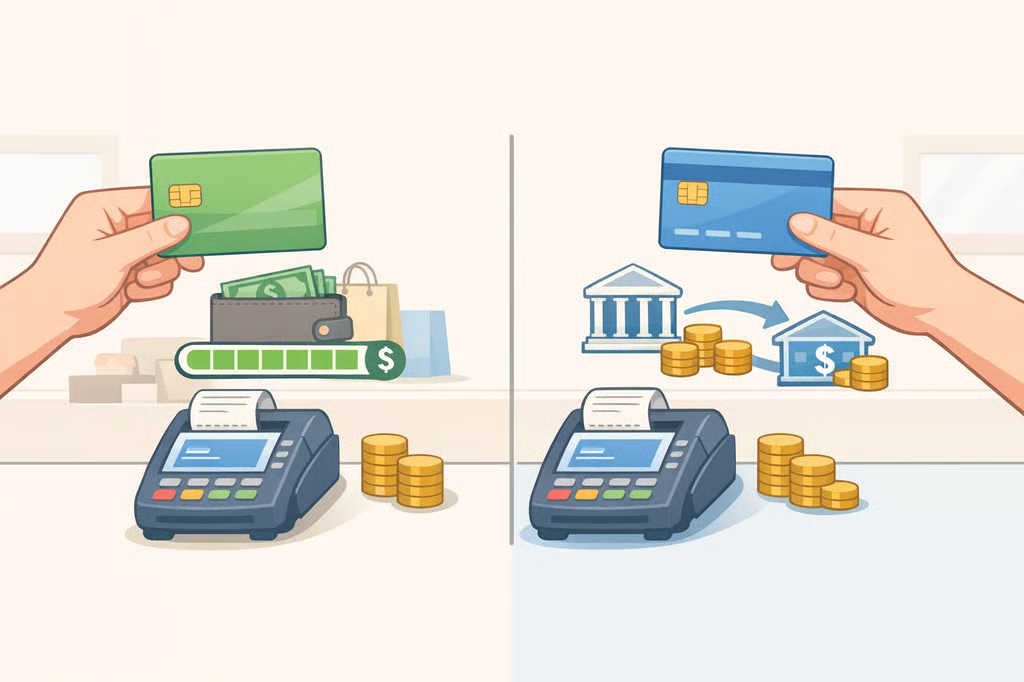
A prepaid card is money you load onto a card first, not money pulled from a checking account. A debit card is linked to a bank or credit union account, so purchases draw from that account’s balance. That simple difference is the whole story, until the fine print starts doing its usual mischief.
What is the difference between a prepaid card and a debit card?
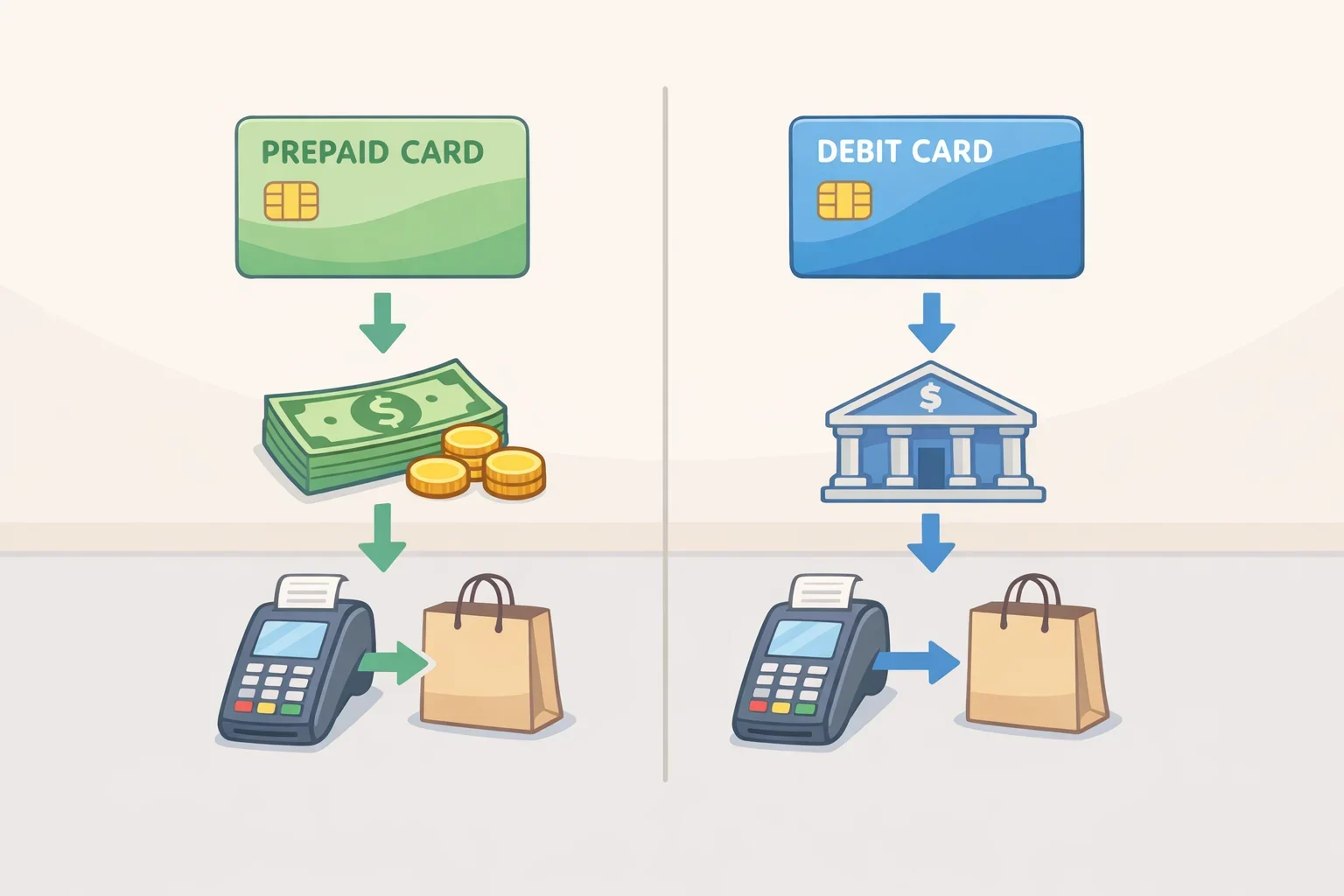
A prepaid card, sometimes called a prepaid debit card or stored-value card, is not linked to a checking account or a credit union share draft account. The CFPB says spending is limited to money loaded onto the card in advance, and some prepaid cards are reloadable while others are not. CFPB explained that setup in December 2024.
A standard debit card works differently. It is tied to a bank account, so when you buy something, the money comes out of that account. If you have opted into your bank’s overdraft program, overspending can happen there too, and the bank will require repayment. CFPB said that in December 2024.
That structural split matters because the cards are often mistaken for each other. The packaging can be nearly interchangeable, the swipe is the same, and the checkout screen does not offer a philosophy lesson. But the money underneath is coming from different places, and that is what counts.
One more point before the comparison gets muddy. A gift card may look like a prepaid card, but the CFPB says it is different, and gift cards typically do not have the protections that come with the CFPB’s 2019 prepaid rule. Most prepaid cards are open-loop cards with a network logo, and those can be used at any location that accepts that card type. CFPB made that distinction clear in December 2024.
How a prepaid card vs debit card works when something goes wrong
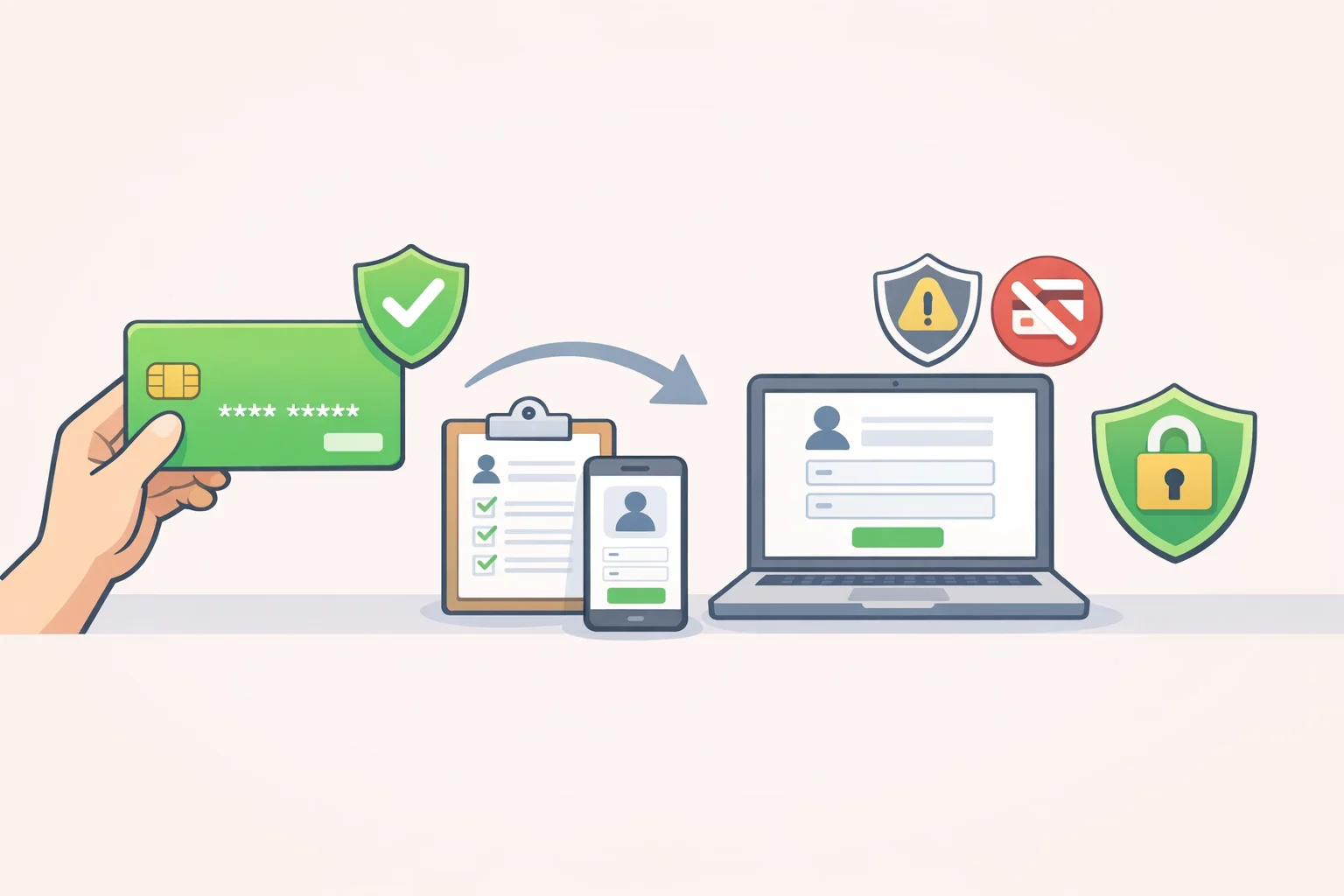
This is where the real difference shows up. Prepaid cards can have different protections than many debit cards and credit cards, and those protections are not automatic. The FTC says registering a prepaid card is a good idea because it can limit losses if someone uses it without permission. Instructions are usually on the packaging. FTC said that in January 2025.
The CFPB says federal error resolution rights apply if the prepaid card is registered, or if it is a payroll card or a qualifying government benefit card. Those rights are the legal backstop that helps limit losses from unauthorized transactions. CFPB explained that in December 2024.
Registration matters for insurance too. The CFPB says FDIC or NCUA insurance, if offered for the card, requires registration. That protects you if the bank or credit union issuing the card goes out of business. Without registration, that layer may not be there. CFPB said that in December 2024.
Bank-linked debit cards sit in a more familiar framework. The FDIC says bank accounts offer federal deposit insurance and other consumer protections, while protections for prepaid cards and nonbank payment apps are not always clear. In plain English: with a bank account, the rules are built into the relationship; with a prepaid card, some protections have to be switched on first. FDIC reported that in July 2024.
There are also special prepaid-card categories worth knowing. A payroll card is a prepaid card you get from an employer, and your paycheck is loaded onto it. A government benefit card is used by a government agency to pay certain benefits, such as unemployment insurance. The CFPB says those cards can carry certain federal protections without the same registration step required for many other prepaid cards. CFPB noted that in December 2024.
That is the practical takeaway. If a prepaid card is lost, stolen, or misused, the amount of protection you have may depend on whether you registered it and what kind of card it is. Debit cards are not magic, but the legal scaffolding around a bank account is more established from the start.
Prepaid card fees and protections to know before you load a dollar
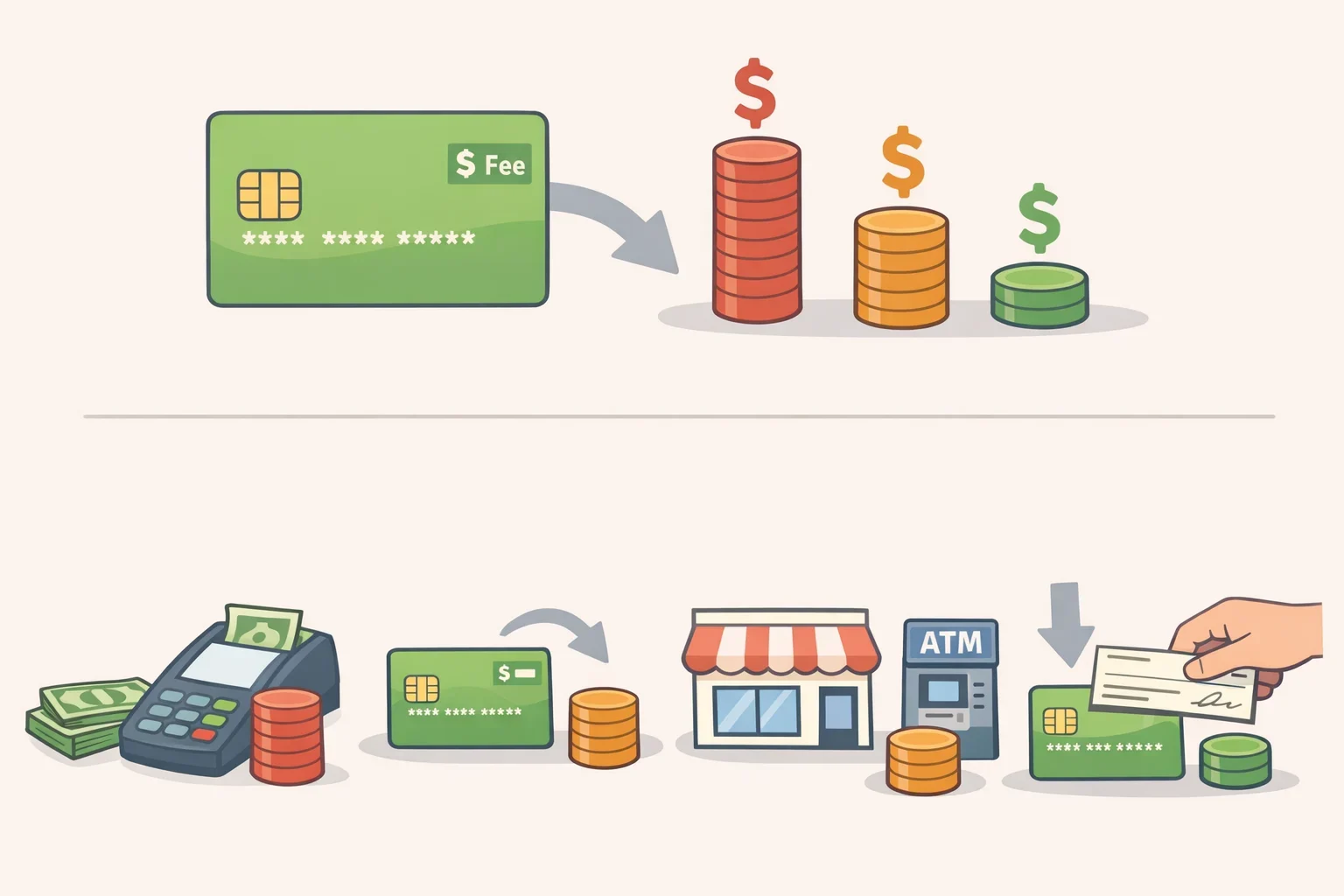
The fee structure is where prepaid cards can get surprisingly expensive. A card can charge for monthly use, transactions, ATM withdrawals, balance checks, cash reloads, customer service, inactivity, paper statements, declines, card replacement, extra cards, bill pay, cancellation, and foreign transactions. Not every card charges every fee, but the list is long enough to make the point. The CFPB says prepaid providers must disclose fee information before you choose a card. CFPB said that in December 2024.
That means the cheapest-looking card is not always the cheapest card. A low sticker price can hide a fee every time you touch the thing, which is a neat little business model if you enjoy surprises and do not mind paying for them.
Direct deposit is often the cheapest way to reload a prepaid card. The CFPB says many cards do not charge for money added through direct deposit, and some may waive the monthly fee if you use it. Before setting that up, though, the CFPB says to make sure the feature is available on the card you have or plan to buy. CFPB said that in September 2024.
There is one more wrinkle. Some prepaid cards let you spend more than you loaded, which means you are borrowing money in that moment, similar to a credit card or overdraft. The FTC says that can mean interest and other credit-related fees. FTC reported that in January 2025. That is not the norm, but it is the sort of clause that deserves a careful read before anyone signs up.
Credit building is another difference that matters more than marketing copy suggests. Most prepaid cards do not get reported to credit bureaus, so they do not help build a credit history, according to the FTC. A debit card tied to a checking account does not build credit either. FTC said that in January 2025.
When a prepaid card makes sense, and what a debit card still does better
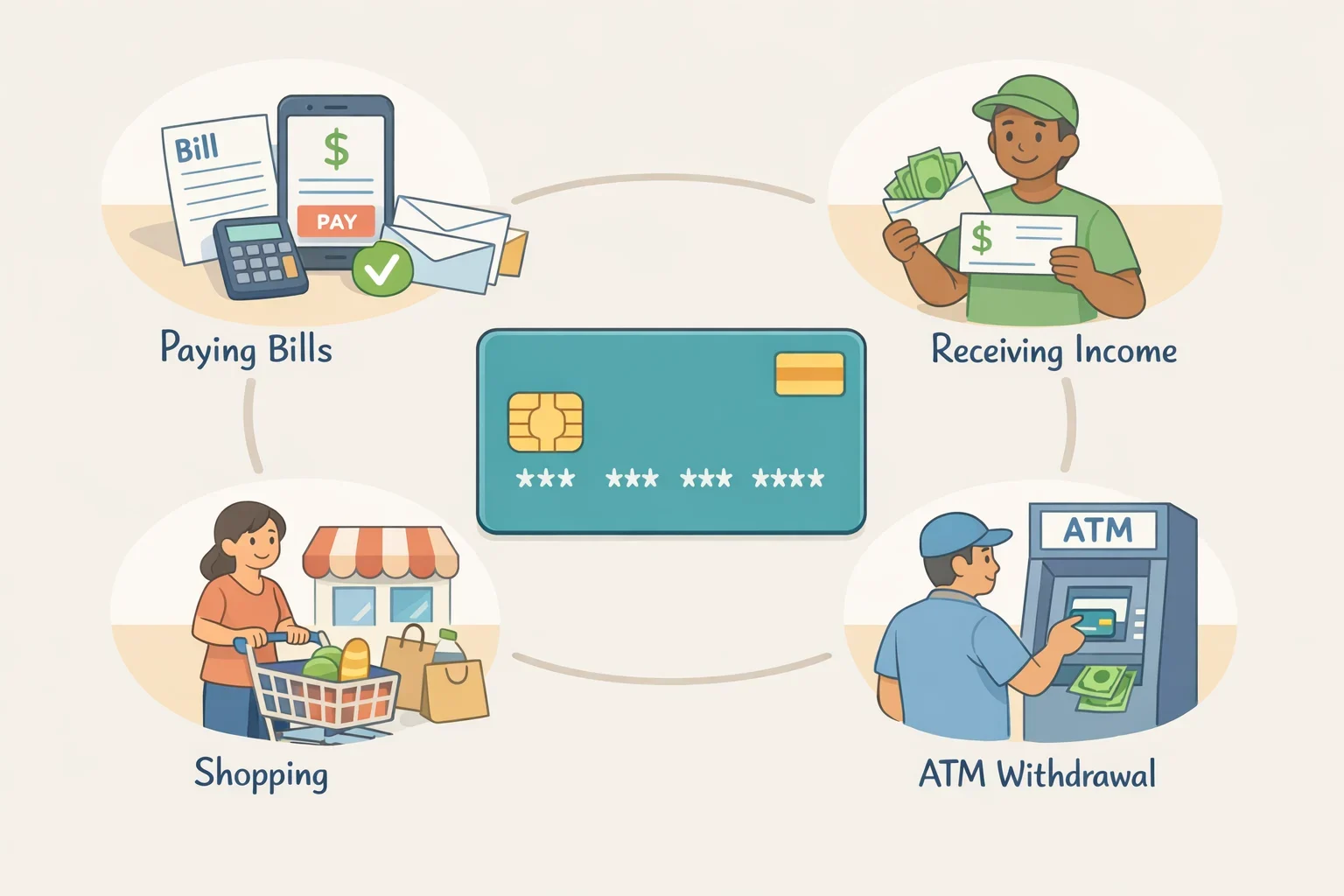
The clearest case for prepaid cards is for people without bank accounts. The FDIC says about one-third of unbanked households used a prepaid card in 2021, and the remaining four in ten unbanked households used prepaid cards or nonbank payment apps as transaction products. Those products can look and feel similar to bank accounts in daily life. FDIC reported that in July 2024.
The same FDIC data shows why people use them. Among unbanked households using these products, about 74 percent used one to pay bills, 59 percent to receive income, and 39 percent to build savings or keep money in a safe place. They also commonly used them to make purchases, both in person and online. FDIC said that in July 2024.
That makes prepaid cards useful, not imaginary. They can handle direct deposit, purchases, and ATM withdrawals. For someone outside the banking system, that is real utility, not a theoretical convenience.
The FDIC is also careful about the limits. These products resemble bank accounts, but they may not offer the full consumer protections provided by banks and credit unions. Households using prepaid cards and nonbank payment apps may also miss the ancillary benefits that come with a banking relationship, including access to credit products, small-business loans, and help buying a home. FDIC said that in July 2024.
That is where debit cards still have the edge. They sit inside a bank account, which means the account can bring deposit insurance, established consumer protections, and a path to other financial products. That does not make every bank account cheap or every debit card harmless. Banks still charge fees, overdrafts still exist, and nobody should confuse “banked” with “comfortable.” But the account relationship is broader than a prepaid card relationship.
For readers already using a checking account, a prepaid card usually serves a narrower purpose. It can help with budgeting, travel, or keeping spending in a separate bucket. That is useful enough. It just is not the same as a debit card that moves through the wider bank-account system behind it.
Choosing between prepaid card vs debit card
The choice comes down to control, cost, and protection. A prepaid card is best understood as a spending tool with a ceiling. You load money onto it, spend up to that balance, and accept that protections and fees depend on the card and whether you register it. CFPB and FTC laid out those rules in late 2024 and early 2025.
A debit card is part of a bank account. That makes it more connected to the mainstream financial system, but it also means you are living with the account’s rules, fees, and, sometimes, overdraft habits. The tradeoff is less dramatic than it sounds, because both cards can do the same ordinary job at the checkout counter.
The sharper question is not which card looks simpler. It is which one fits the way money actually moves in your life. For someone without a bank account, a reloadable prepaid card can be a workable bridge. For someone with a checking account, the debit card usually remains the more complete tool.
Either way, read the fee table before loading money. That is where the story usually begins, and where it tends to end if the wrong card gets picked.