
- Kevin Warsh Fed chair nominee calls for Fed regime change
- Kevin Warsh’s new inflation framework and what it signals
- Why Kevin Warsh is bullish on growth and harsh on inflation
- What Kevin Warsh regime change Fed policy would mean in practice
- The Fed independence question hangs over the hearing
- How much of this Kevin Warsh could actually do
Kevin Warsh Fed chair nominee calls for Fed regime change
Kevin Warsh’s new inflation framework and what it signals
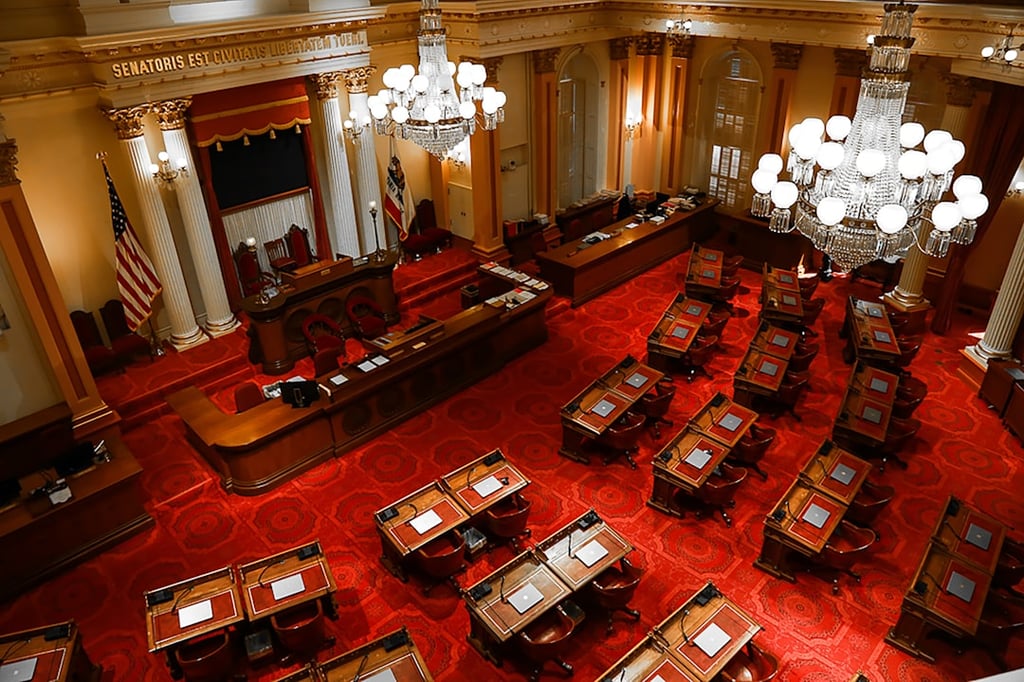
Kevin Warsh, President Donald Trump’s pick to lead the Federal Reserve, used his Senate confirmation hearing on Tuesday to do something more ambitious than offer reassurance. He said the economy’s growth potential is rising, then called for “a regime change in the conduct of policy” and “a different new inflation framework,” AOL Finance reported today.
That is the part investors should not miss. Warsh sounds bullish on the U.S. economy, but his prescription for the central bank points to a much bigger reset than a routine change at the top.
He told the Senate Banking Committee that he shares the White House’s confidence that “real economic growth in the US and real take-home pay will accelerate,” and that “America’s economic growth potential is rising as we sit here today,” according to AOL Finance reported today. The same report noted that the S&P 500 returned 16% in 2025 and has gained roughly 70% over the past five years, a useful backdrop for a nominee talking up growth.
But Warsh paired that optimism with a sharp indictment of the Fed itself. He said post-COVID price increases of 25 to 35% for virtually all income groups showed the central bank “missed its mark” and that the economy is still dealing with “the legacy of the policy errors in 2021 and 2022,” AOL Finance reported today.
Why Kevin Warsh is bullish on growth and harsh on inflation
Warsh’s inflation argument is plain-spoken and unsentimental. In writing cited by City Journal in February, he described inflation as a “choice” made when government spends too much and the Fed prints too much money.
That view strips away the usual list of culprits, from the pandemic to supply-chain bottlenecks to labor shortages, and treats them as excuses rather than the real cause of recent price pressure, City Journal reported in February. It is a tougher line than the one many central bankers have taken, and it leaves little room for the idea that inflation was mostly an unlucky byproduct of a bizarre few years.
Warsh also made clear he thinks price stability has to come first. “Once you let inflation take hold in the economy, it’s more expensive and harder to bring it down,” he said, AOL Finance reported today.
That matters because it explains the tension at the center of his case. He is optimistic about growth, but he is not arguing for easier money as a shortcut to that growth. He is arguing that the Fed has to restore credibility before it can help the economy breathe easier.
What Kevin Warsh regime change Fed policy would mean in practice
The “regime change” language sounds dramatic because it is. Warsh told the committee the Fed tells the world what its dots and forecasts will be, then hangs on to those projections longer than it should, AOL Finance reported today.
That is really a complaint about how the central bank talks about itself. Warsh appears to think the Fed has become too confident in its own forecasts, and too attached to the fiction that it can map the future with tidy little dots on a chart.
The American Enterprise Institute argued 3 days ago that the Fed should replace dot plots with scenario analysis, so officials would show how policy might respond to different developments instead of suggesting a cleaner path than they can actually guarantee, AEI reported 3 days ago. In the same piece, AEI said Warsh should immediately launch an evaluation of the Fed’s purpose, strategy and structure, including its objectives, trade-offs, communication and lender-of-last-resort rules, AEI reported 3 days ago.
Warsh’s skepticism goes beyond communications. City Journal reported in February that he argues statistics are inherently imprecise, that the Fed cannot honestly call itself fully “data-driven,” and that policymakers should be more modest about what the numbers can tell them.
The balance sheet is the other big piece. Warsh said the Fed’s bloated balance sheet, built up to support firms in a bygone crisis era, can be reduced significantly, and that the room created could be redeployed as lower interest rates for households and small and medium-size businesses, AOL Finance reported today. AEI warned in February that shrinking the balance sheet too aggressively could raise the risk of a bond market-induced financial crisis, AEI reported in February.
That makes the balance-sheet question one of the most volatile parts of his agenda. It is the kind of thing that sounds technical until markets decide it is not.
The Fed independence question hangs over the hearing
Warsh also tried to draw a firm line around presidential influence. He said Trump never asked him to precommit to any interest-rate decision, and that he would never agree to do so, AOL Finance reported today.
That answer was aimed at critics who see the nomination as a test of the Fed’s independence. The Council on Foreign Relations noted 3 months ago that Senator Elizabeth Warren has already raised concerns that the pick could undermine the central bank’s independence, Council on Foreign Relations reported 3 months ago.
Warsh’s own view of independence is not the usual altar-call version. City Journal reported in February that he supports Fed independence as a means to achieve policy outcomes, not as an end in itself, and that he has argued presidential criticism alone does not amount to a threat to it.
AEI takes the opposite side on the urgency of the moment. In a piece published one month ago, the group said budget deficits are projected at least $2 trillion annually and that foreign investors hold $8.5 trillion in U.S. Treasury bonds, so the Fed cannot afford to look as if it is taking political direction, AEI reported one month ago.
That is not a minor academic dispute. A central bank’s credibility depends on the belief that it is making decisions on economic grounds, not trying to please the White House or dodge political heat. Once that belief erodes, every move starts to look like a favor.
The politics around the nomination already show the strain. The Council on Foreign Relations reported 3 months ago that Senator Thom Tillis intends to block the Senate Banking Committee’s recommendation of Warsh until an ongoing Department of Justice investigation into Jerome Powell is fully resolved, Council on Foreign Relations reported 3 months ago.
How much of this Kevin Warsh could actually do
Even if confirmed, Warsh would not be running the Fed like a one-man band. Interest-rate decisions are made by the 12-member Federal Open Market Committee, and the chair cannot dictate policy without a majority, the Council on Foreign Relations explained 3 months ago, Council on Foreign Relations reported 3 months ago.
That institutional limit matters now because inflation is still above the Fed’s 2% target. CFR noted 3 months ago that cutting rates aggressively in that setting could worsen price pressures, which means any new chair has less room to maneuver than the rhetoric around the nomination might suggest, Council on Foreign Relations reported 3 months ago.
City Journal was blunt about the odds in February, saying it would be remarkable if Warsh managed to implement even a small part of his desired focus on price stability and resistance to mission creep, City Journal reported in February. AEI’s more sympathetic reading still comes with a caveat: the economy benefits only if the president allows him a free hand, AEI reported 3 days ago.
That is probably the cleanest way to read this hearing. Warsh is not selling a modest course correction. He is arguing for a different Fed, one that talks less like it can forecast the future and more like it has learned a few hard lessons about inflation, balance sheets and politics.
Whether he can turn that into policy will depend on confirmation, committee dynamics and how much space he gets from the White House. For now, the bigger signal is simple: the nominee is already trying to move the debate from rate cuts to first principles.