
- How to Deal With Credit Card Debt Collectors: Steps
- 1. Verify the collector before you say or pay anything
- How to verify a credit card debt
- 2. Know what a debt collector can and cannot do
- 3. Dispute a debt collector in writing if the account is wrong
- 4. If the debt is valid, work with the collector strategically
- 5. Treat time-barred debt with extra care
- 6. Respond if you are sued
- What to do next
How to Deal With Credit Card Debt Collectors: Steps
If you want the short version of how to deal with credit card debt collectors, start here: verify who is calling, ask for validation information, dispute the debt in writing if anything looks off, and only then decide whether to pay, settle, or push back. That sequence saves people from two expensive mistakes, paying a fake debt and ignoring a real one.
Credit card debt collectors do have rules. The FTC said in January that the Fair Debt Collection Practices Act bars abusive, deceptive, and unfair collection tactics, and it covers credit card debt, medical bills, mortgages, and other household debts. A few months earlier, the FTC described a case in which a debt collection operation used illegal threats to pressure thousands of people into paying debts they did not owe, taking in $9.6 million before the agency shut it down.
That is the backdrop. The practical part is more ordinary, and more useful: check the debt, know your rights, and keep everything in writing.
1. Verify the collector before you say or pay anything
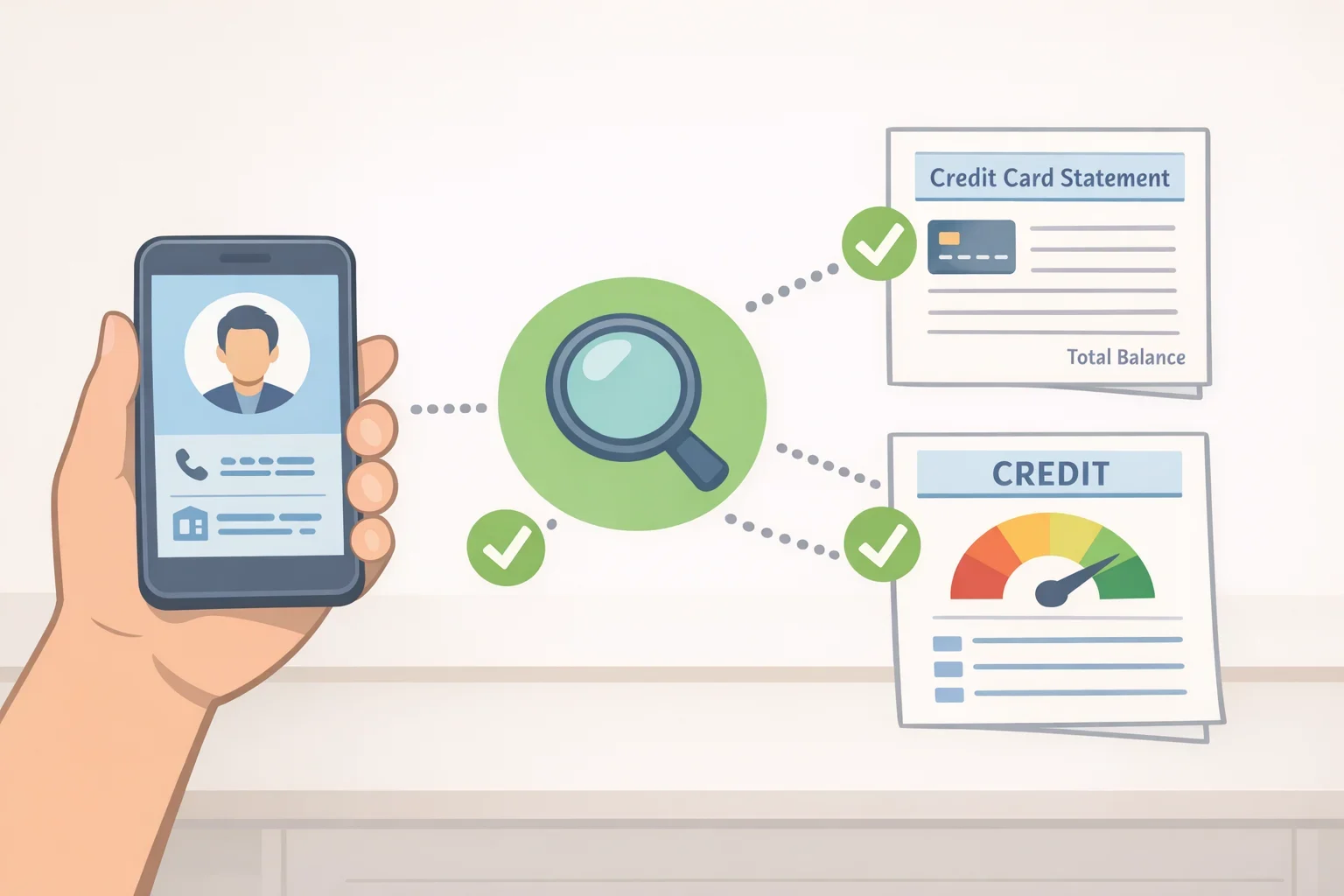
Before you share personal or financial information, make sure the caller is real and the debt is yours. The FTC says collectors have to give you validation information either when they first contact you or within five days. That information should include the collector’s name and mailing address, the name of the creditor, the amount owed with interest, fees, payments, and credits, and your debt collection rights.
This is the part where people get tripped up. Validation information is not the same thing as a full proof package. It is enough to tell you who is asking, what they say you owe, and how to dispute it. If the person on the phone cannot or will not provide that information, the CFPB said in October that it could be a scam.
A good first move is simple. Write down the collector’s name, the agency, the amount claimed, and the original creditor. Then compare it with your own credit card statements or credit report. If the account name, balance, or creditor does not match, stop and investigate.
You do not need to hand over bank account numbers, Social Security numbers, or card details to “prove” anything. The FTC said in January not to share sensitive information until the collector is familiar and you have received validation information. That alone filters out a surprising number of scams.
Talking to the collector at least once is usually worth doing, even if you think the debt is wrong. You are not admitting anything by asking questions. You are gathering facts.
How to verify a credit card debt
Verification is where the article stops being abstract and starts saving money. If the debt is not yours, or the amount is off, send a dispute letter within 30 days of getting validation information. The FTC said in February that this is the cleanest way to say, in effect, “I do not owe some or all of this, and I want proof.”
Your letter should be short and direct. Include your name, address, and account number if you have it. Say clearly that you dispute the debt in full or in part. Ask for written verification, such as a copy of the original bill, the name of the creditor, and the basis for the amount they say you owe. If you already paid the debt, include that documentation too; the CFPB said in October that documentation can help if the debt is not yours or has already been paid.
Mail the letter, and keep a copy. Certified mail with a return receipt is still the dull, old-fashioned move that works best. The FTC recommends it, and so does basic self-preservation.
One nuance matters here. If you do not dispute within 30 days, the FTC said in January that the collector will assume the debt is legitimate. That is not the same as a courtroom ruling, but it does make your position weaker. File the letter early and keep the timeline tidy.
If the collector cannot verify the debt, or the account details do not line up, treat that as a serious warning sign. Report fake or abusive collectors to your state attorney general, the FTC, and the CFPB if needed. Then stop giving out information until the paper trail makes sense.
2. Know what a debt collector can and cannot do
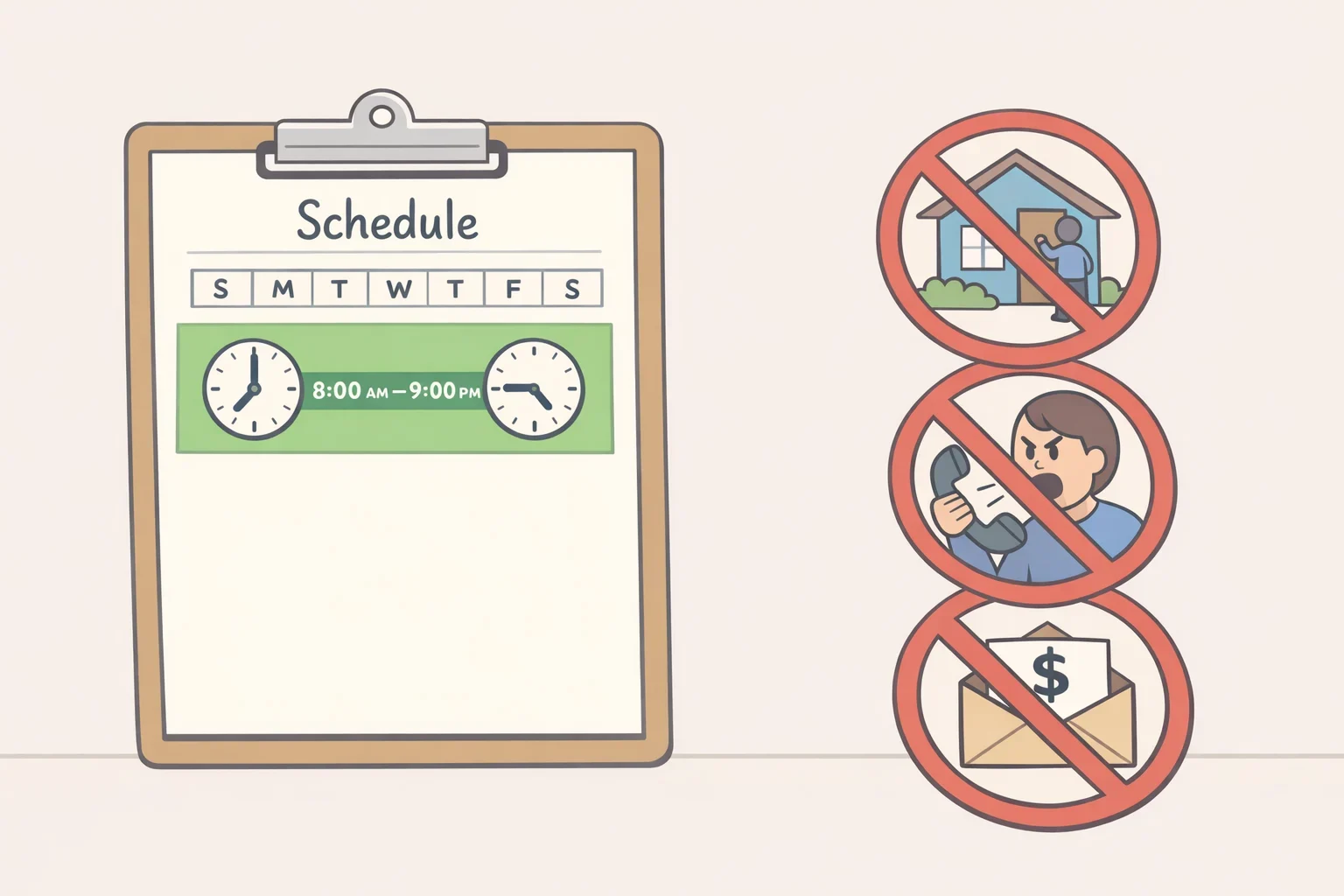
Collectors have more tools than most people realize, but they are not free agents. The FTC says they cannot call before 8 a.m. or after 9 p.m. unless you agree, cannot contact you at work if you tell them not to, and cannot call more than seven times in a seven-day period about a single debt, or within seven days after a phone conversation about that debt.
They can contact you by letter, email, text, or private social media message. They also have to stop if you ask them to, in writing. The FTC says that once they get your mailed request, they can contact you only to confirm they will stop or to say they plan to take a specific action, like filing a lawsuit.
Collectors also cannot lie about the debt. The FTC says they cannot claim you owe a different amount, pretend to be a government official or attorney, threaten arrest, or add interest and fees unless the original contract or a law allows it. You also cannot be arrested for unpaid credit card debt. The FTC said so plainly in May: jail is not a collection method.
If you have an attorney, tell the collector. The FTC says they must communicate with your lawyer, not you, unless the lawyer fails to respond within a reasonable time. That is one of the few situations where silence has actual legal value.
3. Dispute a debt collector in writing if the account is wrong
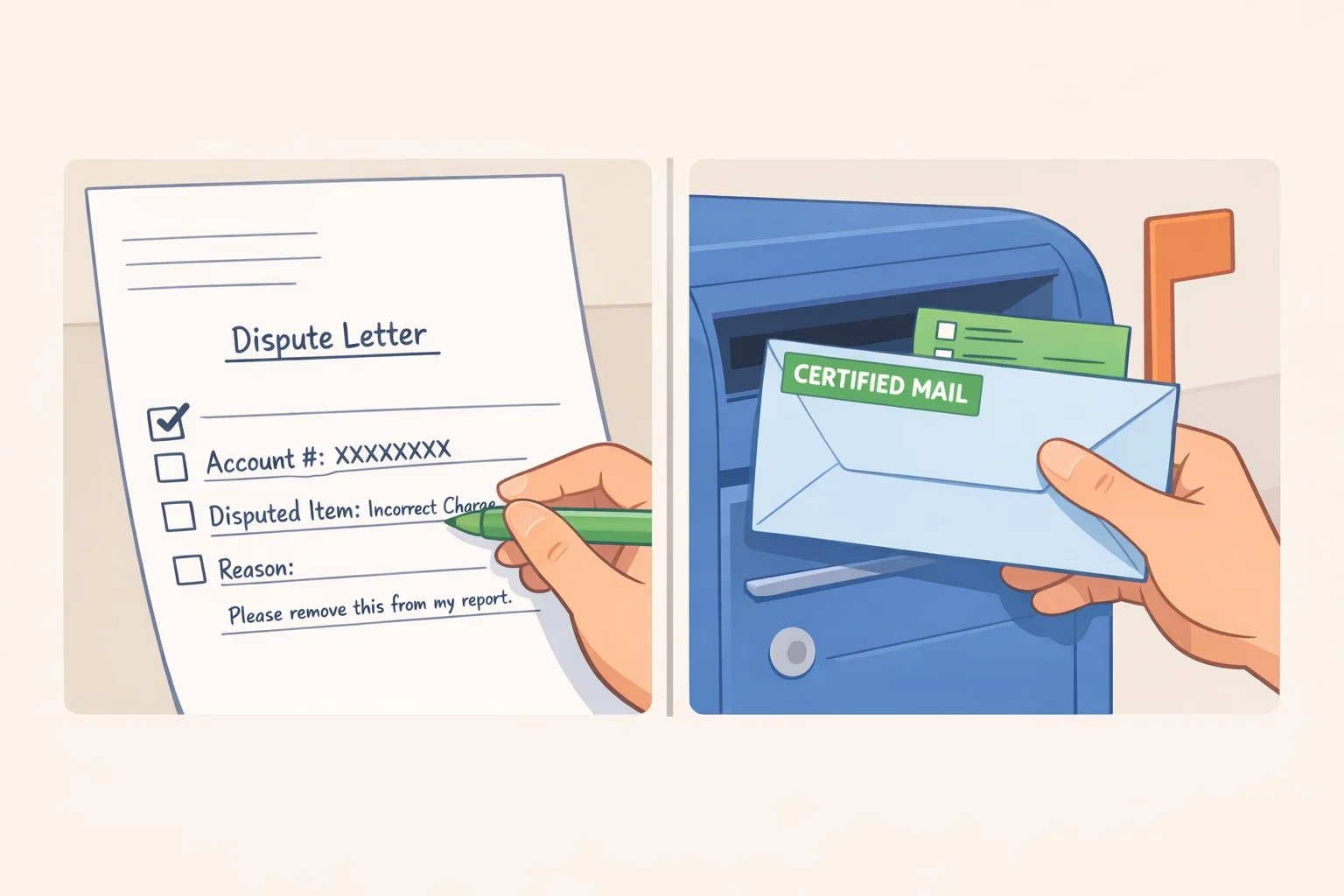
A dispute letter is the right move when the debt is unfamiliar, the amount is wrong, or the account belongs to someone else. The FTC says to send the letter within 30 days of getting validation information and to say you do not owe some or all of the money. Then ask for verification of the debt.
The point is not to write a legal brief. The point is to make the collector slow down and prove its case.
A strong letter does four things:
- Identifies you and the account, if you know it
- States that you dispute the debt in full or in part
- Requests written verification, such as the original bill and the basis for the amount owed
- Includes any documents showing the debt was already paid or is attached to the wrong person
Keep the tone plain. Something like, “I dispute this debt and request written verification of the amount, the creditor, and the basis for your claim,” is enough. No need to gild the lily.
If the collector gets your dispute letter, the FTC says it must stop trying to collect until it sends written verification. That does not erase the debt. It just forces the collector to back up its claim before it keeps pressing.
4. If the debt is valid, work with the collector strategically
If the debt checks out, the next move is not panic. It is choosing the least bad option. The FTC says you may be able to enroll in a payment plan, or settle for a lower negotiated amount if you cannot pay in full.
Working with a credit card debt collector is not a moral contest. It is a negotiation over terms. If a payment plan fits your budget, that may be the cleanest route. If it does not, settlement can be an option, though paying less than you owe could hurt your credit score, according to the FTC.
Before sending a settlement payment, get the agreement in writing. The FTC says to get a signed letter stating that the amount you are paying settles the entire debt and that you will not owe anything further. Do not pay first and hope the confirmation shows up later. Hope is not a receipt.
Negative information can stay on your credit report for seven years, the FTC said in January. That includes past-due debts, and it can include settled ones. The balance may be gone, but the paper trail tends to linger.
5. Treat time-barred debt with extra care
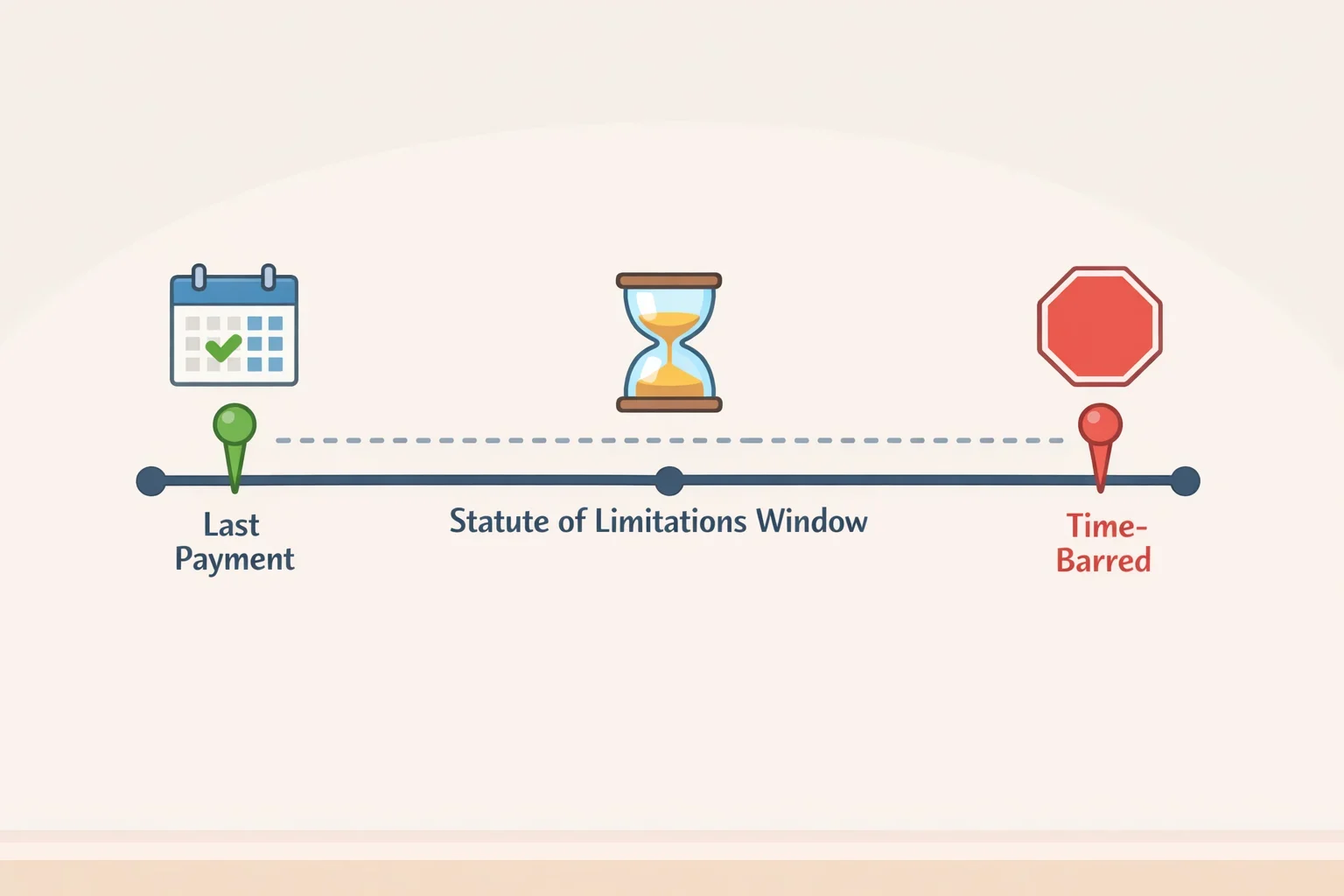
Debt does not usually vanish, but collectors only have a limited window to sue on it. The FTC says that period is called the statute of limitations, it usually starts when you miss a payment, and how long it lasts depends on the type of debt and the law in your state, or the state named in your credit contract.
Once the debt is time-barred, it is against the law for a collector to sue you for not paying it, the FTC said in January. But the collector can still contact you, which is why old debt keeps being annoying long after it should have learned some manners.
This is where state law matters a lot. In some states, making a partial payment or even promising to pay can revive the debt and start the clock again, the FTC said. That caution is state-dependent, not universal, so a consumer law attorney is worth speaking with before paying anything on an old account.
If you are sued over a time-barred debt, do not just sit there and admire the summons. The FTC says to respond by the court deadline and tell the judge the statute of limitations has run out. Bring the collector’s debt information or anything that shows the date of your last payment.
6. Respond if you are sued
If a debt collection lawsuit is filed against you, respond by the date in the court papers. The FTC says you can respond on your own or through an attorney.
Do not ignore it. A default judgment can open the door to wage garnishment, and a collector needs a court order to garnish your paycheck. They cannot simply reach into payroll and help themselves, however much some of them might like the fantasy.
If you are facing a lawsuit, bankruptcy, or a debt that is years old, this is the point where a nonprofit credit counselor or consumer law attorney becomes more than a nice idea. It becomes cheap insurance.
What to do next
Save every letter, every notice, and every tracking number. Set a reminder for the 30-day dispute window as soon as the collector first contacts you. If the collector threatens arrest, refuses to verify the debt, or keeps pushing a time-barred account, report the problem to your state attorney general, the FTC, or the CFPB.
The CFPB’s Debt Collection Rule took effect in late 2021 and clarified how collectors can communicate, including the information they have to provide. That matters because the channels have multiplied, but the basic playbook has not: verify, dispute if needed, negotiate carefully if the debt is real, and get legal help when the stakes jump from annoying to dangerous.