
- Foreign transaction fees cost: what they add up to
- What foreign transaction fees really are
- How the total cost shows up at checkout
- How much foreign transaction fees cost at ATMs
- Dynamic currency conversion fees: the trap to avoid
- How to avoid foreign transaction fees on credit cards and debit cards
- The bottom line on foreign transaction fees
Foreign transaction fees cost: what they add up to
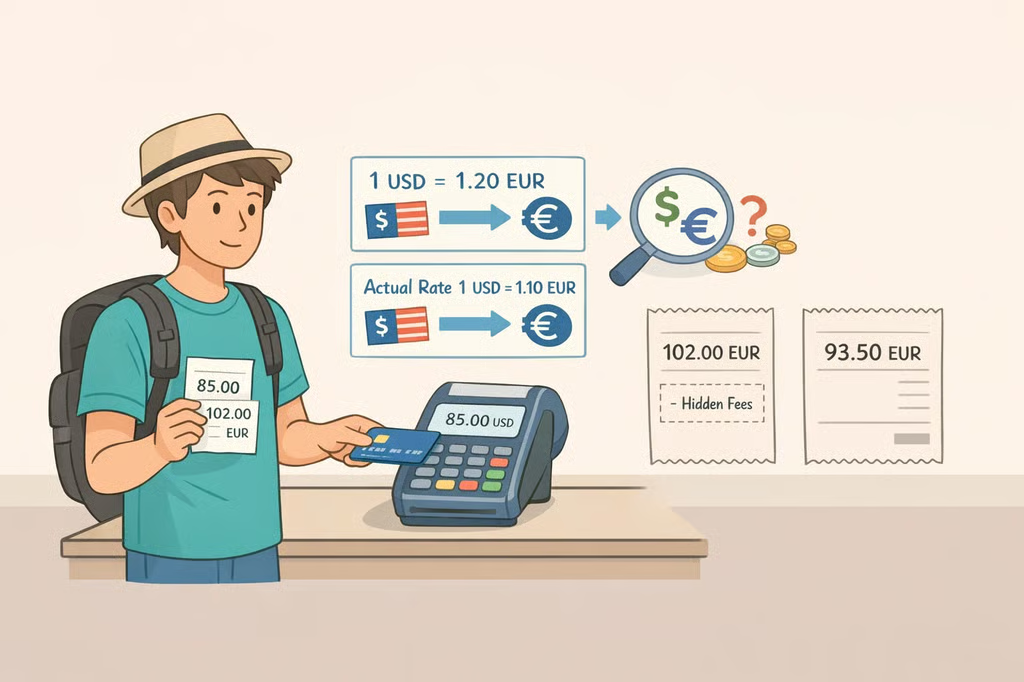
Most travelers notice foreign transaction fees only after a trip, when the statement arrives and the bill is a little uglier than expected. The fee on the receipt is only part of the picture. The rest is hidden in the exchange rate, the ATM, and sometimes the terminal itself.
A foreign transaction fee is a percentage charge a card issuer applies when you make a purchase in another country or in a foreign currency. The CFPB says it is also called a currency conversion fee, and that not all cards can be used outside the United States, so the fine print matters before departure.
What foreign transaction fees really are
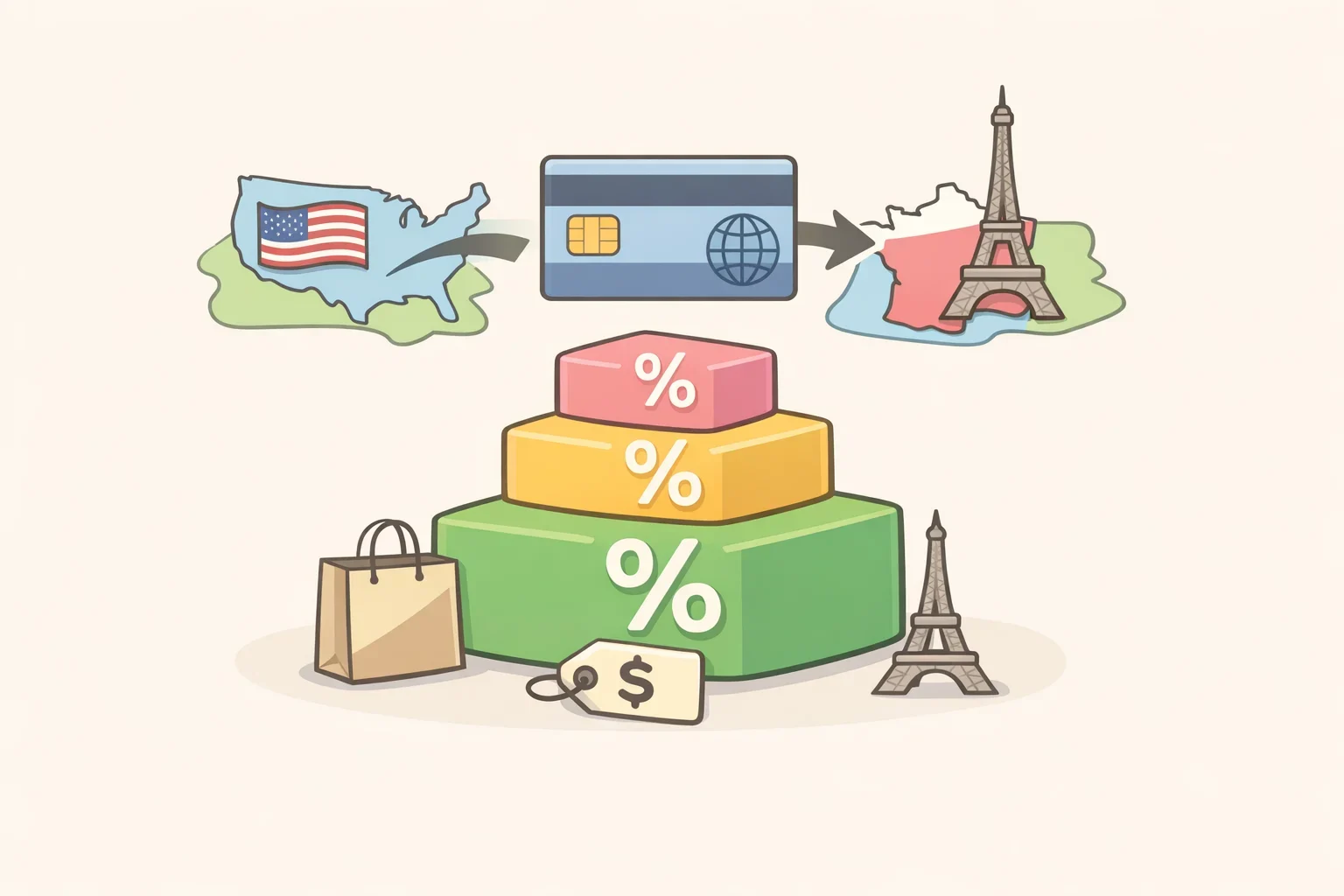
Think of cross-border spending like a toll road with more than one booth. The card network usually takes its cut first by building a spread of roughly 1% to 2% above mid-market into the exchange rate it uses, so you do not see that as a neat line item on the bill. The issuing bank then typically adds another 1% to 3% as a foreign transaction fee on top of that, The Paypers reported in May.
Mid-market rate means the midpoint between the buy and sell price for a currency, the number often shown on Google or XE. Consumers rarely get that exact rate. Once the network spread and issuer fee are both in play, the total cost usually lands somewhere between 2% and 5% above mid-market, The Paypers reported in May.
That is why a card advertised as having no foreign transaction fee is better, but not magically free. It usually means the issuer has waived its own percentage fee. The network spread can still be there.
How the total cost shows up at checkout
The reason this fee is so easy to miss is that it rarely arrives alone. A traveler pays in local currency, the merchant sends the charge through the card network, and the network and issuer each get their turn at the exchange rate. By the time the final amount appears, the original purchase has already grown a little.
That layered structure matters because the cardholder usually sees only the end result. It is not one dramatic charge. It is a series of small cuts.
For ordinary card purchases, that is often the whole story. Cash withdrawals are messier.
How much foreign transaction fees cost at ATMs
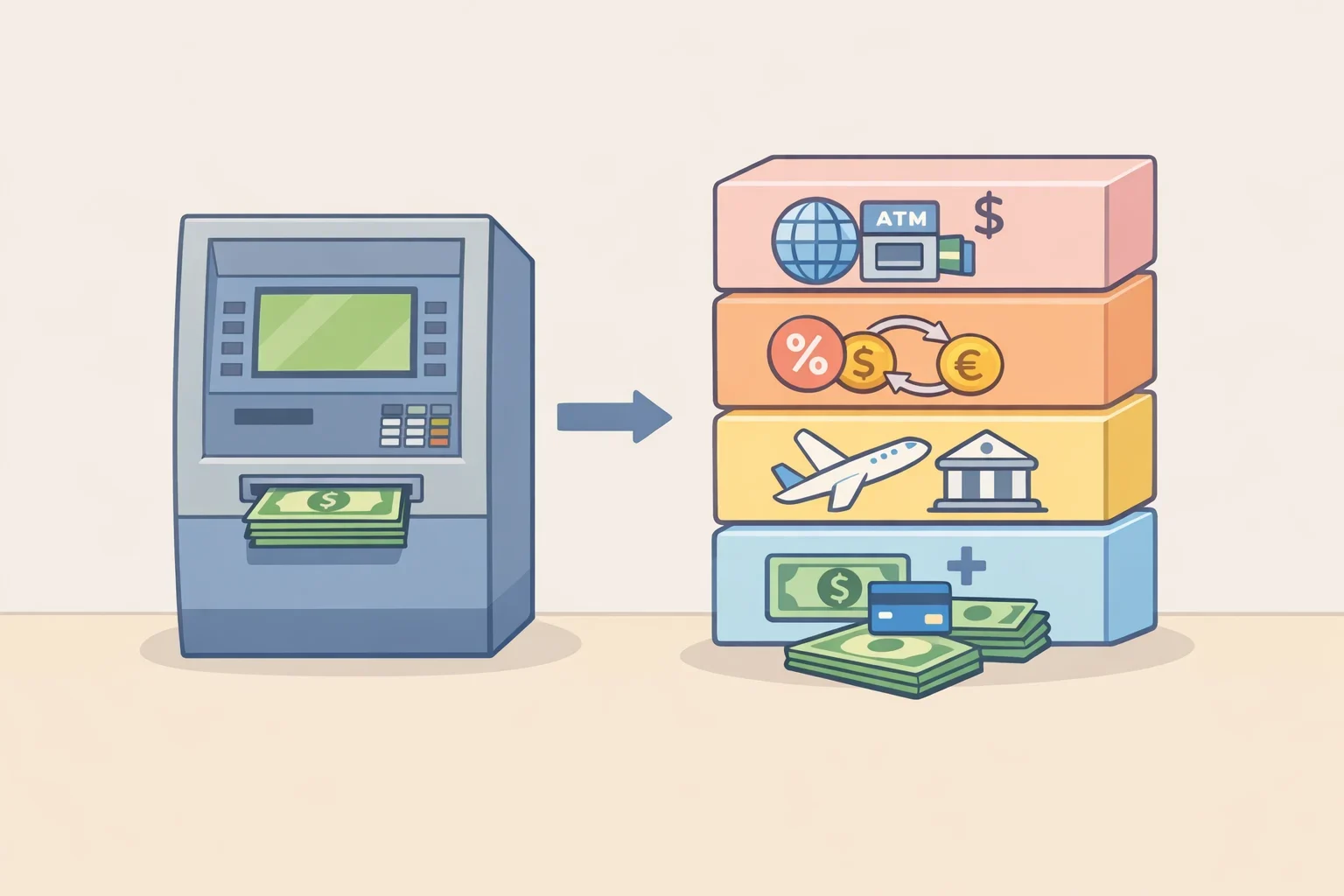
ATM withdrawals abroad can be more expensive than card purchases because fixed charges pile up fast. Faroway described one example in May: withdraw $40 and about $9 can disappear into fees before the cash is even in hand.
International ATM costs usually come from four places. The machine owner can charge an ATM operator fee, your home bank may add an out-of-network fee, your card can still trigger a foreign transaction fee, and the ATM may offer dynamic currency conversion if you accept it. Faroway laid out that structure in May.
The typical ranges are not subtle. Faroway says ATM operator fees often run $2 to $8 per withdrawal, out-of-network bank fees can run $2 to $5, foreign transaction fees are usually 1% to 3%, and DCC can add a hidden markup often in the 3% to 12% range.
That is why small withdrawals sting. If the fee is fixed, taking out a little money more often is a bad bargain. Larger withdrawals, less often, usually reduce the damage.
Dynamic currency conversion fees: the trap to avoid
Dynamic currency conversion, or DCC, is the offer to charge you in your home currency instead of the local one. It sounds helpful. You see a number you understand, hit yes, and move on. That ease is the point.
When a card is used abroad, the terminal can detect that the card’s currency differs from the transaction currency and then offer DCC. If the traveler accepts, the conversion is handled by the merchant’s bank or a DCC service provider rather than the card network, and the markup is shared among the acquirer, the merchant, and the provider, according to a Journal of Banking & Finance study in 2023.
The economics are ugly. The same study says DCC fees persistently exceed the monopoly level because the setup gives the provider room to charge more, not less. Consumer groups have been saying much the same thing for years. The BEUC position quoted in that paper says people are financially worse off in practically every single case when they choose DCC, and that the way the offer is presented makes informed choice hard.
The numbers back that up. The Paypers reported in May that DCC markups are typically 3% to 6% above mid-market for purchases in places like airports, hotels, restaurants, and luxury retail. The academic paper goes further, saying markups of 12% over the next best option are not uncommon, and citing one Czech ATM case where paying in euros instead of local currency cost 13.7% more, Journal of Banking & Finance reported in 2023.
The rule is simple. When a terminal or ATM asks whether to charge in your home currency or local currency, choose local currency. That declines DCC and lets the card network handle the conversion, which is generally the better deal, Faroway said in May.
How to avoid foreign transaction fees on credit cards and debit cards
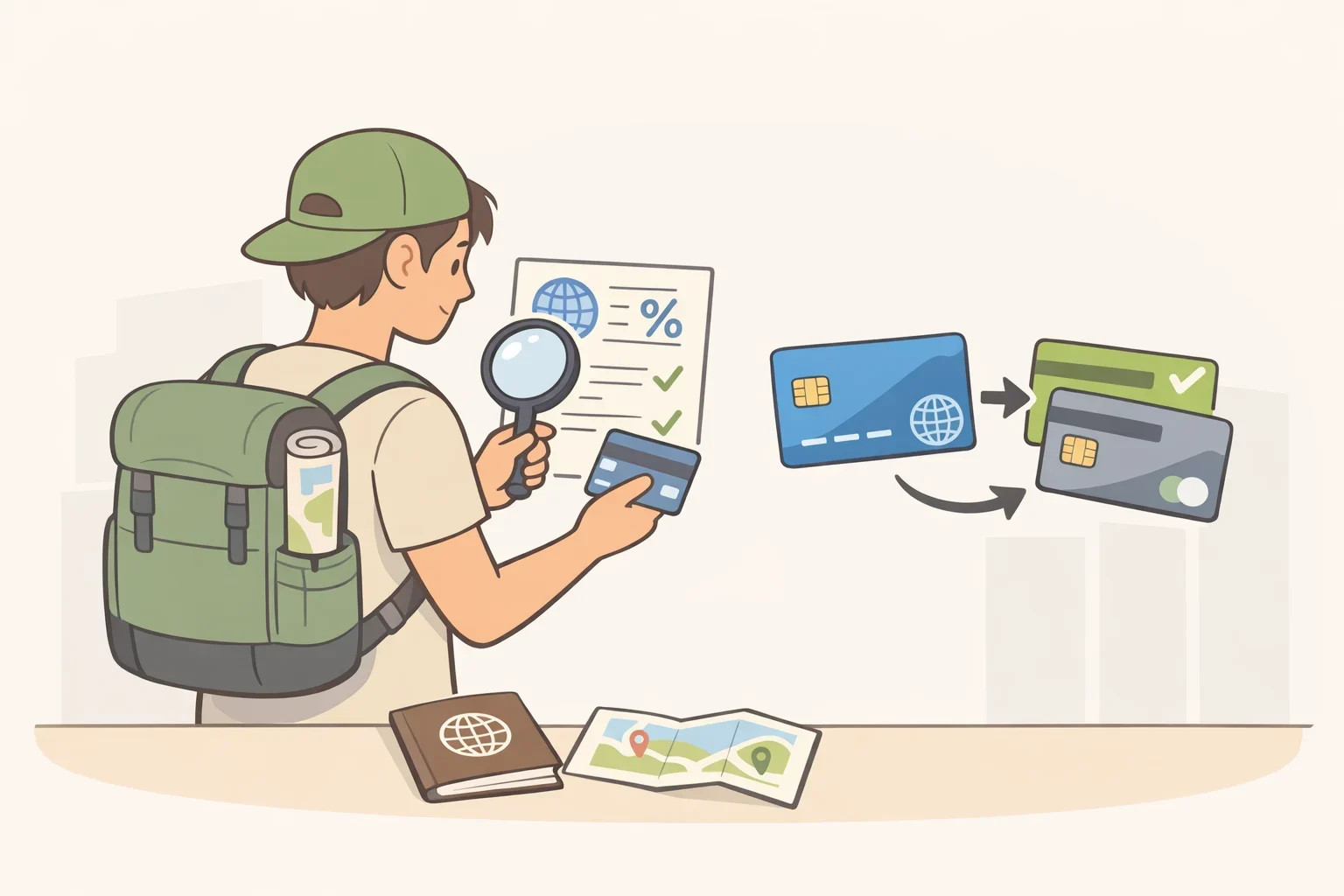
The cleanest fix is to carry a card that does not charge a foreign transaction fee. Many travel credit cards waive it entirely. On the debit side, Faroway noted in May that Schwab’s checking account rebates ATM fees at month-end, while Capital One 360 Checking has no foreign transaction fee and no Capital One out-of-network fee, though ATM owner fees may still apply.
There are also fintech options. Faroway said in May that Wise and Revolut can be useful for holding currencies and spending abroad, but their free ATM withdrawal limits vary by plan and region. They are not automatically fee-free for unlimited cash. That would be too easy, and travel rarely grants that kind of mercy.
If switching accounts is not practical, the next best move is behavioral. Use bank ATMs instead of airport or private machines when possible. Withdraw cash less often and in larger amounts so fixed fees sting less. Pay by card when merchants accept it, and always decline conversion.
One more rule belongs in bold, even if this format does not allow bold. Never use a credit card for ATM cash advances unless it is a true emergency. Faroway said in May that cash advances trigger fees immediately, interest starts right away, and the APR is usually awful.
Before you leave, check the terms on every card you plan to carry. Confirm the foreign transaction fee and ATM policy. Pack a backup debit card and backup credit card, save your bank’s international support number offline, and set a realistic withdrawal limit so you are not forced into bad decisions at a machine in a hurry.
The bottom line on foreign transaction fees
Foreign transaction fees are not a single charge. They are a stack of them. The card network’s exchange-rate spread, the issuer’s fee, ATM operator charges, and DCC markups can turn a simple purchase into something noticeably more expensive, with the total on card transactions often landing 2% to 5% above mid-market, The Paypers reported in May.
The easiest mistake to fix is DCC. The easiest savings come from using a no-foreign-transaction-fee card, withdrawing cash less often, and choosing local currency every time the machine asks. That is the whole game.