
Software engineer identity crisis: AI, jobs, and data
The loudest story about AI and software engineers is simple enough: one replaces the other. The software engineer identity crisis starts there, but the numbers do not. SignalFire’s analysis, which tracked the careers of millions of employees across more than 80 million companies, suggests that engineering was the most resilient job function in 2025 TechCrunch reported last month.
That matters because the fear is not built on nothing. Hiring across large tech companies dropped 25% compared with 2019 levels, while engineering roles fell 11% TechCrunch reported last month. Engineers also made up 55% of new hires in 2025 across SignalFire’s “Tech Majors,” up from 46% in 2019, and early-stage startups hired 7% more engineers in 2025 than they did in 2019 TechCrunch reported last month.
So the core answer is awkward but useful. Software engineering jobs are not collapsing at scale, at least not according to the data available now. What is collapsing, or at least wobbling hard, is the old idea of what an engineer is supposed to be good at. That is where the anxiety lives.
Are software engineering jobs really at risk from AI?
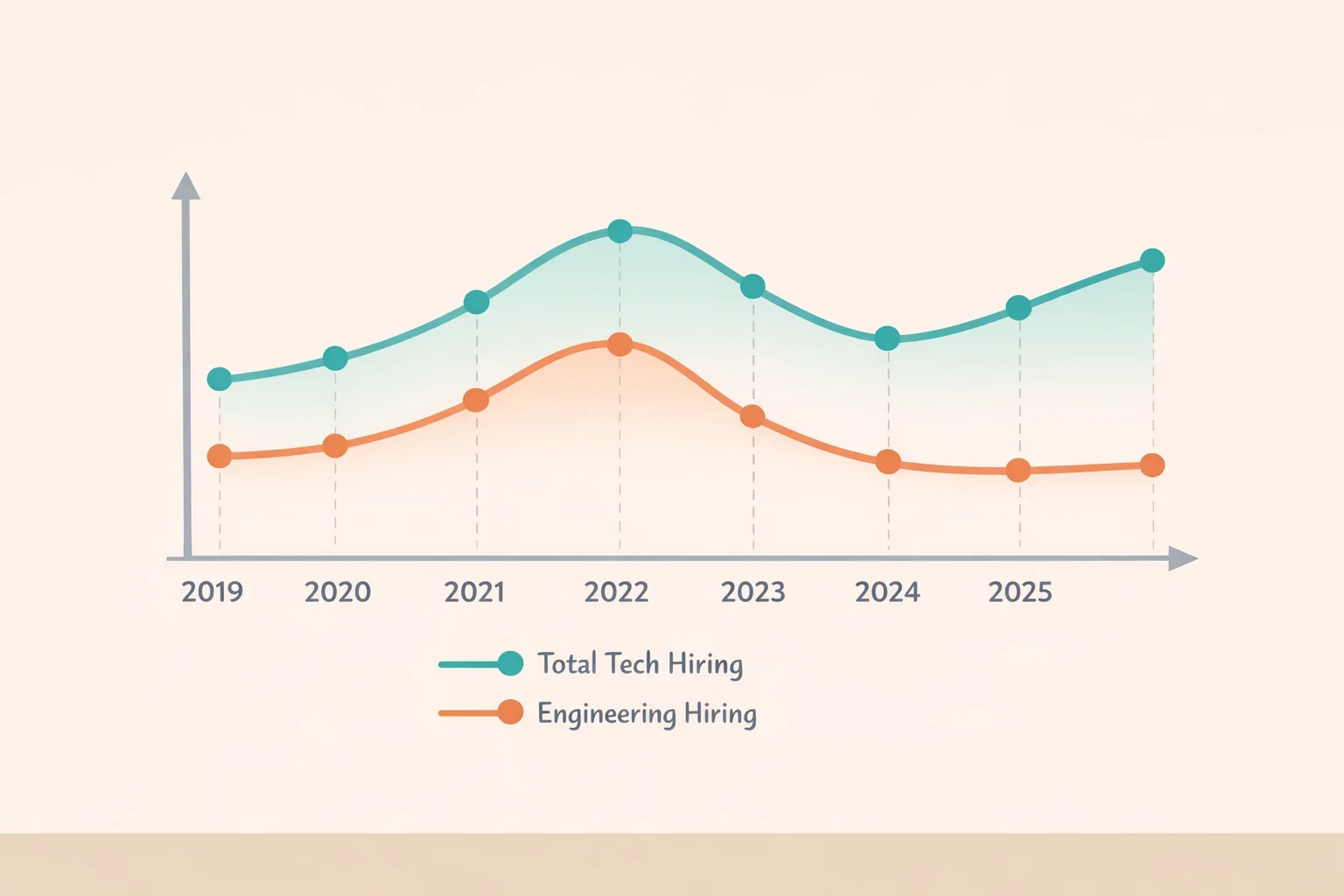
SignalFire’s head of research, Asher Bantock, said the standard layoff story goes like this: AI is the reason, and code is the first place leaders point to, because one engineer can supposedly now do the work of many TechCrunch reported last month. He added that what is happening on the ground is “a little inconsistent with that” TechCrunch reported last month.
His point is straightforward. If AI were truly substituting for engineering talent, engineering hiring should be the first thing to crack. Instead, engineering headcount is growing faster than most other tech functions TechCrunch reported last month. That does not mean the labor market is healthy across the board, only that the popular “AI killed the software engineer” script is ahead of the evidence.
Nvidia CEO Jensen Huang made a similar argument after deploying agentic AI tools across all of Nvidia’s engineers. He said software engineers are “busier than ever,” and added that while agents write code almost instantly, they keep pushing engineers toward “the next idea” TechCrunch reported last month. That is not a story of replacement. It is a story of compression, more output, less waiting, and a lot more pressure to decide what matters next.
Anthropic’s own analysis points in the same direction. McCrory said there was “at least no larger material difference in unemployment rates” between workers using Claude for the central task of their jobs in automated ways, including software engineers, and workers in roles less exposed to AI that depend on physical interaction and dexterity TechCrunch reported last month. That is not proof that nothing is changing. It is evidence that the labor market is not yet behaving like a clean substitution story.
The caveat is important. Aggregate resilience can hide local pain. The data does not tell us whether entry-level opportunities are shrinking inside a stable overall headcount, or whether some specialties are taking the hit while others hold up. That gap is exactly the sort of thing that turns a labor-market change into career anxiety.
How AI is changing what software engineering actually means
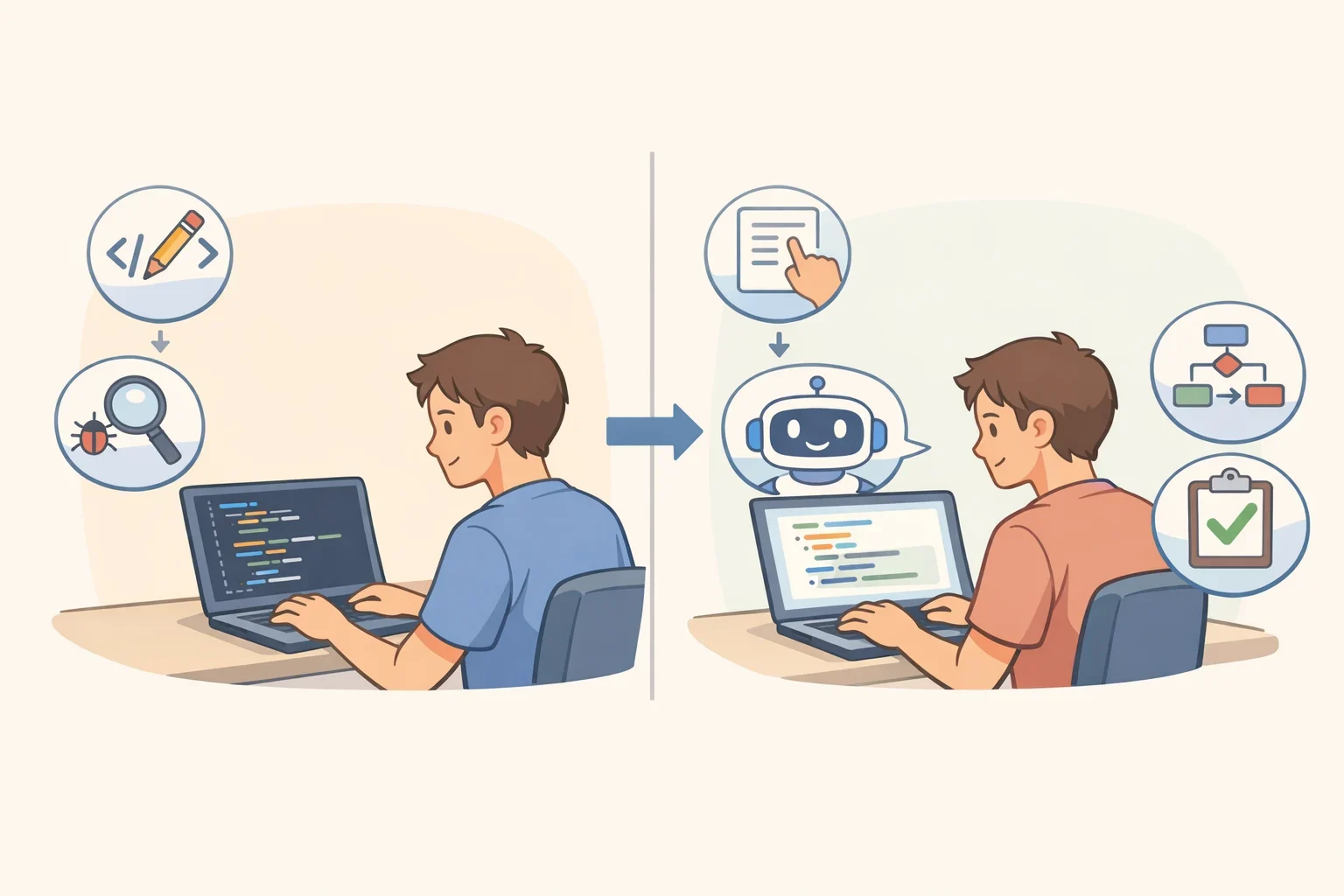
The bigger disruption may not be to headcount at all. It is to the definition of competence. AI is shortening the distance between thinking and code, which changes who looks productive, how experience is measured, and what gets rewarded.
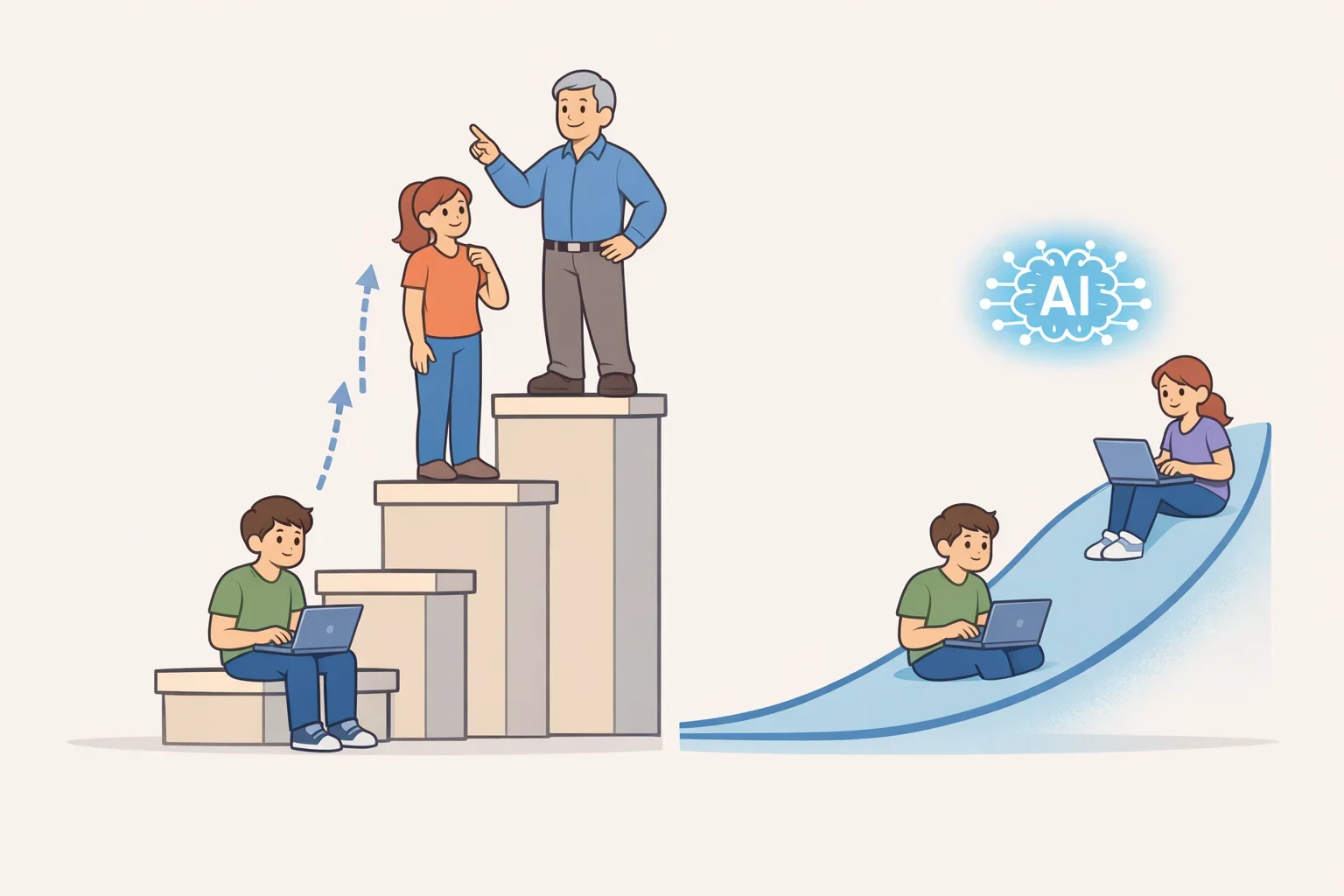
MIT researchers tested Copilot in experiments at Microsoft, Accenture, and one anonymous company. Access to the tool increased output, measured as completed weekly tasks, by 26% on average across the three studies MIT Sloan reported about 20 months ago. The gains were uneven, though. Junior developers and recent hires saw output rise by 27% to 39%, while more senior developers saw gains of only 8% to 13% MIT Sloan reported about 20 months ago.
That split matters more than the headline number. If AI gives younger engineers a bigger lift than older ones, it changes the shape of the ladder. Experience still counts, but not always in the same way. MIT’s Demirer put it plainly: for more experienced developers, “we actually don’t see much of an effect” MIT Sloan reported about 20 months ago.
The transition is also incomplete. After a year of access, average AI adoption across the three companies reached only about 60% MIT Sloan reported about 20 months ago. That means many engineering teams are not living in the same workflow yet. Some developers are already leaning on AI heavily. Others are still writing code much as they always have. No wonder the culture feels uneven.
GitHub’s interviews with 22 full-time U.S.-based software engineers add a useful human layer. The developers who had gone furthest with AI were working differently, shifting from “code producers to creative directors of code” GitHub Blog reported about 7 months ago. More tellingly, they did not describe that as a loss of craft. They described it as a reinvention of it GitHub Blog reported about 7 months ago.
That is the part the charts cannot catch. The day-to-day work is changing, and so is the self-image that comes with it. A developer who once got status from speed or elegance may now get it from orchestration, judgment, and the ability to tell when the machine is bluffing. That is a different job, even if the title has not caught up.
The software engineer career anxiety is really about ownership
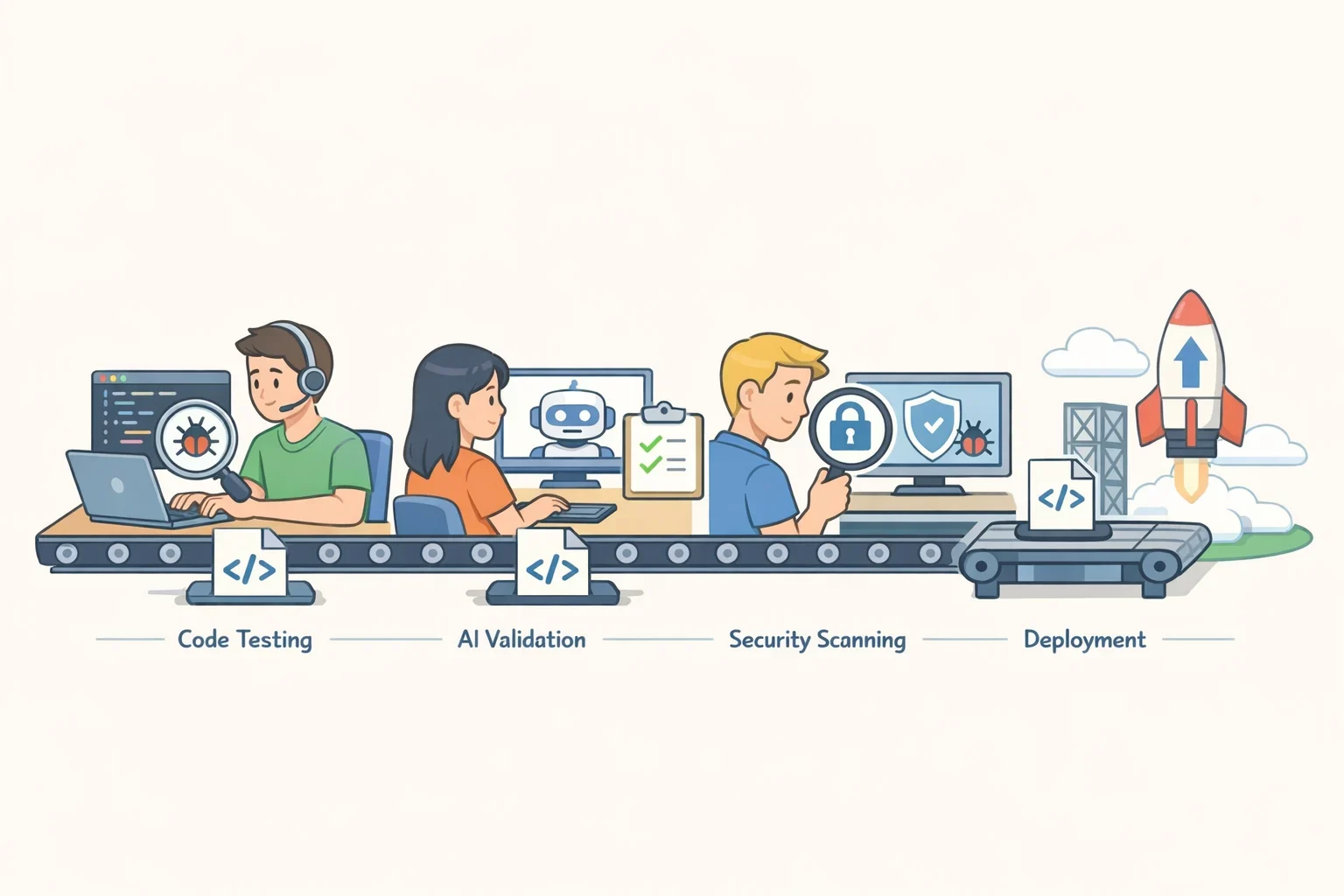
If the labor market question is whether engineers are being replaced, the identity question is whether they are still the main authors of the systems they build. That is where Menlo Ventures enters the picture, and its financial stake needs to stay in view. It is not offering a neutral field report.
Menlo argues that large language models generate code that looks right, often compiles, and frequently works, but is still not provably correct or safe Menlo Ventures reported about 4 months ago. The firm says LLMs are statistical by nature, which means they produce plausible output, not guaranteed output, and that they cannot ensure a function returns the right answer or avoids introducing a security vulnerability Menlo Ventures reported about 4 months ago.
That is a thesis, not a settled verdict. Still, it is a serious one, because it shifts the premium skill from generating code to verifying it. Menlo’s case is that proving code is correct and safe will become “as essential as generating it” Menlo Ventures reported about 4 months ago. Whether that future arrives through formal verification, new tooling, or something else entirely, the direction is clear enough: systems thinking, security awareness, and architectural judgment become more valuable when the code itself gets cheaper.
That is also why the identity crisis can feel sharper than a typical tech cycle. Engineers are not only watching AI write more of the boilerplate. They are watching the craft that once signaled seniority become more common, more automated, and less distinguishable. Clean code still matters. Clever code still matters. But the market is rewarding ownership of outcomes more than production of lines.
Bantock’s description fits that shift from the supply side too. Engineers are “suddenly a lot more productive, and there’s endless work for them to do” TechCrunch reported last month. Huang’s account at Nvidia points the same way. The work is expanding, but the center of gravity is moving.
What this means for engineers building careers now
The broad labor picture is more stable than the panic suggests. Engineering was the most resilient function in SignalFire’s 2025 data, and the other evidence cited here does not show mass replacement TechCrunch reported last month. That should calm one fear, at least.
The more unsettling truth is that the transition is still underway. MIT’s data shows average Copilot adoption at only about 60% after a year across the companies studied MIT Sloan reported about 20 months ago. GitHub’s interviews suggest the most AI-fluent engineers are already changing how they define their work GitHub Blog reported about 7 months ago. Put those together and the picture is less “job apocalypse” than a profession mid-rewrite.
The unresolved question is the one that matters most for the next generation. What happens to junior pipelines if AI keeps flattening the skill curve? A field can survive being more productive. It can even survive being more abstract. What it cannot easily survive is losing the apprenticeship ladder that turns new coders into experienced engineers. That is the part worth watching.