
Workers Thriving in the AI Era: What Research Shows
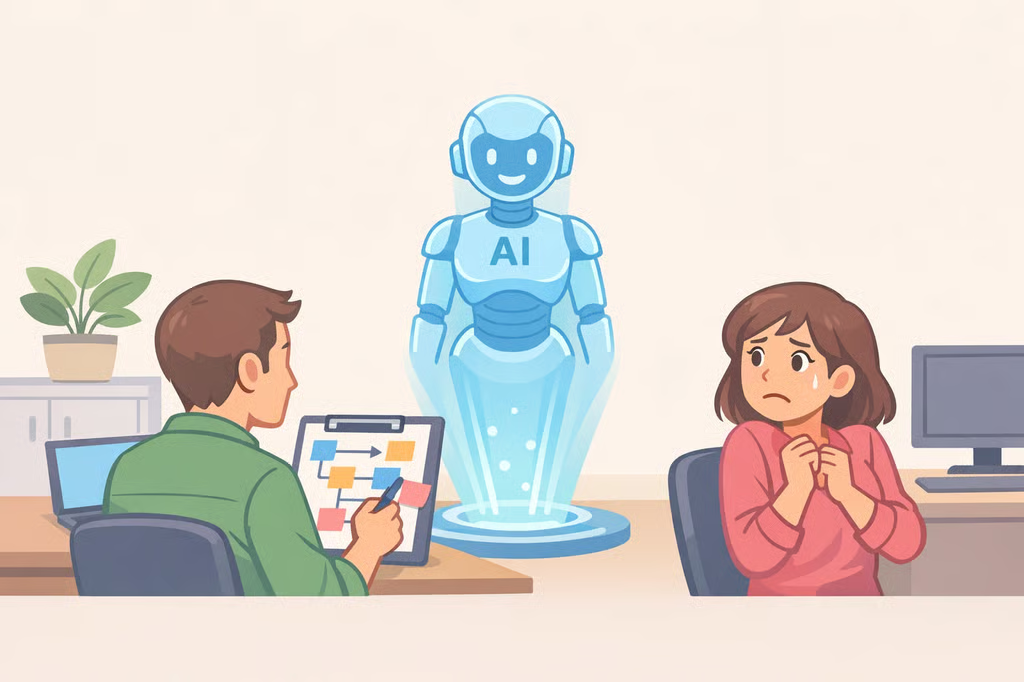
Two workers can face the same AI system and walk away with opposite impressions. One sees a threat. The other sees room to adjust. For workers thriving in the AI era, the new research suggests the split is less about raw technical skill than about goal reengagement, the capacity to let go of a goal that no longer fits and move toward a new one.
That is a tidy explanation, which is why management talk has latched onto it so quickly. A July 2025 study in the Journal of Vocational Behavior gives that idea some empirical backing, but only within a narrow frame. It speaks to career optimism and perceived threat, not to pay, promotions, or job survival. “Thriving” here is not a grand victory lap. It is a smaller, more awkward thing: feeling less cornered when AI shows up at work.
What the study found
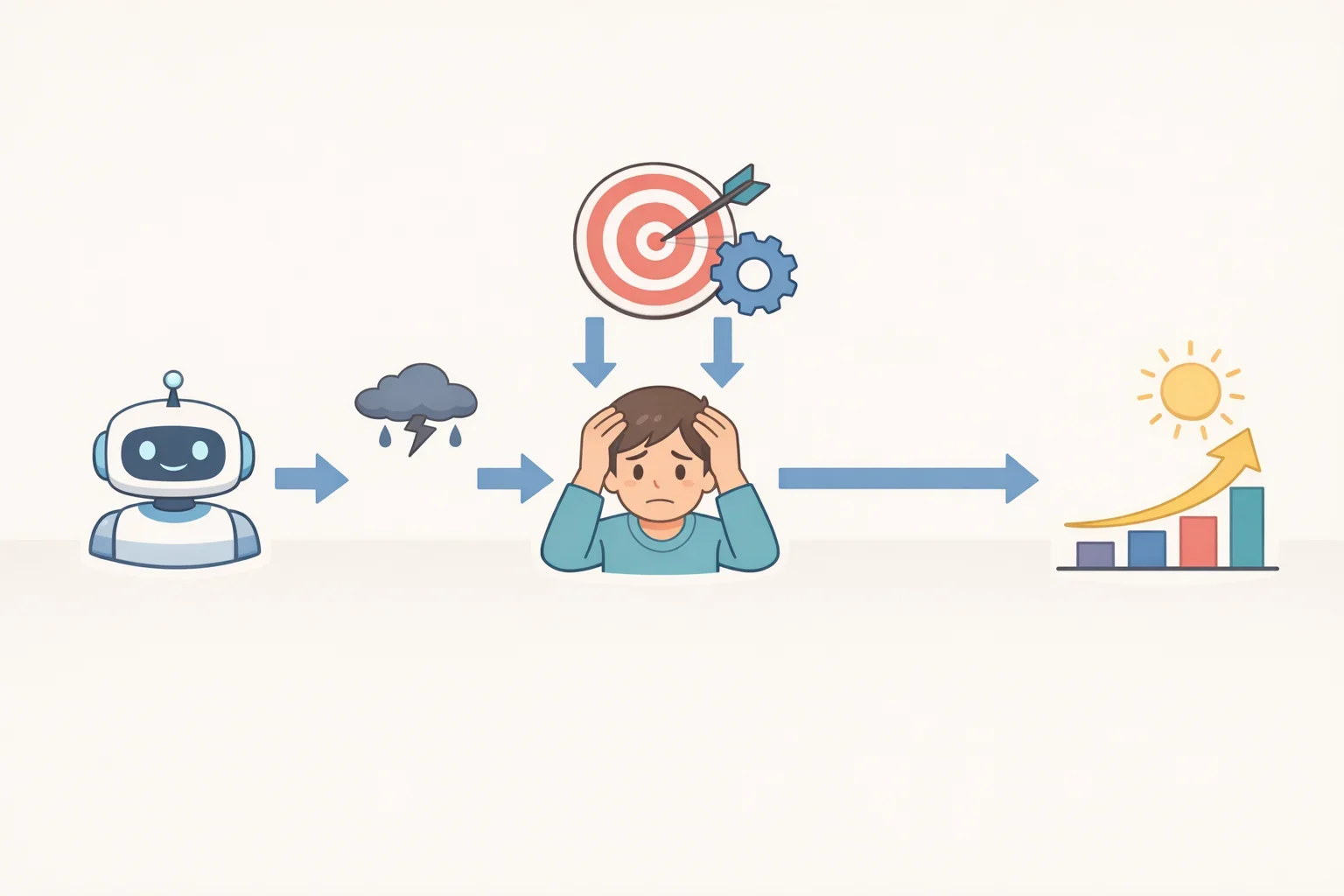
The paper used two experimental studies, one with students and one with full-time employees, with sample sizes of 355 and 186 (Journal of Vocational Behavior, July 2025). The researchers found that goal reengagement capacities moderate the indirect relationship between AI interaction and career-related optimism through perceived threat. Put plainly, people low in goal reengagement were more likely to read AI as threatening and, in turn, feel less optimistic about their careers. People high in goal reengagement moved the other way.
That is the cleanest version of the finding, and it matters. The same AI encounter did not produce the same psychological result for everyone. The difference ran through how much a person could release an old goal and take up a new one, which is a fairly human way of describing adaptation. Not surrender. Not cheerleading. Just the ability to stop clinging to a version of work that is no longer available.
The authors of the study say their findings underscore the value of letting go of previously held goals and embracing new ones as AI reshapes work, and they describe goal reengagement capacities as critical for maintaining career optimism in an AI-transformed workplace (Journal of Vocational Behavior, July 2025). That is a defensible claim, as far as it goes. It is also where the evidence ends.
Why that finding is useful, and where it stops
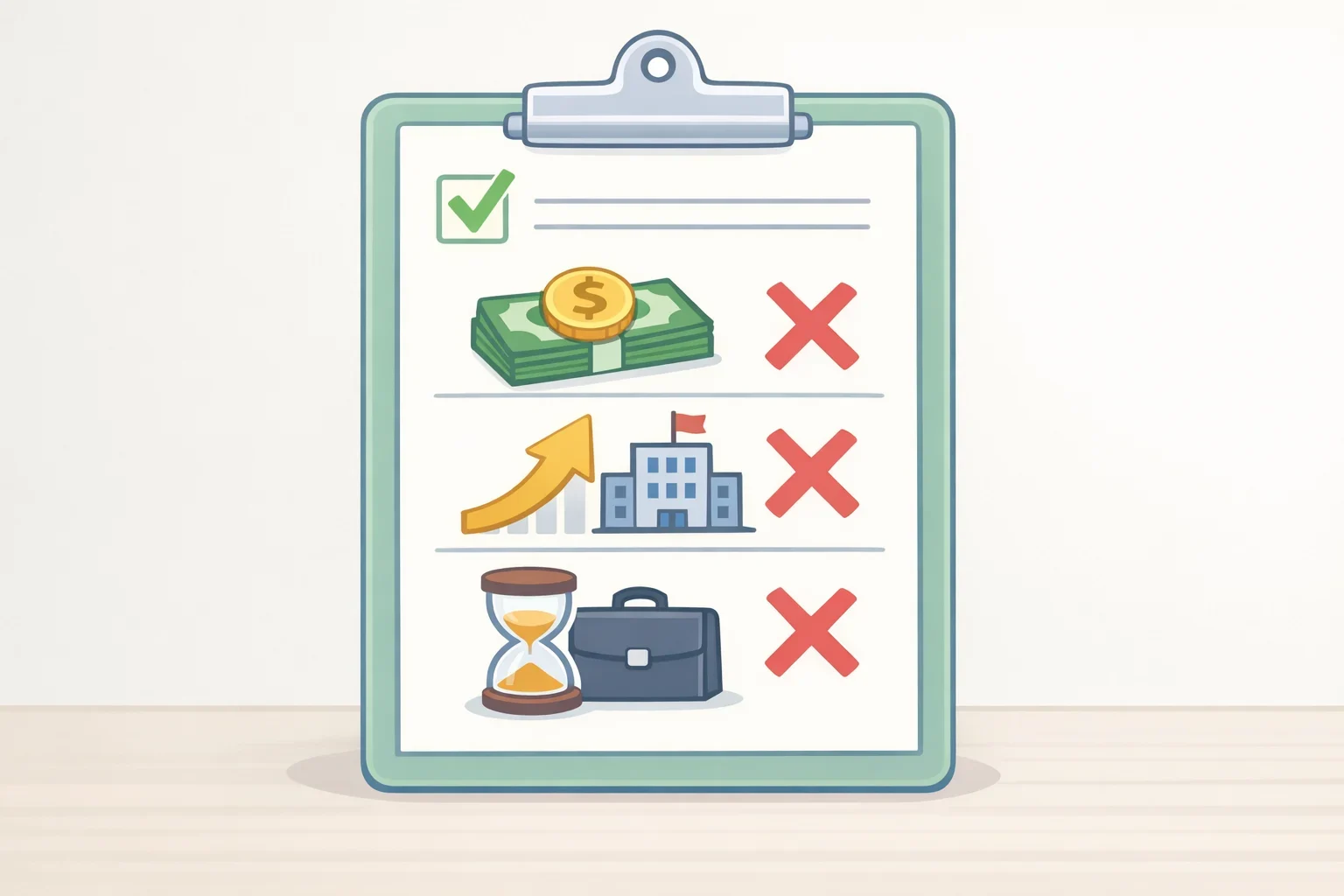
The study does not tell workers how to build goal reengagement. It does not show whether this capacity can be trained, and it does not establish whether people who score high on it end up with better jobs, better pay, or better long-term outcomes. What it does show is narrower and still worth attention: when people interact with AI, those with low goal reengagement capacities perceive more threat and feel less career optimism, while those with high capacities show the opposite pattern (Journal of Vocational Behavior, July 2025).
That makes the result useful for interpreting the mood shift many workers are feeling. It also keeps the claim in proportion. The study supports a link between mindset and how AI is experienced. It does not prove that mindset alone will make anyone safe in a turbulent labor market. That distinction gets blurred all the time, usually by people selling optimism as a substitute for evidence.
Still, the practical implication is not hard to see. If AI is changing which parts of a job matter, then a worker who can update the goal is less likely to experience the change as a personal ambush. The exact shape of that update will vary by role, and the paper does not map those differences. It simply shows that goal reengagement is doing real work in the background.
Career optimism is not the whole story
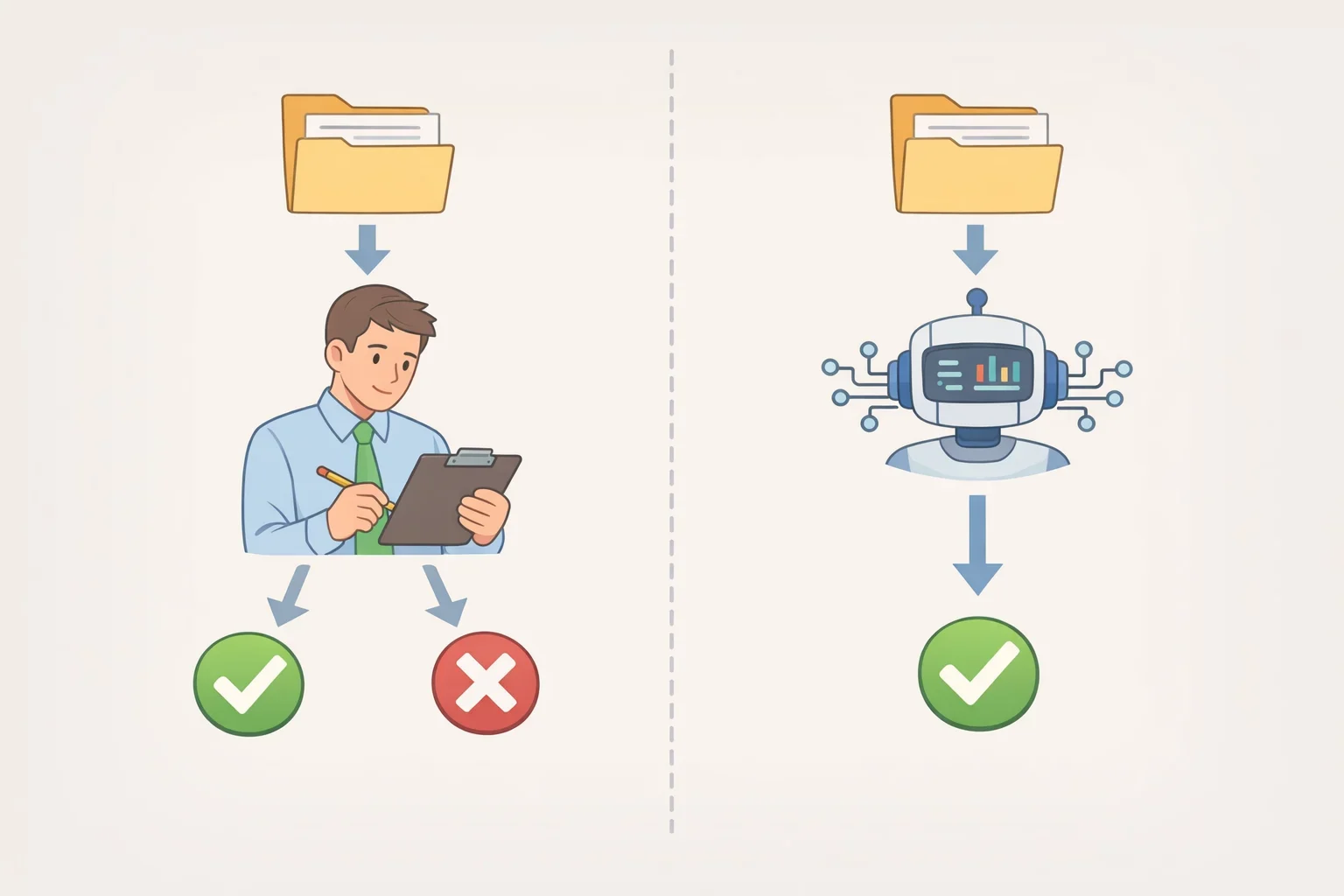
There is a reason this finding should not be read as a full account of adaptation. A June 2025 paper in Ethics and Information Technology argues that judging automation only through employment or career optimism misses another kind of harm. Workers can keep their jobs, feel reasonably upbeat, and still lose something central: the ability to exercise independent professional judgment.
The paper calls that epistemic agency, and the point is straightforward enough. If a radiologist is expected to accept an AI diagnosis without meaningful review, or a loan officer must defer to an algorithm they cannot challenge, the worker may remain employed while becoming less of an expert in any serious sense (Ethics and Information Technology, June 2025). The job is still there. The judgment is what erodes.
That is where the easy version of the “high agency” story gets messy. Goal reengagement is plainly valuable if the world of work is shifting underfoot. But adapting to AI at work should not mean treating every system output as a command. The better long-term position is not blind flexibility. It is the ability to revise what one is aiming for while still knowing when to say no.
The real tension inside the high agency story
This is the part that deserves more attention than it usually gets. Career optimism can rise even as professional autonomy falls. Those are not the same thing, and they should not be smoothed together into one cheerful narrative.
The vocational behavior study captures one side of the problem well. It shows that goal reengagement capacities shape how people feel when they encounter AI, through perceived threat (Journal of Vocational Behavior, July 2025). The ethics paper captures the other. It warns that workers can be nudged into obedience by systems that gradually narrow their discretion (Ethics and Information Technology, June 2025). Put together, they suggest a more uncomfortable conclusion: the workers most likely to say they are coping may not be the ones with the most room to think for themselves.
That does not make the research contradictory. It makes it more useful. A worker can need both capacities at once. One is psychological, the ability to release an old goal. The other is professional, the ability to defend judgment when a tool is overreaching. AI is testing both.
What the research still cannot tell us
For all its clarity, the evidence leaves several large questions open. It does not show whether goal reengagement can be taught. It does not tell us whether the finding holds equally across industries, seniority levels, or roles with very different exposure to AI. And it does not answer the more practical question people usually mean when they ask whether someone is “doing well” in the AI era: are they actually landing in a better position, or just feeling better while the ground shifts underneath them?
That matters because the temptation is to turn this into a workplace self-help story. Don’t do that. The study gives a specific psychological mechanism, not a universal fix. It says that when AI enters the picture, people who can move on from a blocked goal tend to feel less threatened and more optimistic about their careers (Journal of Vocational Behavior, July 2025). It does not say they should stop asking whether the system deserves their trust, or whether the job is being redesigned in ways that still leave room for expertise.
That is where the ethics paper earns its keep. The real question is not only whether workers can adapt. It is whether they can adapt without becoming smaller inside the work. A company can produce enthusiastic employees and still strip out the room they need to think. That would be an odd definition of progress, though not an unfamiliar one.
What to take from this
The research on goal reengagement offers a credible answer to a question that keeps coming up in AI conversations: why do some workers react to the same technology with curiosity, while others react with dread? The answer appears to run through perceived threat and the ability to release an outgrown goal (Journal of Vocational Behavior, July 2025). For workers thriving in the AI era, that is a useful piece of the puzzle.
But it is only one piece. Career optimism is not the same as professional freedom, and a worker who feels adaptable is not automatically well protected. The more durable lesson from the two papers is that adaptation has to be judged on two fronts at once: whether people can redirect their ambitions, and whether they still have the authority to use their own judgment (Ethics and Information Technology, June 2025).
That is a more demanding standard than “high agency” usually implies. It is also the one worth keeping.