
- Physician-Scientist Career Pathway: Why It Needs Design
- Why the physician-scientist career pathway stayed fragile for so long
- What federal programs do right, and where the pipeline still leaks
- What formalizing the physician-scientist career pathway would require
- The money problem is broader than NIH
- Culture is the part institutions like to leave vague
- What happens if institutions treat this as a design problem
Physician-Scientist Career Pathway: Why It Needs Design
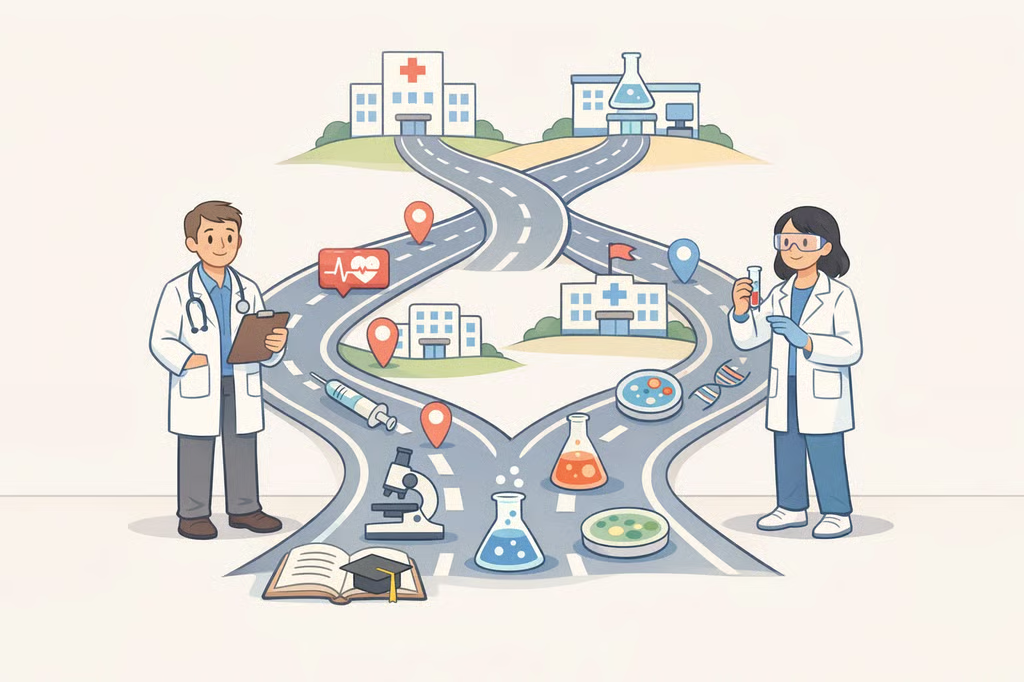
For decades, becoming a physician-scientist meant holding two demanding careers at once, clinical medicine and biomedical research, and making the pairing work by force of personality. That model is starting to crack. A June 2026 workshop report in JCI Insight says the field has long run on “individual persistence and improvisation,” without a clearly structured path to support it, and argues that approach no longer matches the complexity of modern training or the pressure on research funding.
The warning signs are not subtle. The National Academy of Medicine reported in April 2026 that nearly half of physician-scientists consider leaving research early because of burnout, funding instability, and the strain of balancing clinical and research demands. That is a workforce problem, not a motivational one.
This physician-scientist career pathway has reached a point where improvisation is the riskier choice. The real question now is what a deliberate structure would look like, and whether enough institutions are willing to build it.
Why the physician-scientist career pathway stayed fragile for so long
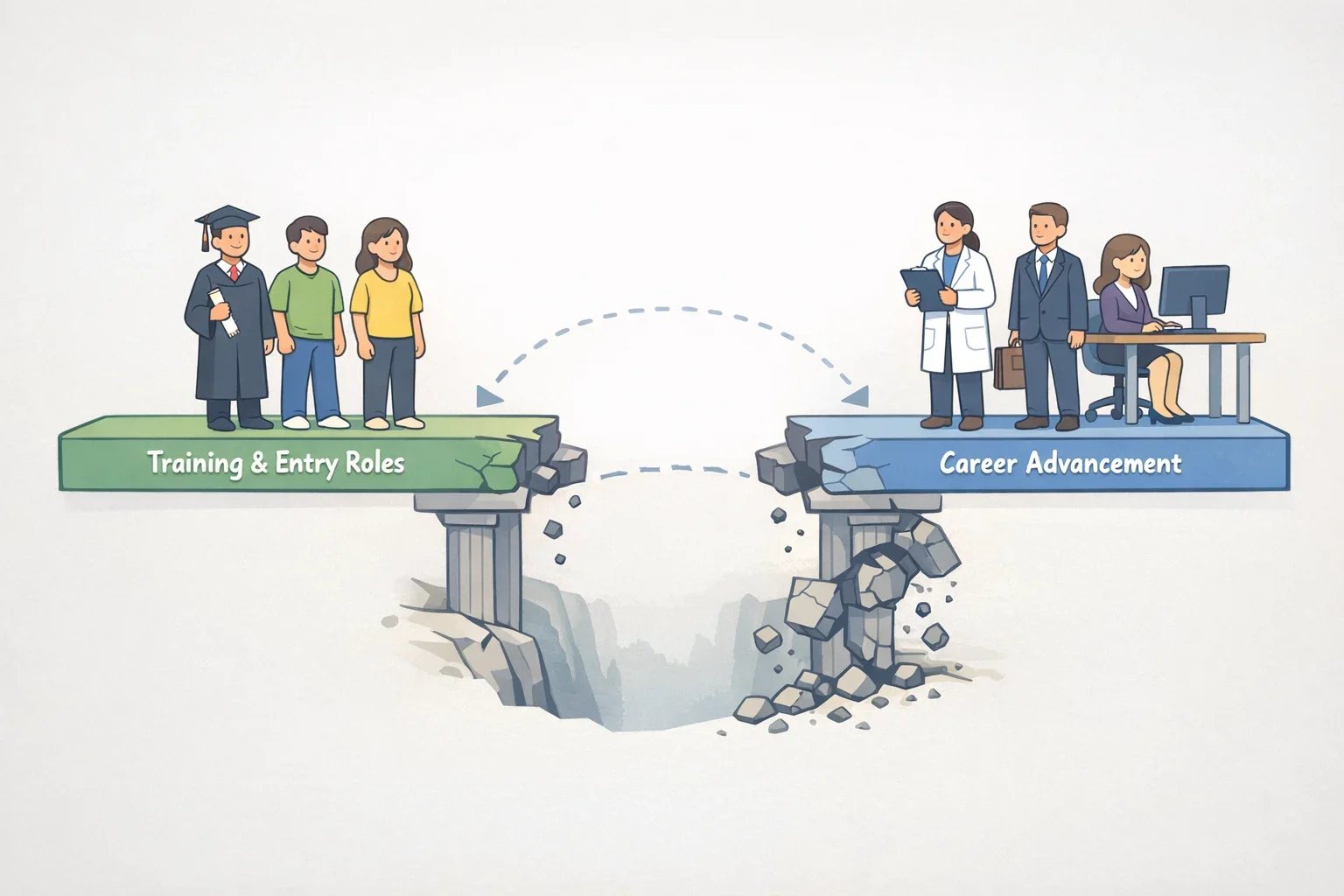
The short answer is that it was never fully designed. A April 2026 framework in JCI Insight says mounting pressures from the clinical and research sides have put this workforce in jeopardy because there is no dedicated vocational structure or business model behind it. The career exists. The support system around it is still catching up.
That missing architecture shows up in the way the field talks about itself. The 2025 ASCI/AAIM/BWF Physician-Scientist Pathways Workshop brought together 106 stakeholders from more than 50 institutions, spanning residents, faculty, deans, and CEOs, to confront a “fragmented and incompletely developed” structure, as JCI Insight reported in June 2026. When people at that many levels are in the room, the problem has clearly moved beyond a handful of unhappy trainees.
The workshop’s diagnosis was blunt: the field needs a more structured career path that aligns institutional goals, resources, incentives, and expectations with those of physician-scientists across the career span. That is a long way from the old model, which mostly assumed that anyone determined enough would simply find a way through. Determination matters. It is not a business model.
What federal programs do right, and where the pipeline still leaks
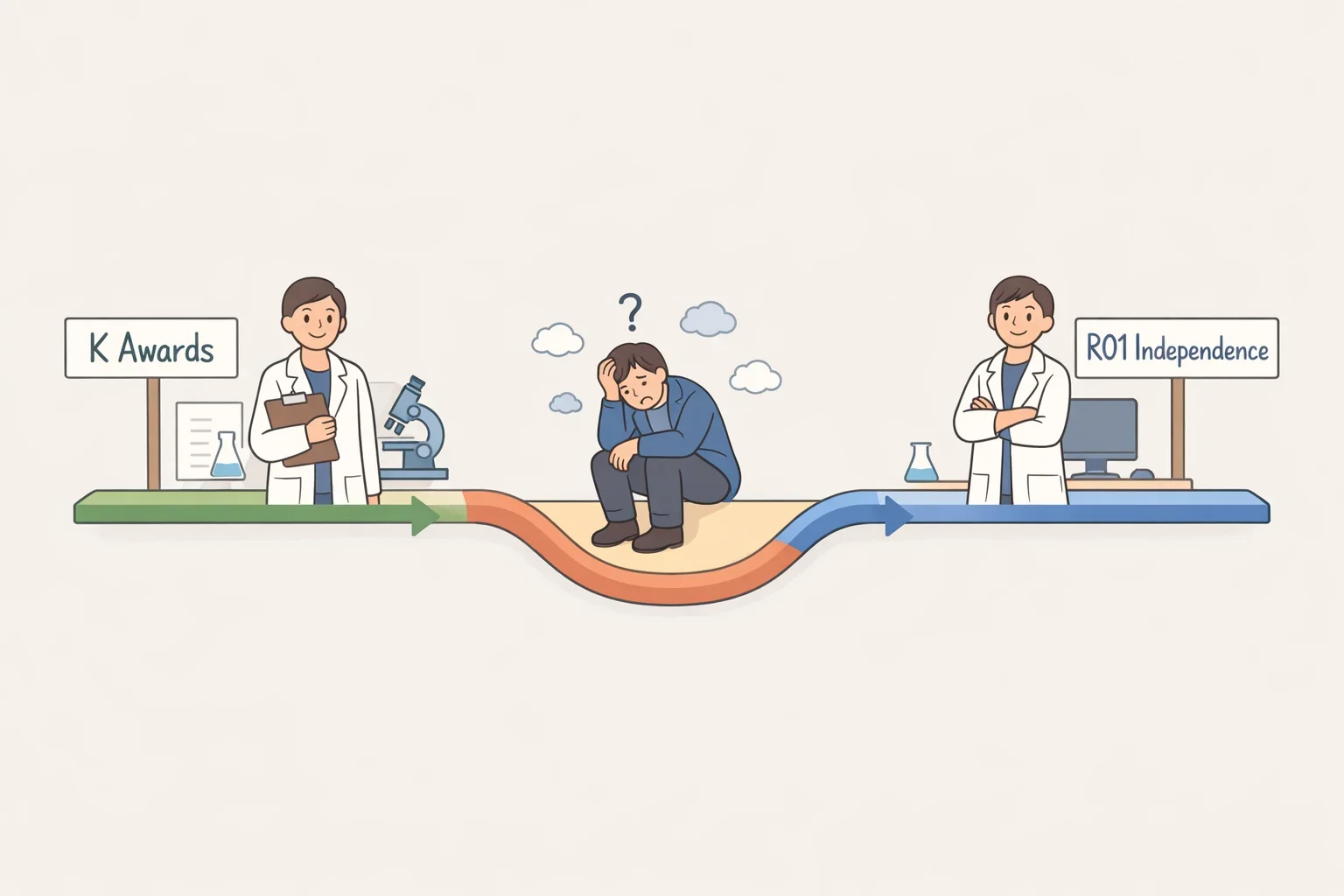
The federal programs that support physician-scientist training have real evidence behind them. JCI Insight reported in June 2026 that the NIGMS-supported Medical Scientist Training Program retains about 65% of participants in academic careers, a stronger rate than aggregate postdoctoral T32 programs. NHLBI K awardees from FY10 to FY15 also produced solid downstream results, with 77% applying for R01 grants and 50% receiving them.
Program design matters just as much as program size. When the NCI aligned salary support with committed research effort up to the federal cap, K08 applications tripled between FY17 and FY24, according to the same JCI Insight report. The R37 MERIT model, which gives early-stage investigators two additional years beyond a typical five-year R01, was associated with a nearly 40% increase in successful second R01 awards.
The NIGMS R35 MIRA program points in the same direction. By extending R01-equivalent support from four to five years and giving investigators more freedom in how they pursue their aims, it is associated with a lower age at first independent award by one to two years and a nearly 80% R01 renewal rate, JCI Insight reported in June 2026. That is not a small effect. Time, in this career, is a form of currency.
But the pipeline is not just about what helps people succeed. It is also about where they are losing confidence. A national survey of 1,904 NIH K award recipients, published in an April 2026 JAMA-network indexed study, found that 96% said federal policy changes had hurt the stability of their research careers. Seventy percent reported feeling less likely to keep conducting research than they had a year earlier.
The sharpest concern sits at the handoff to independence. Among respondents who had not yet applied for an R01, 39% said they were now less likely to do so, the same survey study found. Postdoctoral researchers were more likely than associate professors to report being much less likely to stay in science, and respondents identifying as Black, Hispanic, disabled, or American Indian/Alaska Native were more likely to report significant funding disruptions. The pathway is not failing evenly.
What formalizing the physician-scientist career pathway would require
The reform proposals now on the table are less about diagnosis than design. The April 2026 JCI Insight framework lays out three interconnected pillars, academic, financial, and organizational, built on an operational definition of who counts as a physician-scientist. That sounds basic. It is also the sort of basic thing that is often missing when institutions try to support a career they have never fully named.
Without that shared definition, support becomes inconsistent. Benchmarks are hard to set, outcomes are hard to track, and expectations stay fuzzy enough to produce a lot of frustration and not much accountability. The June 2026 workshop report in JCI Insight recommends national benchmarks for compensation, research effort, and promotion, along with clearer progression milestones. That would make the career easier to navigate for individuals and harder for institutions to treat as an afterthought.
There is also a practical reason to formalize the pathway: physician-scientists do better when they are not isolated. Several schools have already created umbrella programs that bring investigative physicians together through lecture series, work-in-progress talks, named societies, and shared web resources. The workshop report argues more institutions should do the same, even on a low-cost or cost-neutral basis, because a professional community can create the critical mass that individual departments often cannot.
That is not fluff. It is infrastructure. A career built around dual identity needs visible places to belong, or it becomes easier for trainees to drift into more legible, and often safer, alternatives.
The money problem is broader than NIH
If this were only a federal funding story, the fix would be simpler, if not easy. It is not. JCI Insight reported in June 2026 that clinical revenue from academic health centers approaches half of what NIH provides annually, which makes those institutions major players in biomedical research financing. The obvious implication is that they cannot keep acting like bystanders.
That still leaves the question of what fills the gap. Philanthropy may help, but the same report says it may contribute at most 10% of what NIH has historically provided. That is useful money, not substitute money. The workshop therefore pointed to pharmaceutical and biotechnology partnerships, along with other industry-based support, as part of the mix academic medicine will need to develop.
That conversation comes with complications, and the evidence does not resolve them. Industry support can widen the resource base, but it also raises the old, and unavoidable, questions about independence and incentives. The point is not that every new funding stream is equal. The point is that federal support alone is no longer enough to hold the physician-scientist career pathway together.
Culture is the part institutions like to leave vague
The easiest thing to miss in all this is that formalizing a career path is not just about budgets and titles. The June 2026 JCI Insight report says the transformation needed is “not merely operational but also cultural.” That is doing a lot of work in one sentence.
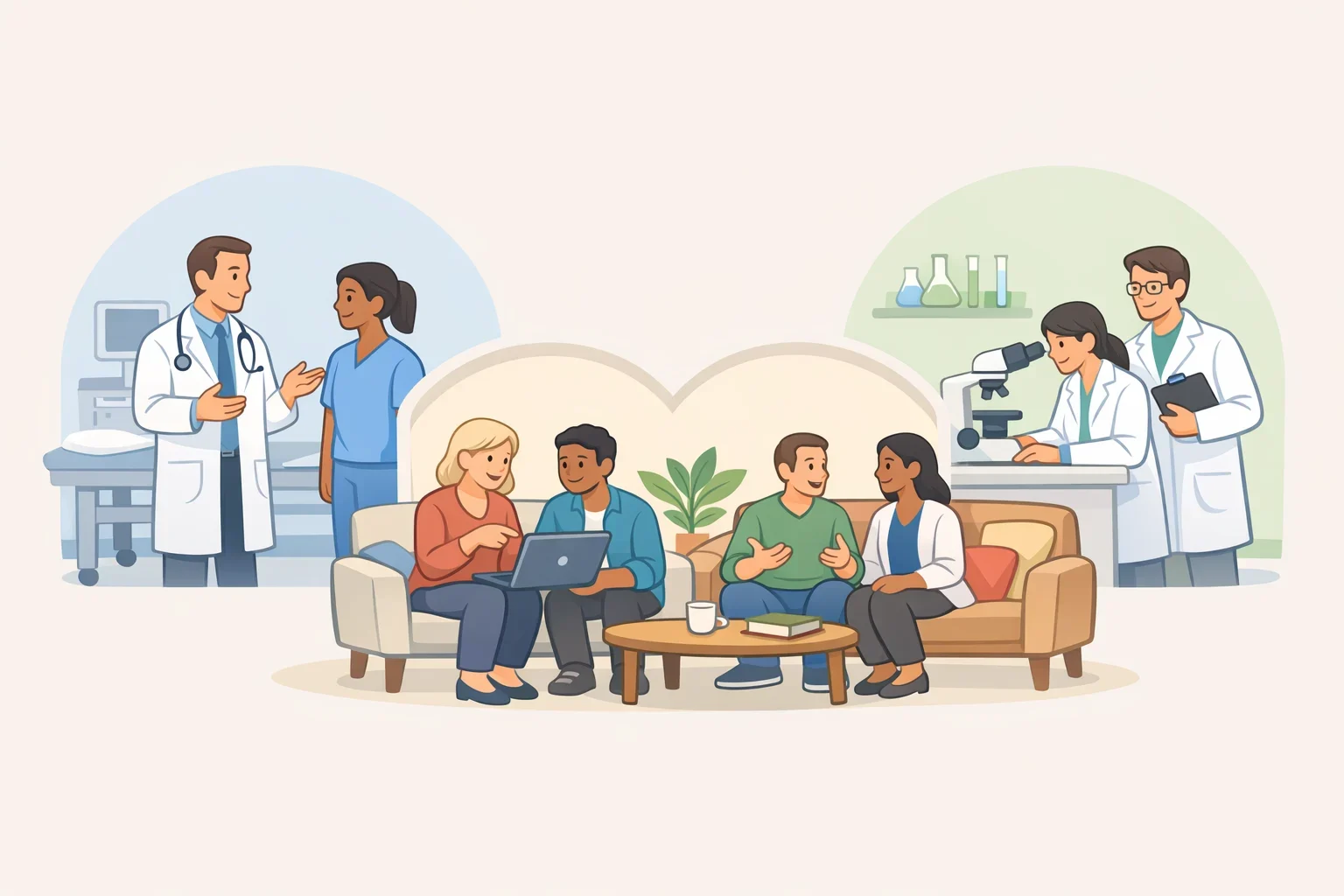
Physician-scientists have often been isolated inside their own institutions, not fully at home in either the clinical or basic science world. That leaves people trying to navigate two professional cultures at once without always being given a place in either. Structured mentorship, visible communities, and explicit institutional backing do more than signal goodwill. They tell trainees that the career is real, valued, and expected to last.
And that matters because even strong pay packages can lose out to something less measurable: the sense that another path will be steadier. Careers are not built on cash alone, however much administrators might wish they were.
What happens if institutions treat this as a design problem
The encouraging part of the evidence is that several interventions already show results. Longer funding periods, more flexible grant structures, salary support tied to research effort, and dedicated mentorship are all associated with better retention or stronger movement toward independent funding, JCI Insight reported in June 2026. The catch is that these models remain limited to a handful of NIH institutes, so they are still treated as exceptions rather than standard practice.
That is the real pivot point. The field does not need another round of generic support for “innovation” or “talent.” It needs institutions to define the career more clearly, fund it more deliberately, and stop pretending that persistence can substitute for structure. The reform agenda already has the bones of a solution, from shared benchmarks to broader funding partnerships to more visible professional communities.
If that happens, the physician-scientist workforce can stop depending on improvisation to survive. If it does not, the current leakage, especially among early-career and underrepresented investigators, will keep narrowing the pool of people able to move discoveries from the lab bench to the clinic. That is not just a personnel issue. It shapes what medicine learns next, and how quickly patients feel the difference.