
- How to Become a Bioprocessing Technician in 2026 (BioWork Path)
- Step 1: Check the bioprocessing technician requirements
- Step 2: Learn what bioprocessing technician requirements actually look like in class
- Step 3: Earn the credential and aim at the right job titles
- Step 4: Use the certificate as a starting point, not the finish line
How to Become a Bioprocessing Technician in 2026 (BioWork Path)
If you are trying to figure out how to become a bioprocessing technician, start with the part most people miss: you do not need to begin with a four-year degree. Wake Tech’s BioWork Process Technician certificate is a 136-hour, non-degree course that can lead to an entry-level process technician job and can be completed in four months or less (Wake Tech, April 2026).
That is the practical route into biomanufacturing. The certificate is designed for high school graduates who want to work in the biopharmaceutical industry, and Wake Tech says the training prepares students for entry-level jobs in bioprocess manufacturing, pharmaceutical manufacturing, and chemical manufacturing (Wake Tech, April 2026). CFCC describes the same BioWork path as a gateway into process technician work in biotechnology, pharma, and chemical manufacturing (CFCC, May 2025).
Biotility, the University of Florida biotech education initiative, adds the broader point that biotech offers many technician-level jobs that do not require a degree (Biotility, February 2025). That is the opening here. Not a shortcut, exactly. More like a narrower door than people expect.
Step 1: Check the bioprocessing technician requirements

Before signing up, make sure you meet the basics. For BioWork at Wake Tech, that means a high school diploma or GED and completion of an online information session before registration (Wake Tech, April 2026). The course is also aimed at people who are unemployed, changing careers, moving out of other manufacturing jobs, or starting fresh in a new field (Wake Tech, April 2026).
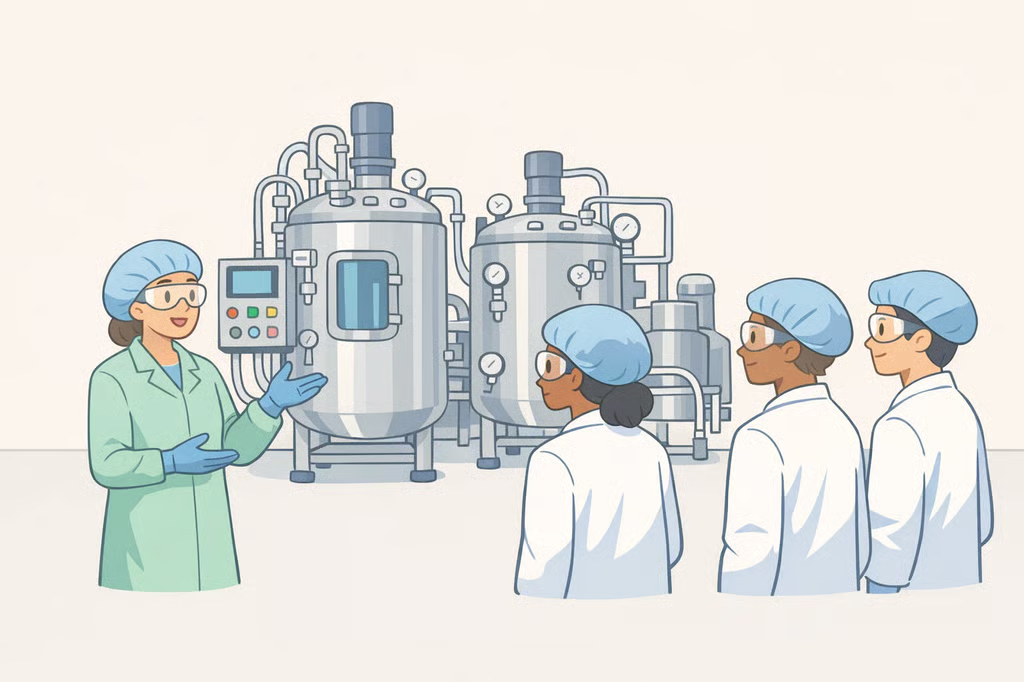
It also fits people who already have degrees in biological sciences, chemistry, or biochemistry but lack the practical knowledge of products, regulations, and manufacturing methods used in biomanufacturing or pharmaceutical manufacturing (Wake Tech, April 2026). That combination matters. The program is not built for people collecting more theory. It is built for people who need to understand the factory floor, the rules that govern it, and how to behave inside a regulated environment.
For anyone outside North Carolina, the model to look for is similar: a community college or workforce program with a short biotech or biomanufacturing certificate, a clear enrollment process, and a direct line to an industry credential. BioWork is the template because it is simple, stackable, and explicit about what it leads to.
One practical detail worth checking before you enroll: Wake Tech says the Propel Scholarship Application is currently closed and will reopen July 1 (Wake Tech, April 2026). If a local program offers a similar scholarship, apply early. Programs like this are short enough that timing matters.
Step 2: Learn what bioprocessing technician requirements actually look like in class
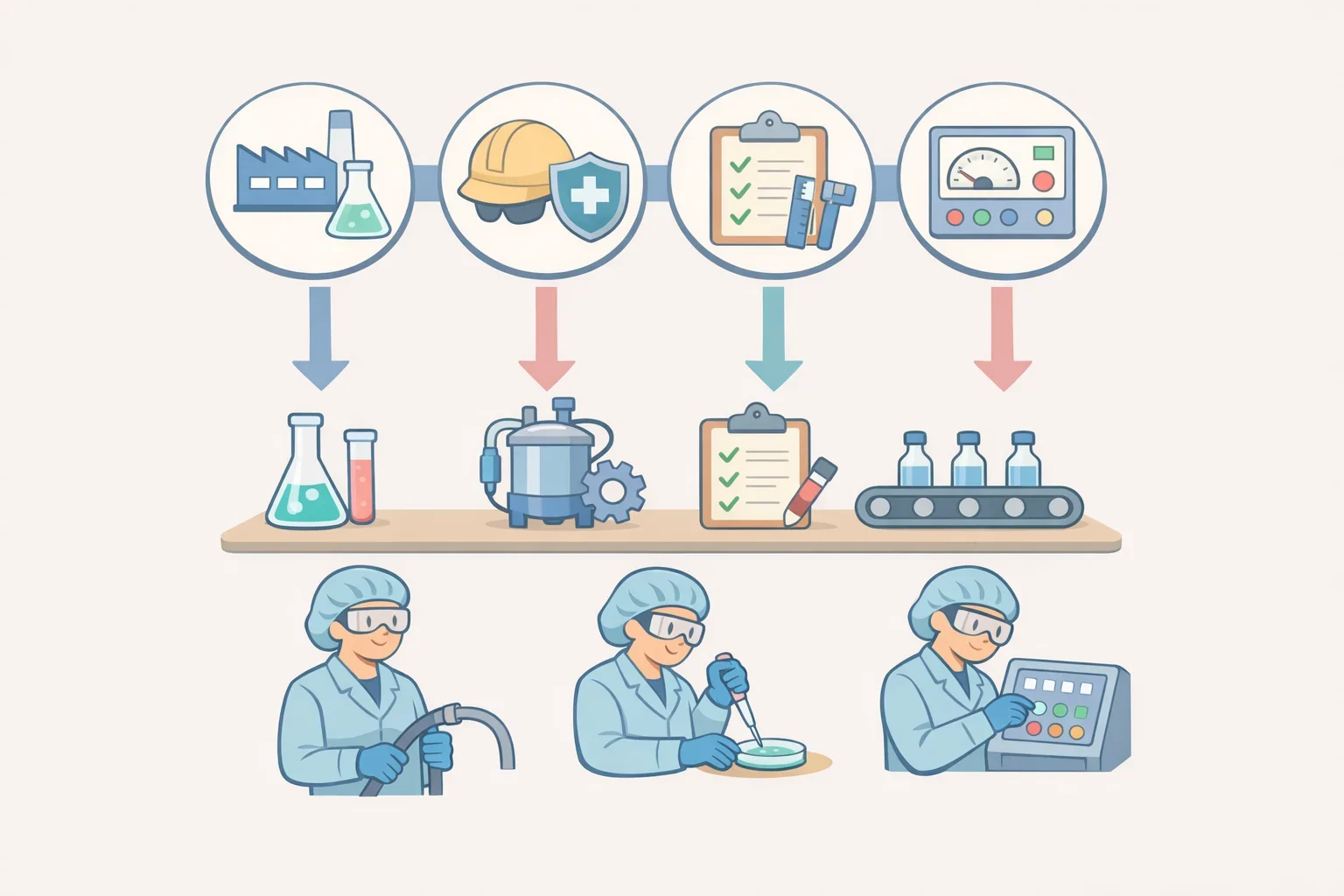
The BioWork curriculum tells you what employers want, and it is not abstract science for its own sake. Unit 1 covers pharmaceutical quality and cGMP, including the quality methods and standards used in biomanufacturing and how the federal government regulates and enforces them (Wake Tech, April 2026). That is the language of compliance, not a lab notebook.
Unit 2 covers working safely, with hazards, risks, and the role of industry practices, education, and agencies such as OSHA in reducing them (Wake Tech, April 2026). Unit 3 moves into measuring process parameters, including length, mass, volume, pressure, and conversions between metric and English units (Wake Tech, April 2026). That mix is a clue. A technician spends time reading, measuring, checking, and recording, then doing it again without making a fuss.
From there, the course gets more operational. Unit 4 introduces chemical processes in biomanufacturing, including chemical safety, chemical families, reactions, and mixtures and solutions (Wake Tech, April 2026). Unit 5 covers equipment and utilities, with tanks, piping systems, pumps, valves, seals, gases, water, steam, heating and cooling, hydraulics, electricity, and waste treatment (Wake Tech, April 2026). Then Unit 6 focuses on controlling the process, including unit operations, separation methods, process control parameters, instrumentation, and manual and automatic control methods (Wake Tech, April 2026).
That is the real shape of the work. A bioprocessing technician career path is built around consistency, documentation, and controlled steps. Biotility’s broader description of bioscience work points to the same pattern, noting that careers in the field can stretch into quality control and assurance, project management, documentation, automation, and regulatory work (Biotility, February 2025).
Two more units round out the picture. Unit 7 covers facilities and the manufacturing environment, including facility design, regulatory requirements, monitoring, maintenance, and contamination control (Wake Tech, April 2026). Unit 8 covers biomanufacturing production, with common steps across product types and special production steps used in certain categories (Wake Tech, April 2026).
There is also a line in the syllabus that makes the pace clear. Students must score 80% on each unit exam to stay in the course, and they are allowed one retest of each exam to reach that score (Wake Tech, April 2026). Attendance is not casual either. Wake Tech lists 80% attendance in one course listing and 100% attendance in another section with lab or virtual replacements for onsite lab exercises (Wake Tech, April 2026). In plain English, this is not a course to drift through.
Step 3: Earn the credential and aim at the right job titles
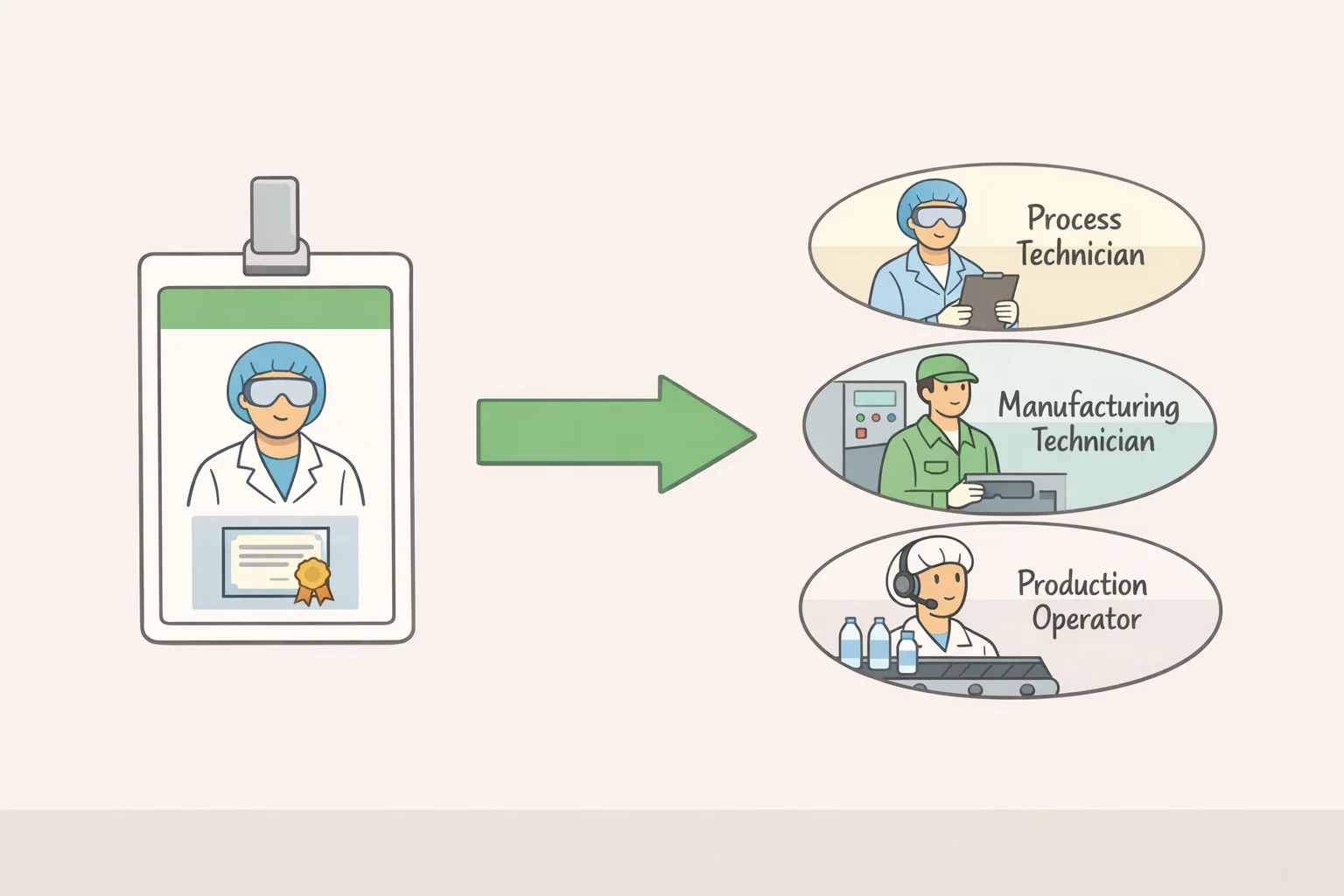
When you finish BioWork, Wake Tech says graduates are certified by NC BioNetwork as a BioWork Process Technician and qualify to sit for the Partnership for Biotechnology Workforce Training Process Technician Examination (Wake Tech, April 2026; CFCC, May 2025). CFCC says successful students are certified the same way (CFCC, May 2025). That credential is the point of the program. It tells employers the candidate has been trained for entry-level work, not just exposed to the vocabulary.
The jobs to target are concrete. Wake Tech lists bioprocess technician, manufacturing process technician, and operation specialist as accessible roles (Wake Tech, April 2026). Raritan Valley Community College’s aseptic biomanufacturing program also points to adjacent roles such as aseptic production associate, cell processing specialist, and manufacturing technician (RVCC, April 2025). That is useful because job titles vary a lot by company, but the work often overlaps.
Biotility makes the case for comparable entry-level credentials such as BACE, saying the credential improves a job candidate’s viability by showing foundational knowledge and skills for the bioscience industry (Biotility, February 2025). Think of that as a useful parallel, not a substitute for the BioWork path. It shows the general hiring logic: employers want evidence that someone can work in a controlled environment and follow a process without improvising.
Wake Tech also says some BioWork students can get an approved resume from N.C. BioNetwork or Biotechnology Career Navigator before applying for jobs (Wake Tech, April 2026). Use it. A clean resume matters more than a heroic one in this kind of hiring. The aim is to show reliability, not flair.
Wake Tech describes BioWork graduates as sought after in the biopharmaceutical industry in Wake County and surrounding counties (Wake Tech, April 2026). CFCC uses the phrase high-demand for process technician jobs (CFCC, May 2025). Those are the programs’ words, and they should be read that way, as directional signals rather than a guarantee. Check live job postings in your area before you enroll.
Step 4: Use the certificate as a starting point, not the finish line

The best part of this path is that it does not dead-end. Wake Tech says BioWork credits can be applied toward an associate degree in Biotechnology, and that BioWork feeds into two Wake Tech degree programs (Wake Tech, April 2026; Wake Tech, April 2026). In practical terms, that means someone can get hired, gain experience, and keep building education without starting over.
Wake Tech describes that progression as the intended one, not some clever workaround (Wake Tech, April 2026). That matters because a lot of career advice treats certificates like endpoints. This one is more like a first rung. It is meant to move you into work, then into further study if you want it.
Raritan Valley’s aseptic biomanufacturing program shows how wide the field can stretch, with training tied to GMP, aseptic processing, biomanufacturing techniques, media preparation, filtration, filling operations, and cell therapy manufacturing techniques (RVCC, April 2025). That is a reminder that bioprocessing is not one fixed job. It branches into cleanroom work, sterile production, cell processing, and other specialized roles.
What is missing from the available research is the part people usually ask about next: salary data, promotion timelines, and the route from technician into QA/QC, validation, or senior technical roles. Those details should come from current BLS or regional wage data before anyone publishes a local career guide. The broad outline is still clear enough, though. Entry-level bioprocessing work is a real entry point, and it opens into more than one lane.
If you are comparing programs this week, ask three questions: how long does the course take, what credential does it lead to, and does it stack into a degree later. If the answers are murky, keep looking. The good programs make the path plain.