
Gen Z Electricians AI Data Centers Wage Math Explained
Mike Rowe says three electricians under 30 he met in Plano, Texas, were making between $240,000 and $280,000 a year at a data center, with as much overtime as they wanted, no debt and three poaching attempts apiece in the prior 18 months, Yahoo Finance reported this week. The number grabbed attention for obvious reasons. What makes it matter is less the headline figure than the market behind it, because AI data centers are pulling electricians into a bidding war.
Rowe made the point on the Power Players with Brian Sozzi podcast, saying the story was really about the stigma that still pushes young people away from the trades, even when the pay is staring them in the face. That argument is cultural. The economics are harder to ignore.
Why Gen Z electricians are being pulled into AI data centers
Turner & Townsend said this week that AI demand is putting pressure on the global construction market, and that data centers have become “the most constrained sector globally” for contractor capacity, according to a DCD summary of the report. The same analysis said 71% of the 112 markets it covered were seeing labor shortages, while the firm warned of a “severe shortfall” in the skilled labor needed to build them.
That shortage shows up fast in job postings. Deloitte said in March that between 2023 and 2025, data center postings rose 64%, far ahead of the 4% increase for comparable roles across the broader economy, and postings for electrical technicians climbed more than 180%, the biggest jump in the analysis. For electricians, that is not a gentle uptick. It is a full-bodied panic, dressed up as recruiting.
The pay follows the pressure. Bisnow reported in November that some union electricians on data center projects are bringing in $130 an hour before overtime, compared with a national average of about $30 an hour for electricians overall. AlphaHire’s Workforce Intelligence Lab said in June that offers for medium-voltage and switchgear electricians were running 40% to 80% above BLS state means in mission-critical corridors, and that Texas data center postings were advertising $32 to $61+ an hour.
And when money alone is not enough, employers start improvising. Bisnow reported in November that workers are being offered bonuses for showing up, for overtime and for the number of cables laid. It also said companies have flown trainers to jobsites on private jets so they can get new electricians up to speed faster, and that some remote projects are using man camps with mess halls, RV hookups, laundry and dorms to house crews.
The shortage is structural, not cyclical
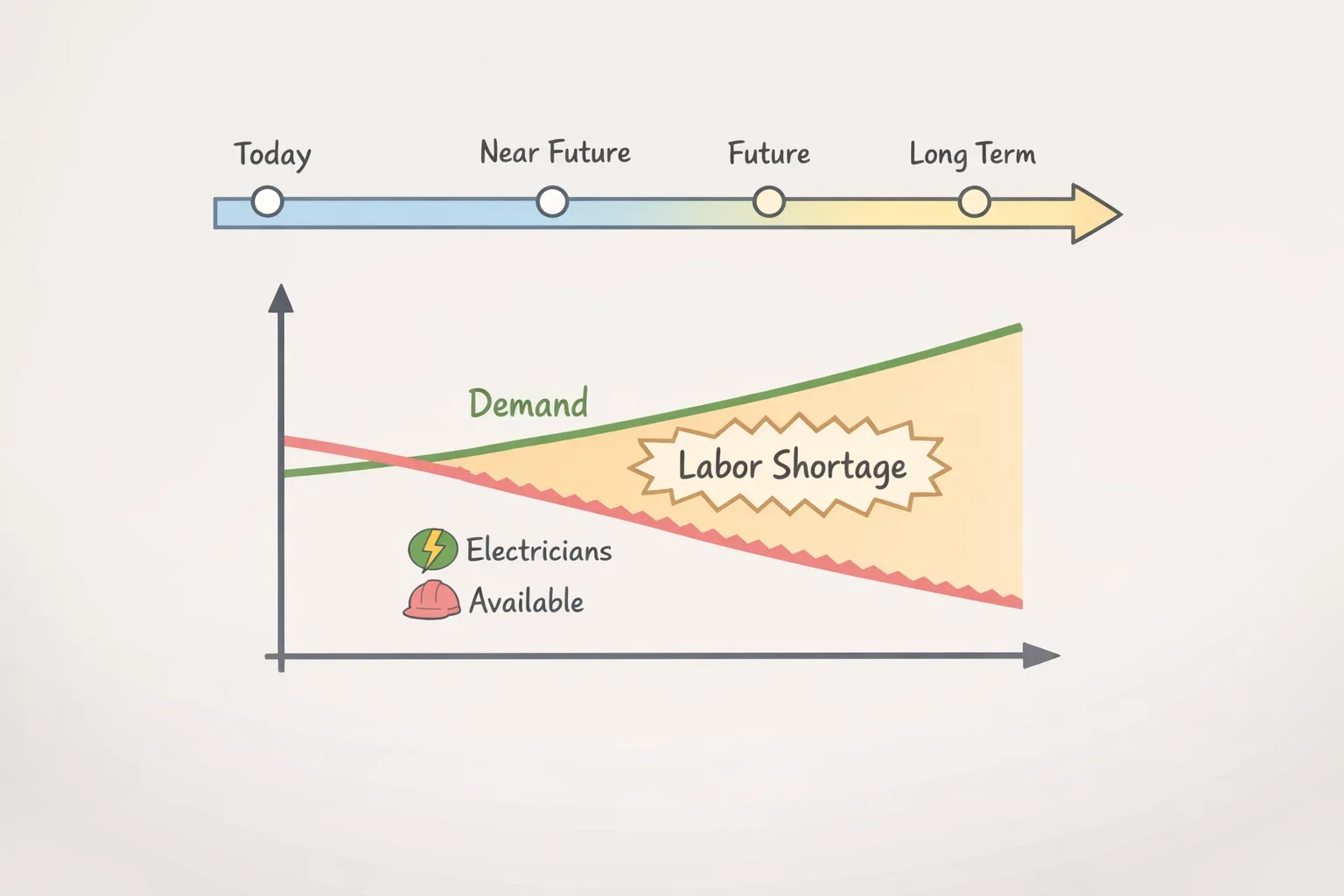
The deeper problem is that this is not a one-off scramble. Bisnow reported in November that the Bureau of Labor Statistics predicts a shortage of roughly 81,000-plus electricians nationally every year through 2030, and that Microsoft President Brad Smith said the country may need half a million new electricians over the next decade. Those are two different estimates, from two different angles, but they point in the same direction: the pipeline is thin.
The money pouring into data centers explains why the pressure keeps building. McKinsey said in April that the sector could require $6.7 trillion in global capital investment by 2030, with $5.2 trillion tied to AI processing capacity. Of that, roughly $1.3 trillion would go to power generation, transmission, cooling and electrical equipment, the unglamorous machinery electricians actually build, wire and keep alive.
Turner & Townsend’s “two-speed” market language helps explain why the bidding has become so aggressive. The firm said this week that traditional construction sectors are dealing with geopolitical tensions, economic challenges and supply constraints, while AI-driven sectors are drawing more investment. Bisnow reported that in a Turner & Townsend survey of 300 executives, half said bids for data center projects had risen between 6% and 15% over the prior year, while 21% said bids were up more than 15%.
The talent fight is not confined to construction sites, either. Deloitte said power companies and data centers are now competing for the same core workforce, with more than one-third of new postings targeting the same set of workers. The study also said those overlapping roles make up more than 40% of the existing workforce in both sectors, which is why a data center electrician can be just as attractive to a utility recruiter as to a contractor.
What Rowe’s point proves, and what it doesn’t

Rowe’s pitch is that the trades have spent years fighting a branding problem. Parents and teenagers were told, politely and repeatedly, that a four-year degree was the only respectable route. He is arguing that the market has moved on, and that the old prejudice is now costing people real money.
The Plano example is strong evidence of that. It is also a little too neat if taken literally. The $240,000 to $280,000 figure almost certainly reflects all-in compensation, not a flat wage, with base hourly pay padded by sustained overtime, bonuses and per diem. AlphaHire said Georgia projects have reportedly added $115 a day in per diem on top of hourly rates, which is the sort of detail that can turn a good year into an eye-watering one.
That matters because the opportunity is real, but not evenly distributed. The research does not show that every Gen Z electrician can walk into an AI data center and land six figures plus. The strongest pay appears concentrated among workers with specific specialties, union ties, geographic flexibility and the willingness to travel or live near remote sites.
There is also the part that does not fit cleanly into a podcast clip. Data center work can mean 60-hour weeks, night shifts, hard physical labor and long stretches away from home. If the AI buildout slows, the market will not stay this hot forever. No labor boom lasts forever just because the group chat liked it.
Why the wage premium could stick
Even so, the broader signal is hard to miss. Deloitte said 63% of data center executives named skilled labor shortage as their No. 1 talent obstacle in its 2025 AI Infrastructure Survey, and it projected data center power demand will jump from 47 gigawatts in 2025 to more than 176 gigawatts by 2035. That is not a temporary spike. It is a scale problem.
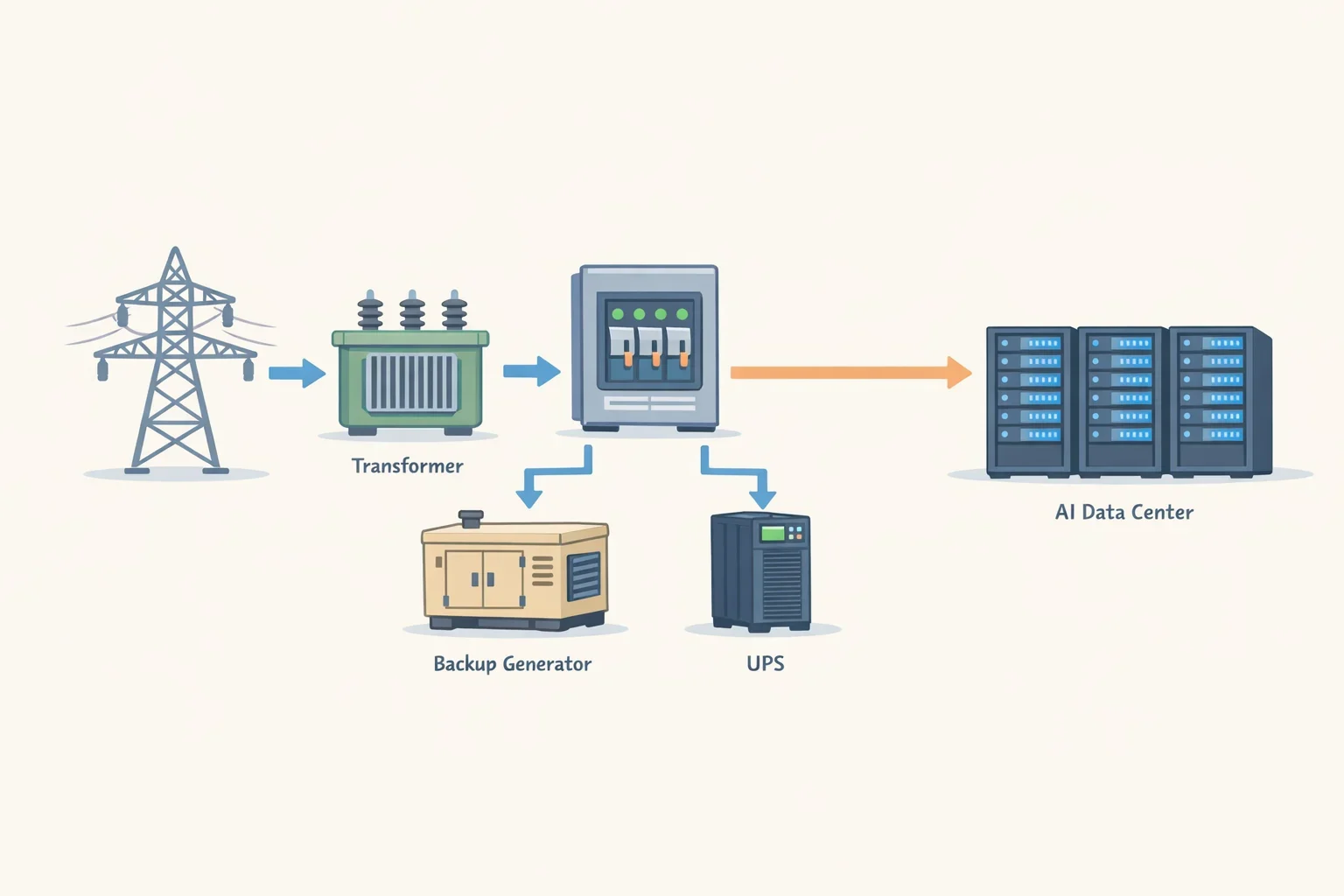
The physical layer of AI is where the work is. Conduit, switchgear, transformers, generators and power distribution systems all need skilled hands, and those hands are in short supply. Software may get the keynote speeches. Electricians get the buildout.
The practical response is already visible. Apprenticeship pipelines, union programs and employer-sponsored academies can widen the funnel, but none of them can produce a journeyman overnight. Until then, AI data center electrician jobs will keep paying a premium, and Gen Z workers willing to learn the trade may keep finding that the old hierarchy of “good jobs” is more scrambled than their parents were told.
For now, that is the market telling the story, not a motivational poster.