
- How to Stand Out in an AI Hiring Market: 5 Steps for Visibility
- Step 1: Read the screen before you try to beat AI resume screening
- Step 2: Make your skills visible, not just claimed
- Step 3: Use a simple plan by stage
- Step 4: Get in front of a human, then act like one
- Step 5: Stop trying to look perfect and start looking legible
How to Stand Out in an AI Hiring Market: 5 Steps for Visibility
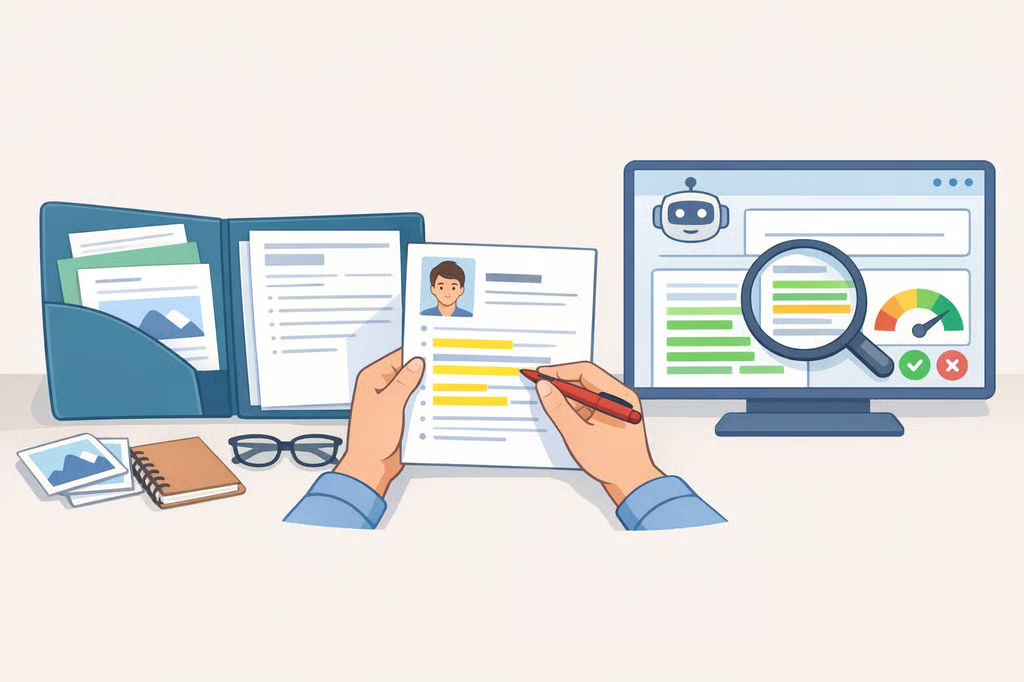
By the time a recruiter opens your resume, software has probably already sorted the pile. More than 90% of employers now use some form of automated system to filter or rank applications (World Economic Forum, March 2025), and roughly 98.4% of Fortune 500 companies have folded AI into hiring in some way (Brookings, April 2025). The volume is part of the point: Goldman Sachs received 315,126 applications for its 2024 internship, and Google got over 3 million that year (World Economic Forum, March 2025).
This guide walks through how to stand out in an AI hiring market by doing two things at once: making your application easy for screening software to read, then giving a recruiter something worth noticing. The keyword here is balance. Beat the machine enough to get a look, then give the human a reason to keep looking.
Prerequisite: This approach matters most for mid-size and large employers, where automated screening is now standard enough to shape the process from the start.
Step 1: Read the screen before you try to beat AI resume screening
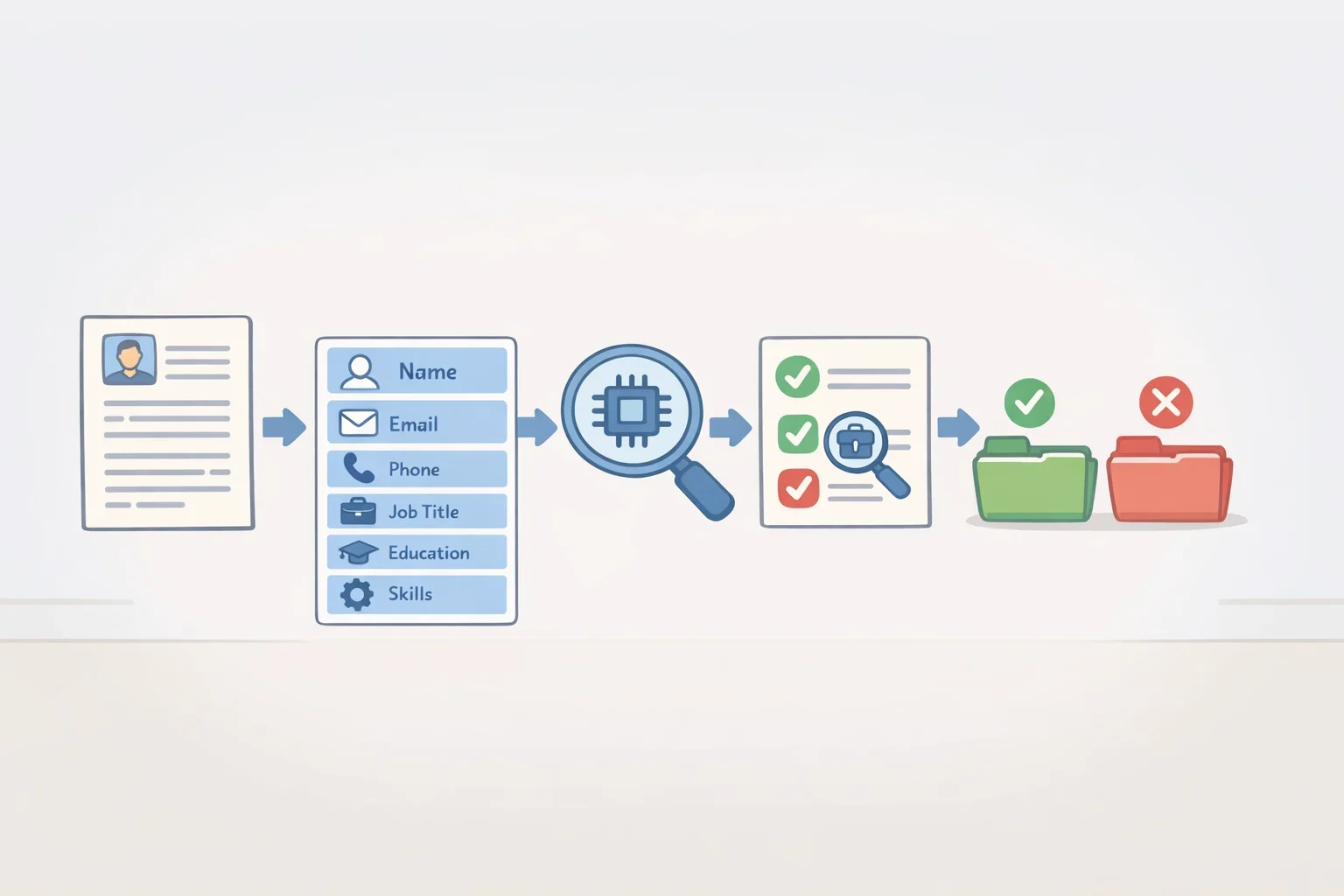
AI hiring tools are not one thing. They include resume parsers, ranking systems, candidate-matching tools, and other automated systems that help narrow a very large pile of applicants into something manageable. Large organizations handling substantial numbers of applications increasingly find those tools essential for efficiency (arXiv, May 2025).
The catch is that this is still a rough system. Brookings reported earlier this year that skills-based hiring remains aspirational, and employers still lean on familiar proxies like job titles, credentials, and formatting because a shared skills language across industries is still missing (Brookings, March 2025). The promise is better matching. The reality, for now, is a lot of text sorting.
A Brookings simulation of LLM-based resume screening found clear evidence of discrimination, with white-associated names preferred in 85.1% of cases and Black-associated names leading in just 8.6% (Brookings, April 2025). That does not mean every system behaves the same way. It does mean the screen is not neutral, and job seekers should stop pretending otherwise.
- Mirror the exact language from the job posting when it’s accurate to your background. If the ad says “project management,” use that phrase, not a softer synonym.
- Keep formatting plain and readable. Standard section headings help. Tables, text boxes, and heavy graphics can hide useful information from parsers.
- Name tools, certifications, and platforms explicitly when the role asks for them. Automation works best on clear terms, not elegant improvisation.
- Check whether the employer publishes a skills framework or competency model, then borrow the same language where it fits.
A small warning here: stuffing your resume with every phrase from the posting is not a strategy. It is clutter. Precision beats padding.
Step 2: Make your skills visible, not just claimed

The strongest way to stand out to employers using AI hiring tools is to make your work easy to verify. A resume can say almost anything. Proof tends to travel better.
Brookings notes that workers without a bachelor’s degree who were hired into roles that previously required one saw average salary gains of about 25%, or more than $12,400 a year, according to Harvard Business School research summarized there earlier this year (Brookings, March 2025). The same Brookings piece says a U.S. Chamber of Commerce report found 95% of executives and HR leaders believe nontraditional candidates perform as well as, or better than, degree holders (Brookings, March 2025). The message is simple enough: employers are open to skill-based hiring, but they still need a clear way to see the skill.
Build a resume that can be checked
- Link to work samples where the role allows it. Portfolio pages, GitHub repositories, case studies, published writing, and presentation decks all help move your experience from claimed to visible.
- Quantify results instead of listing duties. “Managed social media” tells a recruiter almost nothing. “Grew organic reach by 40% over six months by restructuring the content calendar” gives both software and people something concrete to work with.
- Put the strongest proof near the top. If the work sample or credential is buried, it may as well be in a drawer.
- Treat certifications as signals, not magic. A recognized credential can help when conventional experience is thin, but it should support the story, not replace it.
LinkedIn matters for the same reason. Brookings reported earlier this year that major job platforms, including LinkedIn, Monster, and ZipRecruiter, now rely on AI-powered algorithms to recommend candidates to employers (Brookings, March 2025). A sparse profile gives those systems little to work with. A detailed one, with specific roles, skills, and outcomes, gives them more.
Step 3: Use a simple plan by stage
Most job seekers treat the application process like one long blur. That makes it easier to miss the point. The work changes by stage.
Before you apply
Do the matching work first. Read the posting, compare it to your resume, and adjust the language so the essentials are easy to spot. If the company publishes a competency model, use it as your map.
This is also the stage where a little research pays off. Brookings says the labor market still suffers from a critical information gap, with employers struggling to assess whether candidates truly have the skills they need (Brookings, March 2025). Your job is to reduce that gap before anyone has to guess.
While you apply
Submit the cleanest version of your application, then make sure the same facts show up on your LinkedIn profile. AI-powered recommendation systems now play a role in matching candidates to jobs on major platforms (Brookings, March 2025). If your profile and resume disagree, you are making the system do extra work for no reason.
If you know someone inside the company, ask for a referral. That is not a guarantee, and it does not magically erase screening software. It does, however, put your name in front of a human earlier than a blind application usually would.
Before the interview

Assume the person across the table has not memorized your resume. Prepare to explain your strongest examples in plain language, with enough detail to show judgment. AI may have helped sort the pile, but human oversight still matters for cultural fit, communication style, and problem-solving nuance (World Economic Forum, March 2025).
That means the interview is not a repeat of the application. It is a new test.
Step 4: Get in front of a human, then act like one
This is where old-fashioned job search habits still pull their weight. A referral, a warm introduction, or a short direct message can help your application feel less anonymous. That does not bypass every automated step, and it should not be sold as a miracle cure. It simply gives your candidacy a human shape.
World Economic Forum research published in March found that candidates who went through AI-led interviews succeeded in later human interviews at a 53.12% rate, compared with 28.57% for candidates from traditional resume screening (World Economic Forum, March 2025). The point is not that algorithms are better judges of talent. It is that a first pass can surface people with enough baseline skill for a real conversation to matter.
When that conversation comes, do the boring but effective things well:
- Research the company beyond the job description. Read recent coverage, look at the interviewers’ backgrounds, and learn what the business is trying to solve.
- Prepare stories, not slogans. “I’m a strong communicator” is wallpaper. A specific example of a negotiation, conflict, or presentation is useful.
- Ask a question that shows you understood the room. Something like, “What would success look like in the first six months?” beats vague curiosity every time.
- Send a short thank-you note within 24 hours. Mention one concrete thing from the conversation. That is enough.
There is also a trust problem in the background. As of 2023, 71% of Americans opposed AI making final hiring decisions (arXiv, May 2025). Recruiters know this. Some are skeptical themselves. A candidate who shows evidence, good judgment, and actual interest tends to look better than a perfectly polished file with no pulse.
Step 5: Stop trying to look perfect and start looking legible
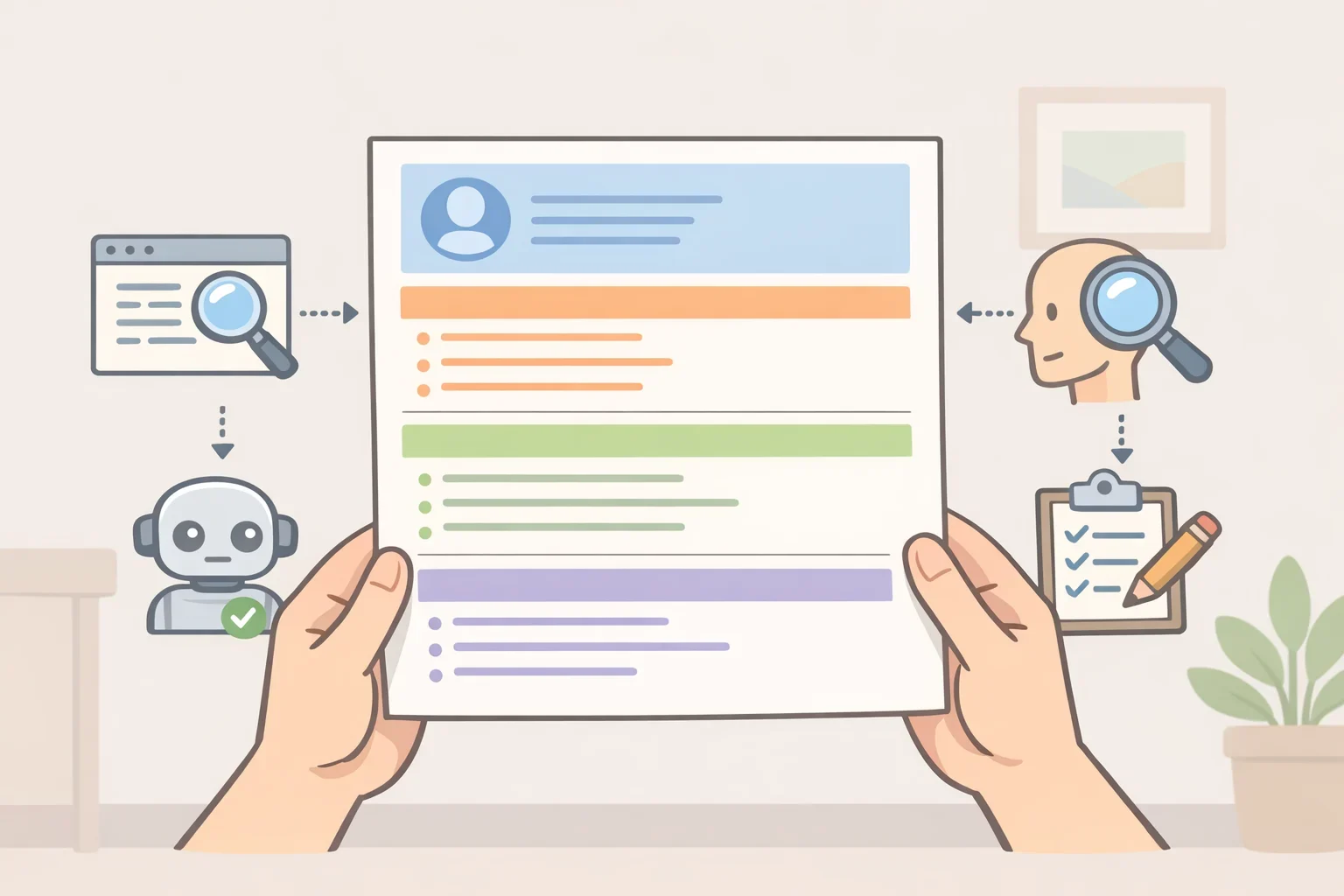
That may be the real trick in how to stand out in an AI hiring market. Not to outsmart every system. Not to decorate a resume until it sparkles. Just to be legible in a process that likes shortcuts.
Brookings argues that skills-based hiring is still unevenly implemented, even though the direction of travel is obvious (Brookings, March 2025). In the meantime, the safest path is plain enough: make your experience easy to verify, use the employer’s language where it fits, and build enough human contact to keep the application from feeling like one more file in a stack.
The machine gets a vote. It does not get a monopoly. If your resume is readable, your proof is visible, and your interviews sound like a real person talking about real work, you will already be ahead of most applicants who are still trying to win by looking busy.