
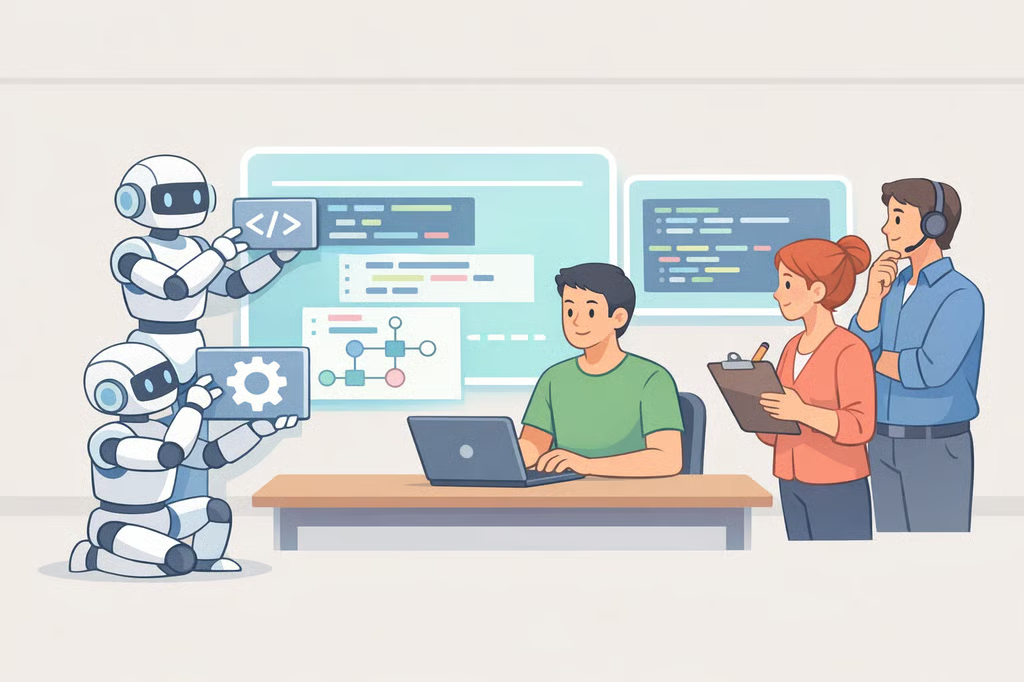
Future job archetypes in the age of AI: 5 roles
Boris Cherny thinks the title “software engineer” could start to disappear by the end of this year, replaced by something closer to “builder” as designers, product managers, and managers start shipping code of their own (Platformer, last month). That is not a throwaway line from an AI evangelist. It is the clearest description yet of how future job archetypes in the age of AI are likely to form: not as neat new job titles, but as old work broken apart and handed to more people.
Cherny’s case is blunt. He says he has not written a line of code in more than six months, and that for the kind of work he does, coding is effectively solved (Platformer, last month). He also says Claude Code has been 100% written by Claude Code for over six months, and that within eight months of launch it was responsible for about 4% of all code pushed to GitHub and had reached an annual revenue run rate of $2.5 billion by February of this year (YouTube, last month). The numbers matter, but the bigger point is structural: the scarce skill is no longer typing code. It is deciding what code should exist, supervising the machines that produce it, and catching the expensive mistakes.
Why “software engineer” is becoming a label, not a job
Cherny’s argument is less about the death of coding than about its diffusion. He compares the shift to literacy after Gutenberg, when the supply of printed material exploded and the definition of who counted as a writer widened with it (YouTube, last month). The old gatekeeper role did not vanish overnight. It just stopped being the only game in town.
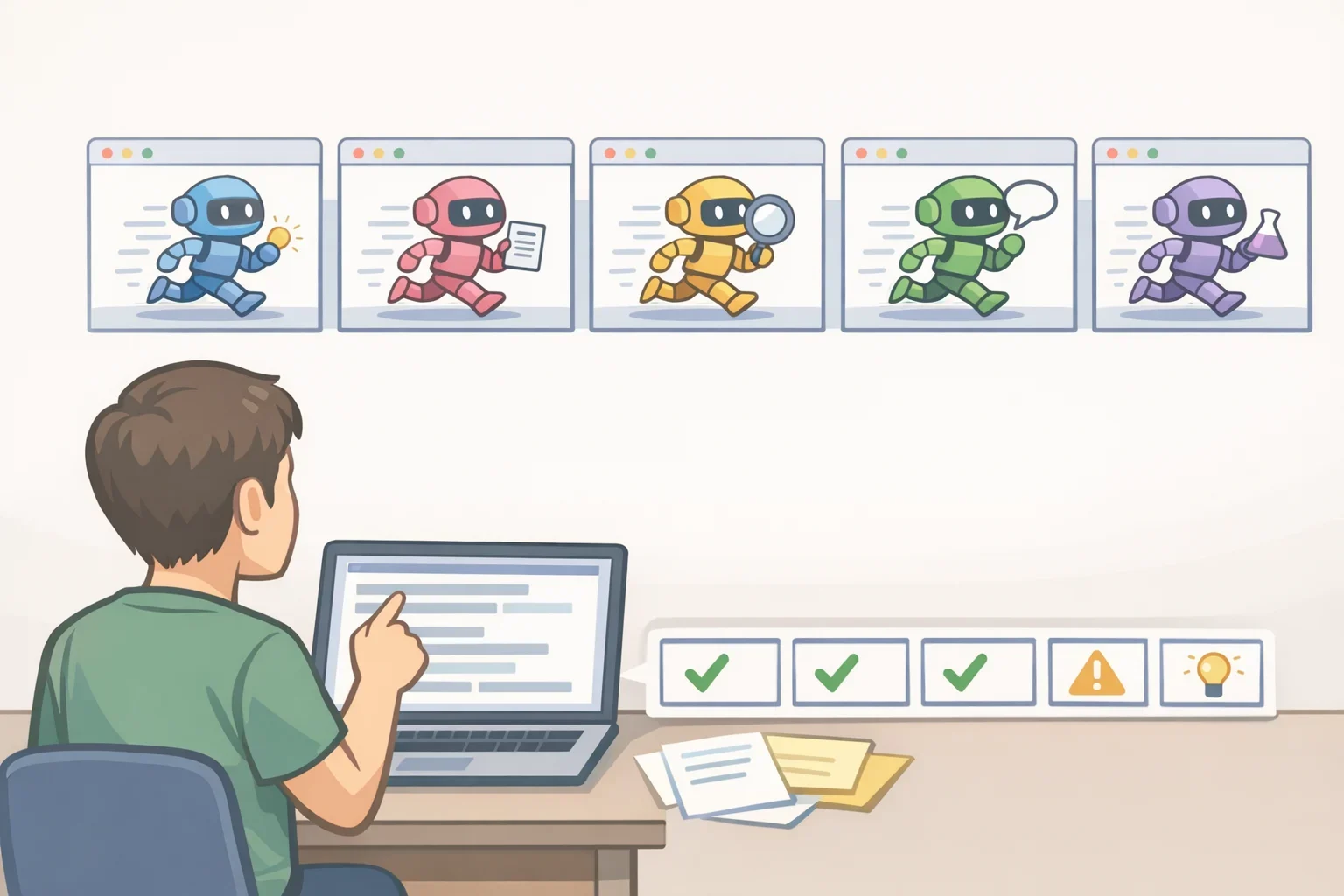
His own workflow makes that visible. He says he ships between 20 and 30 pull requests a day by running five Claude agents in parallel across five terminal tabs (YouTube, last month). That is not programming in the old sense. It is more like directing a small and extremely literal film crew.
Once that happens, the economic center of gravity moves. Syntax becomes cheaper. Judgment becomes more valuable. The work shifts from production to selection, review, and accountability, which is why the future job archetypes in the age of AI are better understood as separate functions pulled out of one collapsing job title.
The five future job archetypes in the age of AI
Cherny does not hand over a tidy five-point list. This is a synthesis of his comments and the World Economic Forum’s 2030 scenarios, which describe new occupations emerging as people direct capable machines (WEF, earlier this year). The point is not taxonomy for its own sake. It is to show where the value is moving.
1. The builder
This is Cherny’s headline archetype, and the one most likely to survive the title churn. He says the title “software engineer” will be replaced by something more like “builder,” and that there may be 100 times more people writing code or using agents to write code than there are today (YouTube, last month). The builder is economically distinct because the scarce skill is no longer implementation. It is choosing the right thing to build fast enough to matter.
That opens the door to people who were never trained as classic engineers. Cherny studied economics, dropped out at 18 to run a startup, spent time at a hedge fund, and then spent five years as a principal engineer at Meta without a computer science degree (YouTube, last month). In the old world, credentials narrowed the funnel. In the new one, they look more like one route among several.
2. The agent orchestrator
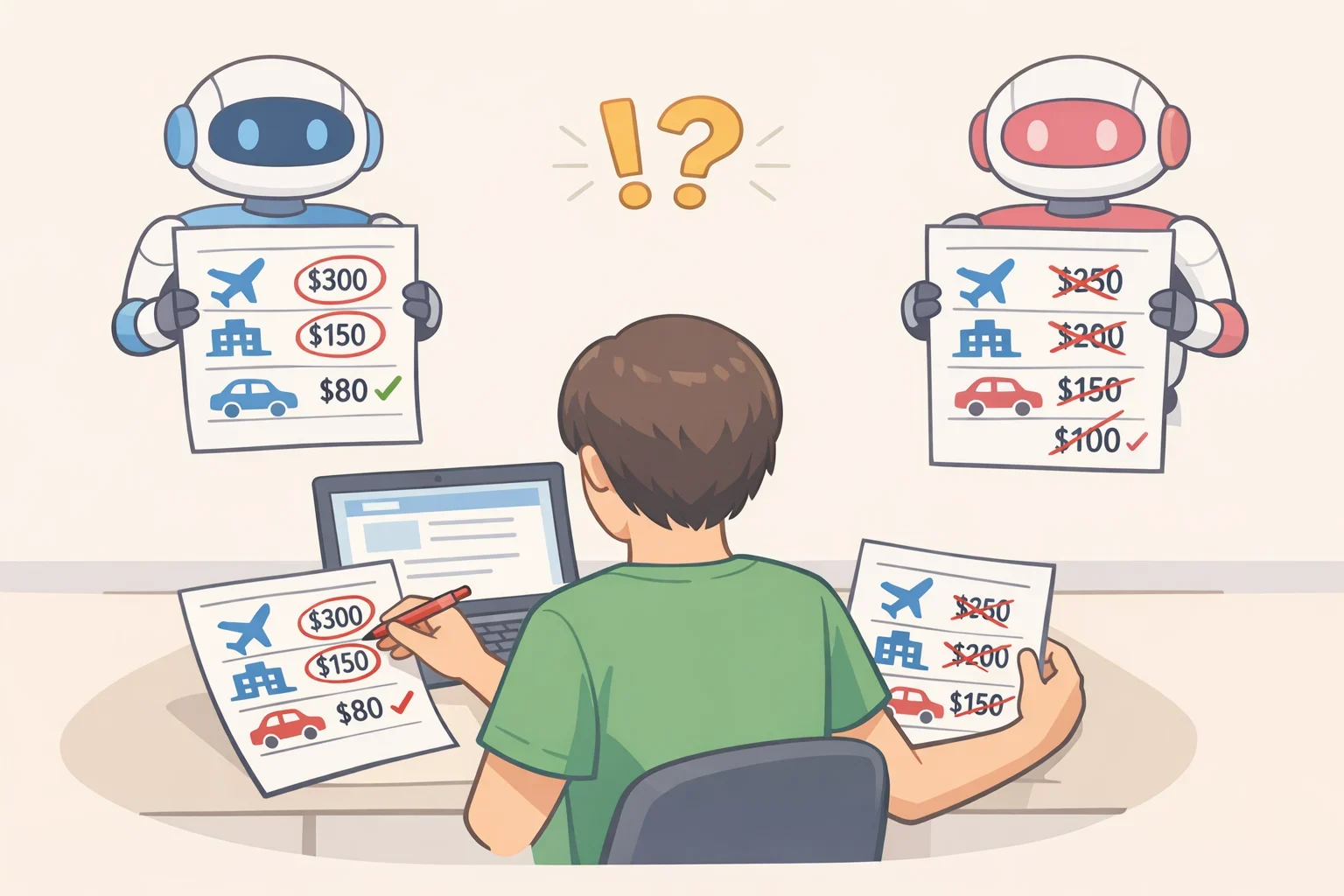
The World Economic Forum gives this role a name in its “Supercharged Progress” scenario, where humans direct portfolios of capable machines and become “agent orchestrators” (WEF, earlier this year). That is not a fancy way of saying “manager.” It is a different job. The orchestrator has to set constraints, run multiple agents at once, compare outputs, and decide when the machine is being clever and when it is merely expensive.
Cherny’s travel-agent example is the neat illustration: the agent booked eight flights and five hotels, got the task done, and still managed one hotel at around $5,000 a night (Platformer, last month). That kind of failure is exactly why orchestration becomes a real occupation. The output exists, but the human has to shape the system around cost, intent, and consequence.
3. The domain operator who codes
Cherny says that in a year, everyone will be able to write code as well as he can, and that software is becoming something everyone can do, like reading and writing (YouTube, last month). If that happens, the advantage shifts from coding ability to domain knowledge.
This is the doctor, analyst, logistics manager, or designer who can now build tools for their own field without waiting for a software team to translate every request. That is economically distinct because it collapses the old handoff between domain expert and engineer. The expert becomes the builder, at least for smaller pieces of the stack. The result is not less software. It is more software made closer to the problem.
4. The AI workflow reviewer

If more people can build, more people will also need to verify. Someone still has to catch the over-budget hotel, the wrong assumption, or the quiet hallucination that looks fine until it hits a customer. This role is less glamorous than “builder,” but it is where a lot of actual power sits.
The WEF’s “Co-Pilot Economy” scenario, where gradual AI progress and AI-ready skills push work toward augmentation rather than mass automation, points in this direction (WEF, earlier this year). A reviewer is not just QA with a new badge. The job is broader, because the review now covers correctness, cost, intent, and whether the machine actually understood the assignment.
5. The safety and security defender
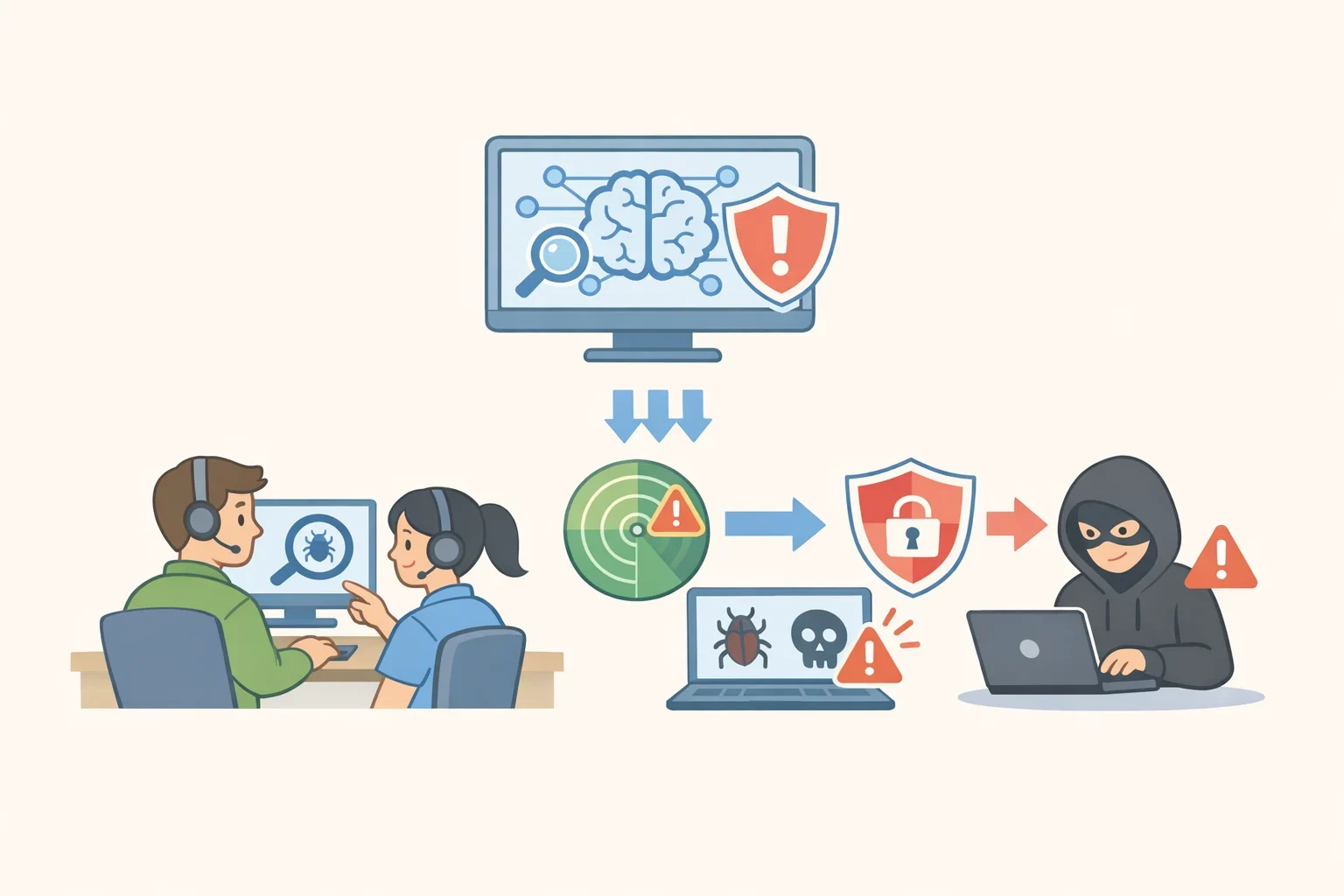
Cherny is explicit that society is not taking AI safety seriously enough, especially as models get very good at hacking and cyber operations (YouTube, last month). He argues defenders need access to these tools before bad actors do. That is the clearest sign that security is not a side concern in the AI economy. It is one of its main labor markets.
The WEF’s “Age of Displacement” scenario, where AI outpaces workforce adaptation and economies fracture socially, is what happens when this role is underbuilt (WEF, earlier this year). Safety and security defenders are the people who make the rest of the system usable at scale. Without them, the other archetypes sit on a fault line.
The objection Cherny has to answer
Cherny is also the builder of the thing doing the building, so the skepticism is healthy. He has an obvious stake in describing this transition as imminent. His estimates about 100 times more engineers, and about coding becoming universal within a year, are predictions, not settled fact (YouTube, last month).
The World Economic Forum helps here because it does not pretend there is only one path. It models “Stalled Progress,” where the workforce lacks the skills to keep up, and “Age of Displacement,” where adaptation lags behind advancement (WEF, earlier this year). Cherny also says entry-level jobs at companies still exist for people who want them (YouTube, last month). That is not a retreat from the thesis. It is a reminder that the leading edge and the median employer are living in different decades.
What this means for careers
The useful way to read these archetypes is not as a résumé checklist. It is a map of where value is migrating. The builder, orchestrator, domain operator, reviewer, and defender all rely on the same underlying skills: framing problems well, spotting bad output, and knowing enough about a field to tell when an answer is merely plausible.
That is why Cherny’s own path matters. He did not arrive at Anthropic through the classic computer science conveyor belt. He moved through economics, startups, finance, and Meta before landing at Claude Code (YouTube, last month). The next generation of valuable workers may look more like that than like a perfect credential stack.
The titles will lag. They always do. By the time most companies catch up, the real change will already be in the work itself.