

Continuous Learning for Design Leaders: AI Shifts the Role
The job description has changed
The traditional head of design role, managing output, setting creative standards, overseeing delivery, is being quietly redrawn. The new version includes something that rarely appears in job postings: structured, ongoing learning as a leadership function, not a perk. That is the heart of continuous learning for design leaders, and it is no longer a nice extra.
AI tools have compressed design execution to the point where workflow steps that once took hours now happen in minutes, NN/g reported this month. That sounds like a clean efficiency gain. It is, up to a point. But it also moves the pressure upstream, from making things faster to deciding better.
Forrester, drawing on interviews with more than 30 design leaders, says AI compresses execution work while increasing the importance of discovery, judgement, and experience strategy. The World Economic Forum’s Future of Jobs Report 2025 shows the organizational side of the same shift. The share of workers completing training as part of long-term learning strategies rose from 41% in 2023 to 50% by 2025.
BEDA’s design-specific read of that data warns that 39% of current skill sets may become outdated by 2030. That is not a reason for panic. It is a reason to stop treating learning like a private hobby squeezed in after work.
How AI moved the value in design work
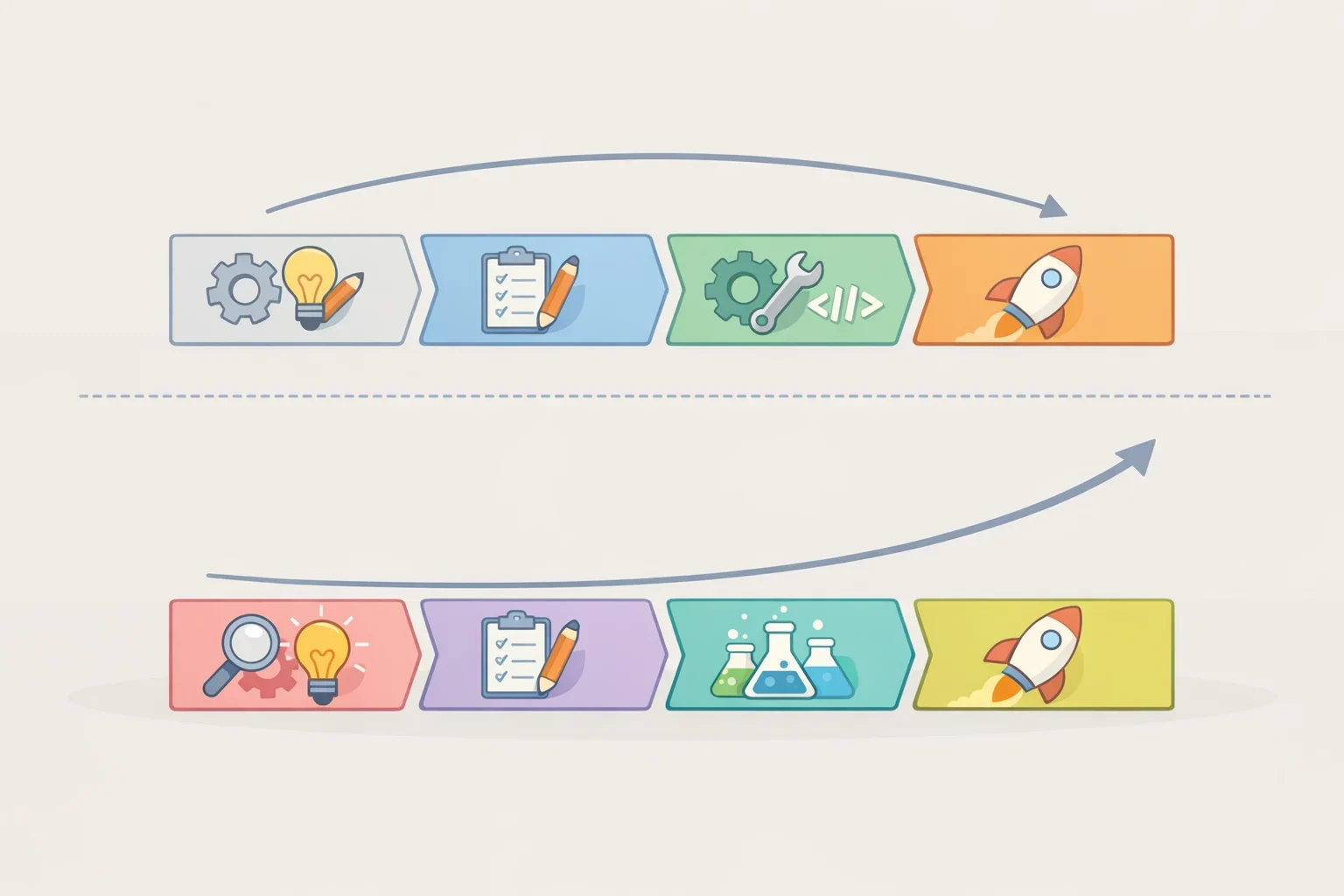
AI has not reduced the need for design talent. It has moved where that talent matters most. The work machines handle well, execution, iteration, asset generation, is the same work that used to swallow a team’s time. What is left is harder to automate and harder to do badly without everyone noticing.
Forrester describes that shift as design effort moving “left and up, not out.” In plain English, the work is happening earlier in the product process and at a higher level of abstraction. The designer as executor is giving way to the designer as evaluator, someone who can shape the question before the answer is built.
That creates a sharp tension. Faster execution invites more output, more versions, more everything. Yet the real advantage now comes from getting the problem definition right before the team starts churning through solutions. Build the wrong thing quickly enough and the only thing you have accelerated is the mistake.
NN/g puts a finer point on it. The publication identifies new AI-related design roles and says demand for the most advanced of them is growing faster than the supply of designers who can do them. It also argues that within a year, many more designers will have meaningful AI experience. That window is not a law of nature, but it does suggest the pace of change is unforgiving.
Learning as a design leadership skill
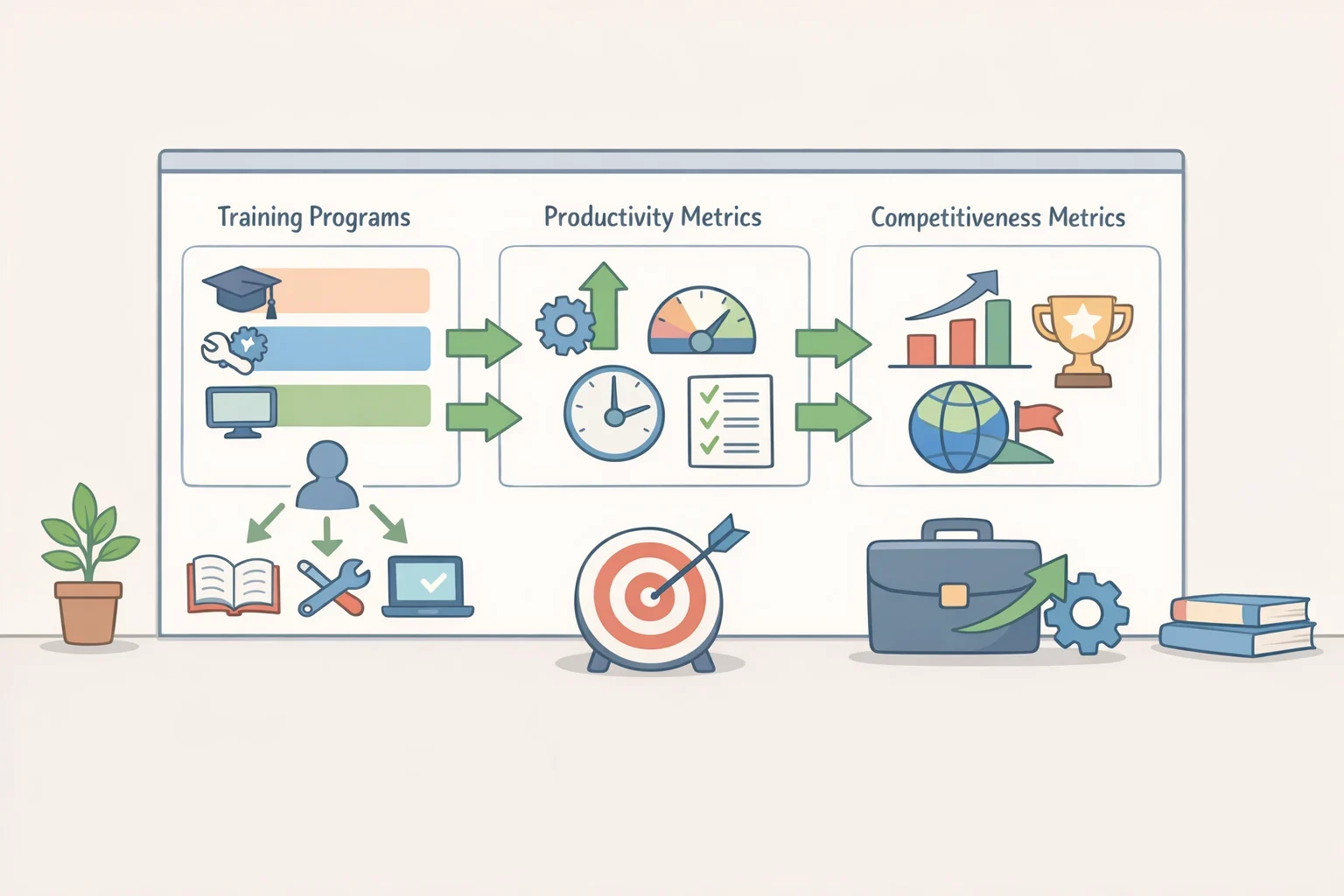
This is where heads of design earn their keep. They cannot close an AI-era capability gap by hiring alone. The World Economic Forum says employers expect 19 out of 100 workers to need training, reskilling, and redeployment within their organizations by 2030. They also expect to fund most of that training themselves.
The same report says the main returns employers expect from training are enhanced productivity, cited by 77% of respondents, and improved competitiveness, cited by 70%. So learning is not a morale slogan. It is operating expense with a business case.
A design leader who treats learning as something individuals do on their own time is outsourcing a core part of the job. A better version of the role looks different. It means deciding which skills matter most, making room for knowledge-sharing, and building experimentation into the team’s normal week instead of pretending it will happen by inspiration.
There is also a practical obstacle that BEDA highlights. Many HR leaders and executives still conflate design with purely technical skills, which can underplay its human-centered and creative dimensions. That matters because it shapes how learning budgets get framed. If design is seen as a production function, training will be narrowed to tools. If it is seen as a strategic function, the brief gets wider.
What continuous learning for design leaders actually covers
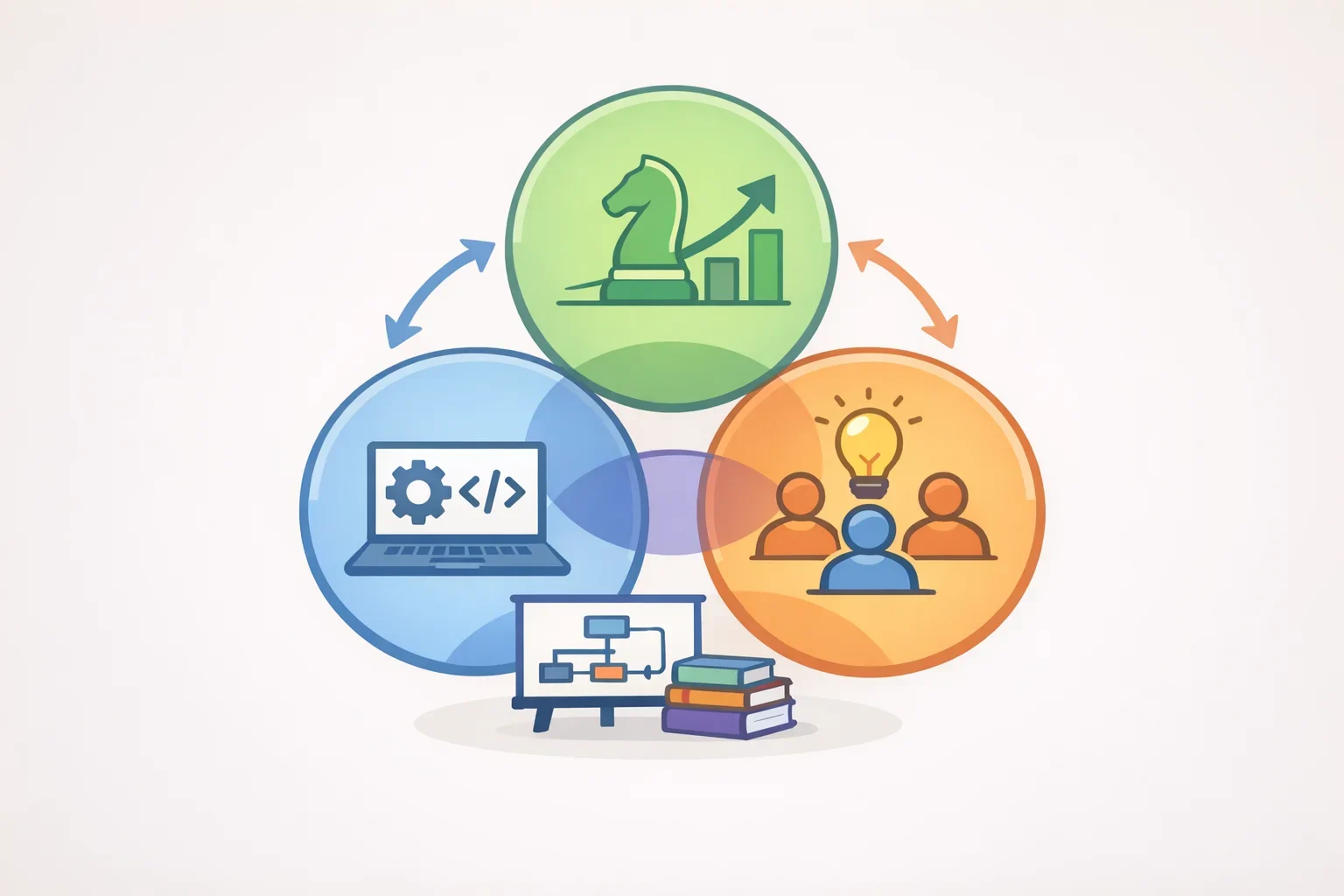
The phrase “continuous learning” can sound broad enough to mean almost anything, which is often a sign that nothing concrete is happening. In this case, the scope is real. It includes technical fluency, strategic influence, cross-functional collaboration, and the kind of adaptability that keeps a design team useful when the ground shifts under it.
BEDA’s analysis of the WEF report says creative thinking remains near the top of employers’ wish lists, but it is increasingly complemented, and sometimes surpassed, by AI and data fluency, cybersecurity awareness, and broader technological literacy. The same source says leadership and social influence, along with resilience, flexibility, and agility, are rising fast. That suggests the growth edge for design leaders is not just technical. It is also social and strategic.
NN/g makes a similar point from another angle. It argues that several emerging AI-related design activities have been treated as engineering work, even though they are not. That has left a hybrid skill set underdeveloped in design teams and underweighted in design hiring. The mistake is familiar enough: if something has a machine in it, people assume it belongs to the machine people.
The practical answer is not for heads of design to become engineers. It is for them to become more fluent in the systems around design, and more deliberate about how their teams learn.
Three parts of that are worth naming.
- Technical literacy. Not coding for its own sake, but enough understanding of AI systems, data, and emerging tooling to judge what is useful, what is noise, and what needs a human in the loop.
- Strategic contribution. Forrester is clear that AI is speeding up execution, which pushes the differentiating work upstream into discovery and experience strategy. Design leaders need to be credible in those earlier conversations, not waiting politely outside the room.
- Team learning architecture. This is the part that gets neglected because it looks unglamorous. It means creating the conditions for people to share knowledge, test ideas, and review what worked without turning every experiment into a tiny performance review.
A concrete example helps. A head of design might run a monthly AI critique session, where the team brings one workflow experiment, one failure, and one question. The point is not to praise the latest tool. It is to compare notes: where did AI save time, where did it distort judgement, and where did the team need better design systems before it could use the tool well? Small ritual, useful signal.
The manager’s job is now partly educational

That may sound grander than it is. It is often as simple as using one meeting a month to ask different questions. Which skills are thinning out on the team. Which tasks should be learned, not outsourced. Which projects would be safer if someone shadowed engineering for a week, or sat in on research synthesis, or audited the design system against the way AI outputs are being used.
Those are not side projects. They are how design leaders stay relevant without chasing every shiny object that lands in the inbox. The point is not to collect tools. It is to build judgment.
And judgment ages better than software licenses.
Why the old model is giving way
There is a temptation, especially in well-run design teams, to assume strong craft will carry the room. It still matters. BEDA is right to keep creative thinking near the center of the profession. But the center of gravity is shifting. AI can accelerate production. It can even help generate options. It cannot decide which problem matters most, or whether a neat solution is actually the right one.
That is why the new baseline for heads of design is broader than technical dexterity. The role now sits at the point where product strategy, team capability, and tooling all meet. Leaders who ignore one of those pieces end up with lopsided teams, usually after a few optimistic quarters and one awkward postmortem.
The learning burden is real, but so is the payoff. A team that keeps learning can move from reacting to tools to shaping how those tools are used. That is a quieter kind of advantage, less glamorous than a big launch announcement, and usually more durable.
The real competitive edge is judgment
AI is shifting design work toward earlier, higher-stakes decisions, discovery, problem framing, and experience strategy, while compressing the execution phase that used to dominate team time, Forrester said in May. The World Economic Forum’s 2025 report shows that training is already becoming part of long-term workforce strategy, with participation rising from 41% in 2023 to 50% by 2025. And NN/g says many more designers will soon have meaningful AI experience, whether teams plan for it or not.
That leaves heads of design with a choice that is not really a choice. They can treat learning as background noise, or they can make it part of how the team works. The second option is less tidy. It takes more discipline, and occasionally more patience than anyone would like. But it is also the one that matches the job now.
Continuous learning for design leaders is no longer about self-improvement on the margins. It is how design teams keep their judgement sharp, their skills current, and their value visible when the machines get faster and the questions get harder.