
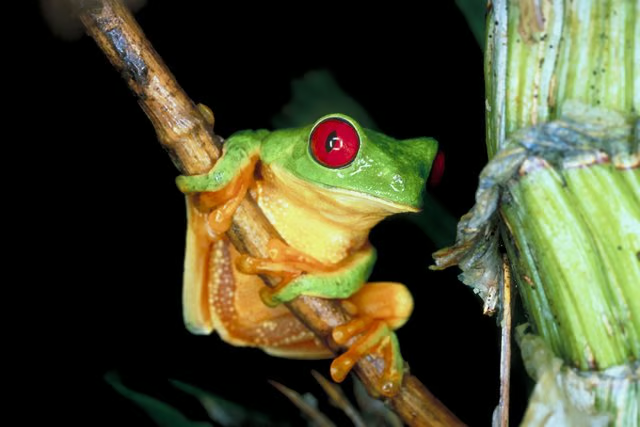


Herpetology is a specialized subdivision of zoology that focuses on the study of reptiles and amphibians. Depending on their area of specialization, a herpetologist may study animal behavior, their physiology, animal growth and development or genetics. Herpetologists may work for zoos or other wildlife agencies, museums or as college professors. If you're interested in pursuing a career in herpetology, learn what education, skills and training are required.
Education
A four-year degree is required to pursue a career in herpetology. Depending on the programs your college or university offers, you may choose to major in biology, zoology, earth sciences or agriculture. Undergraduates should expect to complete coursework in anatomy, physiology, organic chemistry, environmental biology, microbiology, biochemistry and physics. While a four-year degree can prepare you for an entry level position in the herpetology field, a master's or doctoral degree may be necessary if you plan to specialize in a particular area. Some of the most well-known graduate herpetology programs include those offered by Harvard University, the University of Chicago and Duke University.
Training and Experience
Training for a career in herpetology typically comes in the form of research conducted in pursuit of a degree. Students who are interested in herpetology should expect to participate in laboratory and field research projects as part of their degree requirements. At the graduate level, students are generally responsible for completing an independent research thesis or dissertation. While there are no specific requirements for experience, many students choose to participate in internships or volunteer programs to gain firsthand insight into the typical duties of a herpetologist.
Required Skills
In addition to education, training and a passionate interest in their subject, herpetologists also require additional skills. Generally, herpetologists must be physically fit, have an ability to work independently or as part of a group, possess excellent critical thinking and decision making skills, be detail oriented, have strong observation skills and communicate effectively. Herpetologists must also be comfortable working in a wide range of settings and environments.
Job Duties
The type of job duties a herpetologist is required to perform generally depend on their work environment. For example, a herpetologist working in a zoo or wildlife preserve may be responsible for observing animal behavior regularly, treating illnesses or injuries, managing the dietary and nutritional needs of their subjects or maintaining the cleanliness of animal habitats. By contract, a herpetologist working in a museum or university setting would primarily be responsible for teaching, conducting research, maintaining records or caring for preserved specimens. Herpetologists may also work as wildlife photographers or writers.