
Why Dating Apps Feel Broken: Incentives, AI, Burnout
Dating app burnout is no longer just a mood. It shows up in the business data, in the way people talk about the apps, and in the growing suspicion that the whole thing is rigged to keep users scrolling rather than coupled up. Bumble’s second-quarter report for 2025 showed its total paying users fell 8.7% from 4.1 million to 3.8 million over the past year, while revenue dropped 7.6% from $268.6 million to $248.2 million (Medill Reports Chicago, 2025). Across the UK, four of the biggest dating apps lost over a million users between them last year (Phys.org, 2025).
That decline matters because it lines up with a familiar feeling. People are not just bored. They are bored in a specific way, after ghosting, flaky cancellations, dead-end chats, and the sense that the app knows how to keep them swiping but not how to help them leave.
The odd part is that relationships formed on dating apps do not seem to be the weak link. A study published in Social Sciences found no significant difference in relationship quality between people who met through dating apps and people who met in person (PsyPost, late 2024). So why dating apps feel broken, and why they sometimes still work, is really the same story from two angles.
Why dating apps feel broken
The business model explains a lot of the frustration. Bumble went public in 2021 valued at more than $7 billion, and by June 2025 its stock had fallen 91% from its peak, prompting layoffs of 30% of the workforce that were expected to save $40 million annually (Medill Reports Chicago, 2025). Zacks said “lingering user monetization challenges, flat growth in paying users and doubts about Gen Z adoption still remain headwinds” (Medill Reports Chicago, 2025). That is not the language of a product people are falling in love with.
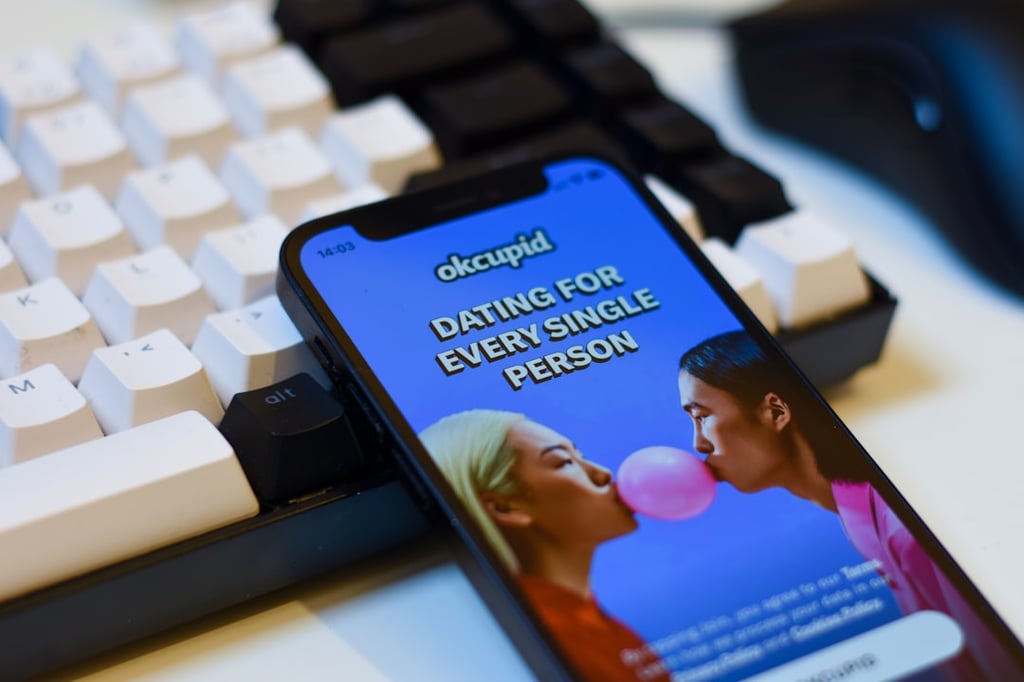
The design story is older than the stock chart. OkCupid, founded in 2004, asked users a wide range of compatibility questions and then asked them to specify the answers they wanted from a prospective partner (Phys.org, 2025). Clunky, yes. But the premise was plain enough: use information to match people.
The newer apps are different. They increasingly rely on less transparent AI, with engagement signals such as swipes, text frequency, and time spent in the app doing much of the work (Phys.org, 2025). That is a tidy way to build a profitable product. It is a less tidy way to find a partner.
A paper in JMIR Formative Research makes the incentive problem explicit. It argues that when a paying subscriber finds a partner and leaves, the platform loses revenue, and there is no upside to a successful offline encounter from a revenue perspective (JMIR Formative Research, April 2025). The paper also compares dating apps to casinos, where the trick is to keep the reward high enough to pull users back in, but not so high that they walk away.
That is an argument about structure, not a courtroom-proof conspiracy. Still, it fits the user experience rather neatly.
Phys.org, in May 2025, described the resulting cycle as four stages: boredom, disappointment, algorithmic cynicism, and finally communication fatigue. The sequence is almost painfully familiar if you have spent any time on the apps. You start hopeful. Then the ghosting begins, the messages go nowhere, and the whole thing starts to feel less like courtship than a treadmill with bad lighting.
There is another reason the experience feels broken. The same JMIR paper says women report being inundated with so many matches that it is hard to choose whom to engage with, while men get very few responses and are pushed toward paid features that buy a little more visibility (JMIR Formative Research, April 2025). Men also make up the largest group of paid subscribers (JMIR Formative Research, April 2025). That is not a balanced market. It is one where the people paying for access are often the ones least satisfied with the product.
The paper also points to an association between dating app use and higher depression and anxiety, especially with more frequent or longer use (JMIR Formative Research, April 2025). It stops short of proving causation, and that caution matters. Plenty of people are already lonely or anxious when they download the app. Still, the association is hard to shrug off when the product itself seems built to deliver more effort than reward.
Why app-born relationships are not second-rate
The backlash against dating apps has not erased the case for them. A study published in Social Sciences found no significant difference in relationship quality between people who met through dating apps and people who met in person (PsyPost, late 2024). For both current and past relationships, participants who met on apps reported satisfaction, commitment, and passion at levels comparable to face-to-face couples (PsyPost, late 2024).
That finding is narrower than it first appears. The study recruited 233 college students from a single university in the southern United States, and the author said the results cannot be generalized to other populations (PsyPost, late 2024). So this is evidence, not a final verdict. Even so, it cuts against the old assumption that app-based relationships are somehow less real because they began in a feed.
The stigma seems to be fading too. The lead researcher told PsyPost that the negative view of dating apps had diminished and that the study’s results help explain why people are less likely to see dating applications as taboo or embarrassing (PsyPost, late 2024). That shift matters. The social judgment is easing at the same time the product experience is getting worse.
A CEPR working paper makes the larger point even more clearly. Using county-level data and an instrumental-variable strategy, it finds that online dating has become a real force in U.S. marriage markets, affecting who marries whom across education, employment, and race (CEPR, January 2026). This is not a niche corner of modern courtship. It is part of the machinery.
The paper also shows that the effects change by era. In the desktop internet period, 2002-2013, a 1% increase in online dating sessions was associated with a 0.50% rise in divorce rates (CEPR, January 2026). In the mobile app era, 2017-2023, a 1% increase in online dating activity was associated with a 0.40% drop in marriage rates and a 0.33% drop in divorce rates (CEPR, January 2026). That is a reminder that “dating apps” is not one fixed thing. The web era and the swipe era do not behave the same way.
The same CEPR paper also says desktop sites reduce sorting along education and employment dimensions, while mobile sites reduce sorting by employment but increase sorting by race (CEPR, January 2026). So even the social effects are not simple. Online dating is reshaping relationship markets, but not in one clean direction.
What modern dating app fatigue does, and does not, tell us
The most useful thing the research does is separate frustration from fatalism. Dating app fatigue is real, but it is not evenly distributed. The JMIR paper suggests women are more likely to face overload, while men are more likely to face scarcity and paywalls (JMIR Formative Research, April 2025). Those are different kinds of exhaustion. One is drowning. The other is waiting for a reply that never comes.
That asymmetry helps explain why the app economy keeps wobbling without collapsing. A system can frustrate most users and still retain enough paying customers to keep going. Men are still the largest group of paid subscribers (JMIR Formative Research, April 2025), and the platforms have every reason to keep monetizing the hope that the next boost, the next filter, the next premium feature will finally unlock the right match. Hope is sticky. So are subscription plans.
The broader social effects are harder to pin down. CEPR found that greater online dating usage does not appear to raise average STD rates across either era, though effects were positive for some subpopulations (CEPR, January 2026). That does not mean there are no health effects. It means the averages do not tell a simple horror story.
What the evidence still does not answer is the most human question of all: what did the successful couples do differently? Did they delete the app quickly, ignore most filters, pay for premium features, take breaks, or simply get lucky at the right moment? The research is much better at explaining why the system grinds people down than at showing how to beat it. That gap is worth keeping in view. Otherwise the conclusion gets too neat, and dating has never rewarded neatness for long.
Can you still find love on dating apps?
Yes, but not because the apps are beautifully designed. The better answer is that people keep finding each other inside a system that often works against them. The frustration is legitimate, the incentives are warped, and the user decline is real (Medill Reports Chicago, 2025; Phys.org, 2025). None of that means the relationships formed there are lesser.
That is the useful distinction. The apps can be badly built without making every relationship they produce feel second-rate. The social stigma around app-based romance is fading, and the evidence supports that shift (PsyPost, late 2024). What has not changed is the basic bargain: if dating apps are going to keep their users’ attention, they need to offer something better than endless near-misses and a premium subscription.
CEPR’s data suggests online dating has already reshaped marriage markets in the United States (CEPR, January 2026). So the infrastructure matters. What comes next depends on whether the platforms decide to be matching services or simply very elaborate vending machines for loneliness. The couples who found each other anyway are proof that love can still happen there. The rest is up to the people who build the apps.