
Best Hedges Against Inflation: Match Tools to Inflation Type
Inflation is not one problem with one fix. The best hedges against inflation depend on what is driving prices, how long the money needs to work, and which account it sits in. Get those three things right and the rest becomes more manageable.
That matters because the market’s favorite shorthand, “inflation-resistant,” is sloppy at best. NBER found that core inflation and energy inflation behave very differently, and Able Finance argued later last year that treating inflation as a single force is the most common mistake investors make. The practical question is not whether inflation is up. It is which kind, and what can actually keep up.
This guide walks through six investments that hedge against inflation, then shows where each belongs. Some are built for capital preservation. Some are better for scale. One is probably overrated.
Start by identifying the inflation type
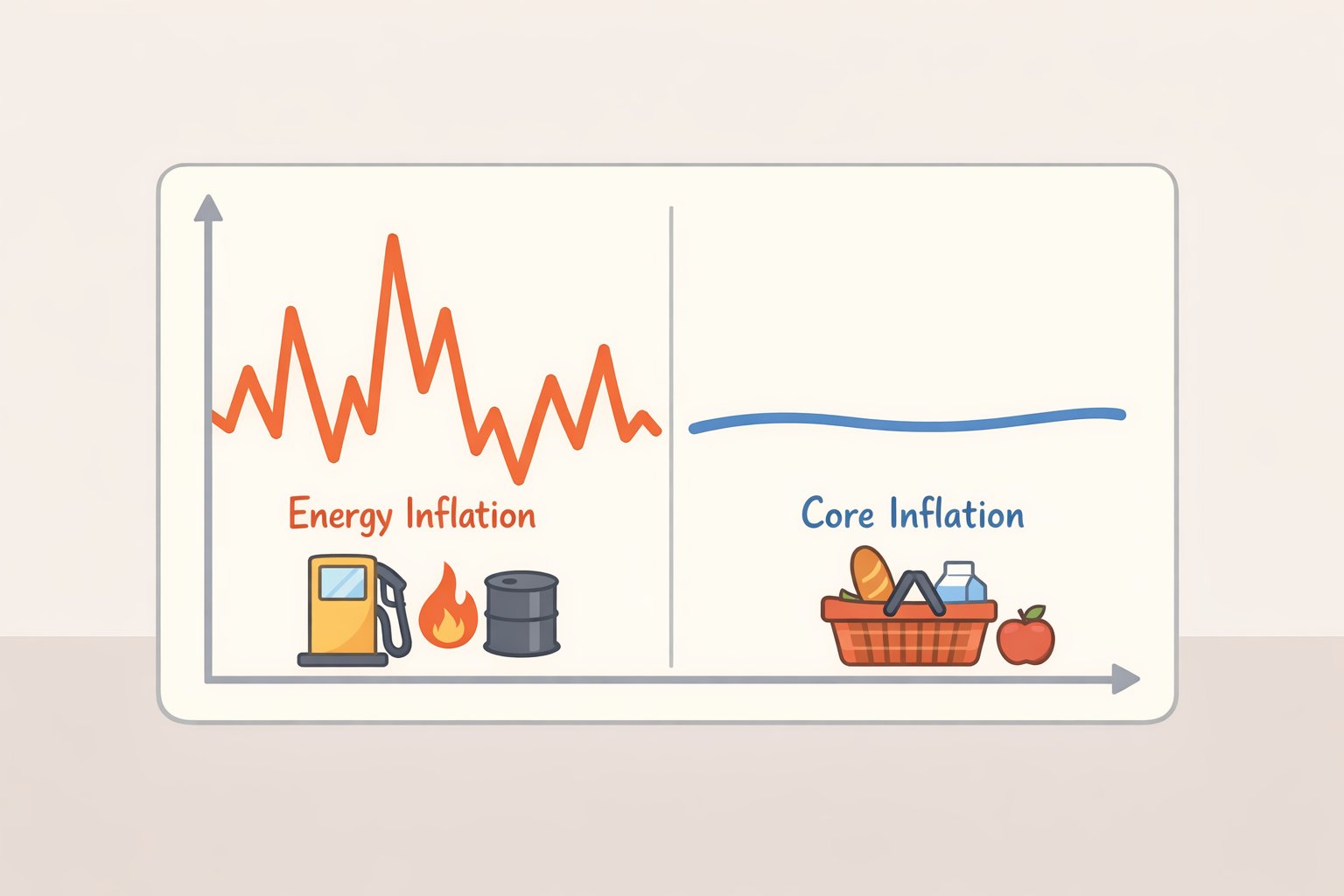
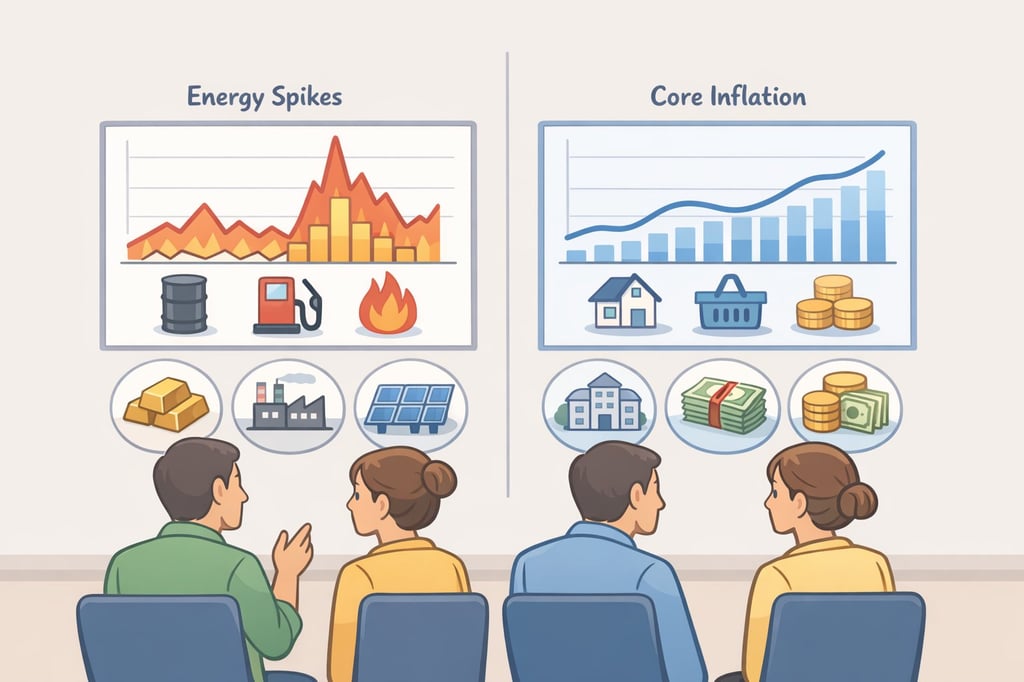
Before buying anything, figure out whether inflation is being driven by energy shocks or by the stickier stuff, wages and services. The distinction sounds academic until you look at the numbers. NBER found core inflation has a standard deviation of 2.66% a year, while energy inflation is far more volatile at 19.52%, and the two series have a correlation of just 0.20.
That means the same headline CPI print can hide very different conditions. A supply shock pushes one set of assets to work. A wage-and-services episode pushes another. Able Finance noted that energy-shock inflation tends to favor commodities and energy exposure, while services-heavy inflation tends to favor stocks with pricing power.
If you want a quick read, check the CPI breakdown and ask a blunt question: is this mostly energy, or is it the broader economy? You do not need a Bloomberg terminal to get that far. You just need enough discipline not to call every inflation scare the same thing.
Match the hedge to your horizon and portfolio size
Once you know what kind of inflation you are dealing with, the next step is matching the tool to the job. The six main options in this piece are I Bonds, TIPS, short-term TIPS funds like VTIP, stocks, commodities, and gold. They are not interchangeable, no matter how often marketing departments pretend otherwise.
I Bonds, best for small amounts and capital preservation
I Bonds are the simplest place to start if the goal is to protect principal on a modest amount of money. Mezzi said earlier this year that they are capped at $10,000 per person per year, cannot be redeemed in the first 12 months, and cost you three months of interest if you cash out before five years.
Their appeal is straightforward. The interest rate adjusts with inflation, principal does not fall below your original investment, and the tax treatment is friendly because federal taxes are deferred until redemption while state and local taxes are avoided. Mezzi also noted that bonds issued from November 2025 through April 2026 carry a composite rate of 4.03%, including a 0.90% fixed rate.
That makes I Bonds a useful foundation, not a full solution. They fit savers with a long enough time horizon to tolerate the lockup, especially if the money lives in a taxable account. They are just too small to carry a larger portfolio on their own.
TIPS, best for larger portfolios that need direct CPI linkage
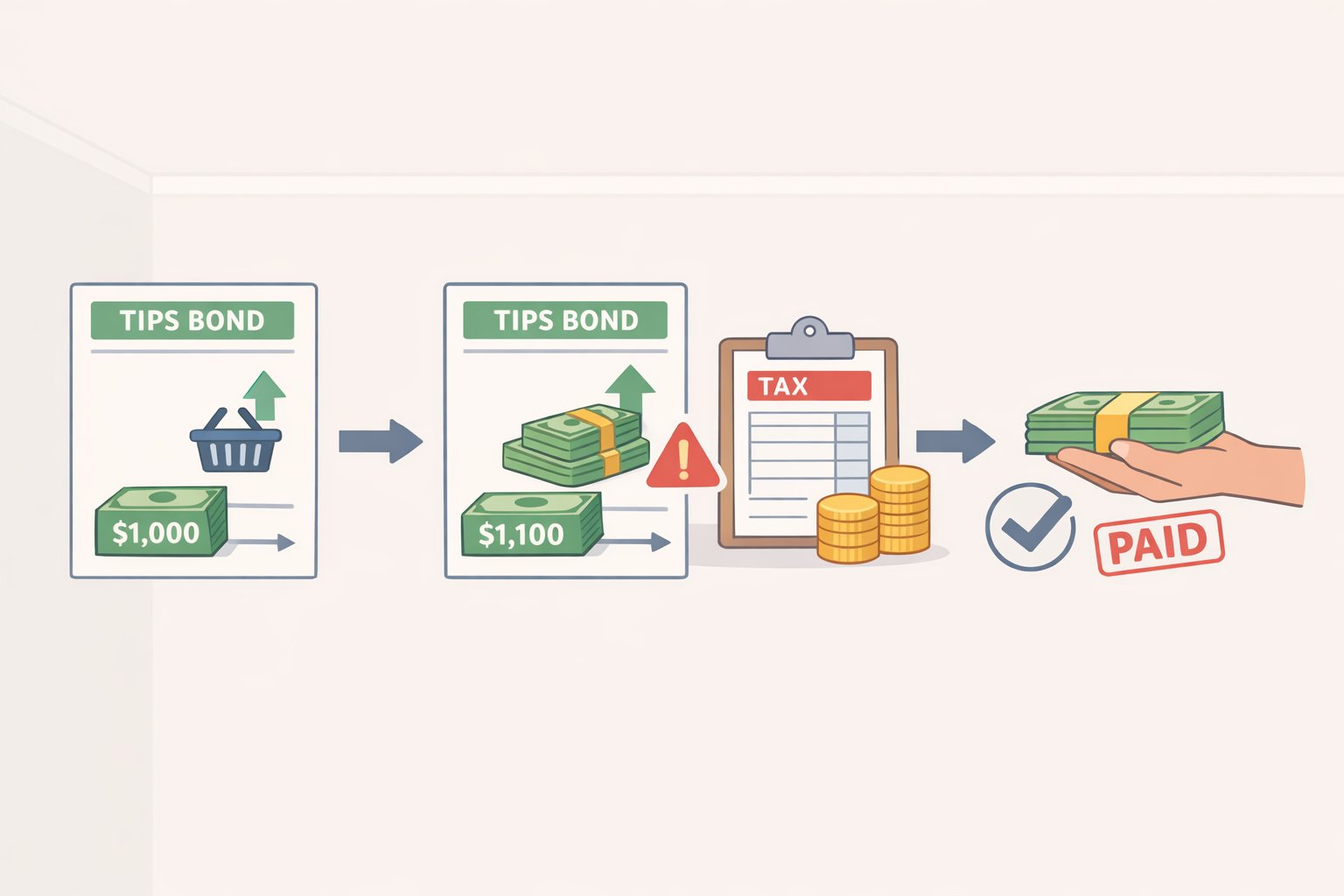
TIPS are the cleaner institutional answer. Mezzi explained this month that their principal adjusts with CPI, and Treasury backstopping means investors receive at least face value at maturity even if deflation shows up along the way. For bigger investors, that matters. The auction limit can reach $10 million.
The attraction is not that TIPS magically solve inflation. It is that they are tied directly to CPI, which makes them one of the few investments that hedge against inflation in a literal sense. The catch is taxes. Mezzi pointed out that investors owe federal tax each year on inflation adjustments to principal, even before the cash is paid out. That is the old phantom-income problem, and it bites hardest in taxable accounts.
There is also a market-price issue. TIPS held to maturity are one thing. TIPS sold early are another. Mezzi noted that in 2022 many TIPS funds lost about 9% even as inflation surged, because rising nominal rates overwhelmed the inflation adjustment. Bond mechanics are not sentimental.
One more point, because the language here gets sloppy fast. The NBER paper found that TIPS had a strong positive exposure to core inflation, with an estimated beta of 4.54, meaning the study’s model associated a 1% rise in core CPI with a 4.54% rise in TIPS returns. That is a useful estimate, not a promise. It is also not the same thing as saying TIPS are a perfect hedge for every inflation episode. They are not.
Short-term TIPS funds, best for liquidity over the next few years
If the money may be needed soon, a fund like VTIP can make more sense than individual TIPS. Mezzi said earlier this year that VTIP tracks short-term TIPS with maturities of 0 to 5 years, carries an average effective duration of roughly 2.5 years, and has an expense ratio of 0.03%.
That shorter duration matters because it softens some interest-rate risk. It does not eliminate it. A 1% rise in rates would still hit the fund’s price by roughly 2.4%, according to Mezzi, which is why this is a useful short-horizon tool, not a sleep-well asset. The ETF structure does buy you daily liquidity, no purchase limits, and no redemption penalties.
VTIP also pays monthly distributions, and those distributions are taxable in the same general way TIPS income is taxable, which is why tax placement matters so much here. In plain English, it is best used for inflation protection on money that needs to stay accessible, especially over the next two to five years. It is flexible. It is not a vault.
Stocks, best for long-run purchasing power
Stocks are the messier hedge, but they are still one of the better ways to preserve purchasing power over long periods. Morningstar reported last week that U.S. equities have produced a 6.6% annualized real return since 1900, well ahead of bonds and bills. Over the period since 2006, the same report said real equity returns were 7.6%, while bills were negative.
That does not mean stocks are an inflation shield in the short run. Far from it. NBER found that stocks have negative exposure to core inflation but positive exposure to energy inflation. That fits the real-world pattern: companies can often pass through rising costs, especially when the inflation shock is supply-driven. Persistent wage pressure is harder on valuations.
Fidelity made a similar point in December, noting that U.S. stocks can grow through inflationary periods because businesses can raise prices, and international stocks can help when inflation is concentrated in the U.S. That is the key distinction. Stocks are not a year-by-year inflation hedge. They are a long-run compounding engine that can outgrow inflation if the investor gives them enough time.
Commodities, best for energy-shock inflation

Commodities are the blunt instrument of inflation protection. That is not an insult. It is a description. NBER found that commodities, currencies, and REITs mostly hedge energy inflation, not core inflation.
That lines up with what happened in 2021 and 2022. Able Finance said oil and industrial metals surged during the supply-driven phase, while equities with pricing power were the better answer in the 1970s, when inflation was more wage-led. Fidelity also noted that commodity-linked investments have historically benefited when demand rises for aluminum, copper, gas, or corn.
That makes commodities useful, but only in the right slice of the cycle. They are a tactical allocation for an energy shock, not a permanent answer to inflation itself. Put them in the wrong bucket and they can look clever right up until they do not.
Gold, best as a narrow diversifier, not a reliable inflation hedge
Gold gets dragged into this conversation because it looks reassuring and never seems to apologize for itself. The historical record is less flattering. Morningstar reported this month that gold’s annualized real return since 1900 is just 1.3%, and that it posted negative returns in 13 of the 28 years when inflation ran above 3%.
That is not the profile of a dependable inflation hedge. It is the profile of an asset with a strong reputation and a patchy résumé. The same Morningstar piece said gold was up 81% over the prior 52 weeks, but also pointed to central bank buying as a major part of the current investment case. That is a different story from consumer prices.
Gold still has a role, just not the one promoters usually assign to it. It makes more sense as a hedge against systemic risk and currency debasement than as a clean CPI play. A small position can be defensible. A large one, built on the assumption that gold automatically beats inflation, is where the trouble starts.
Put each hedge in the right account
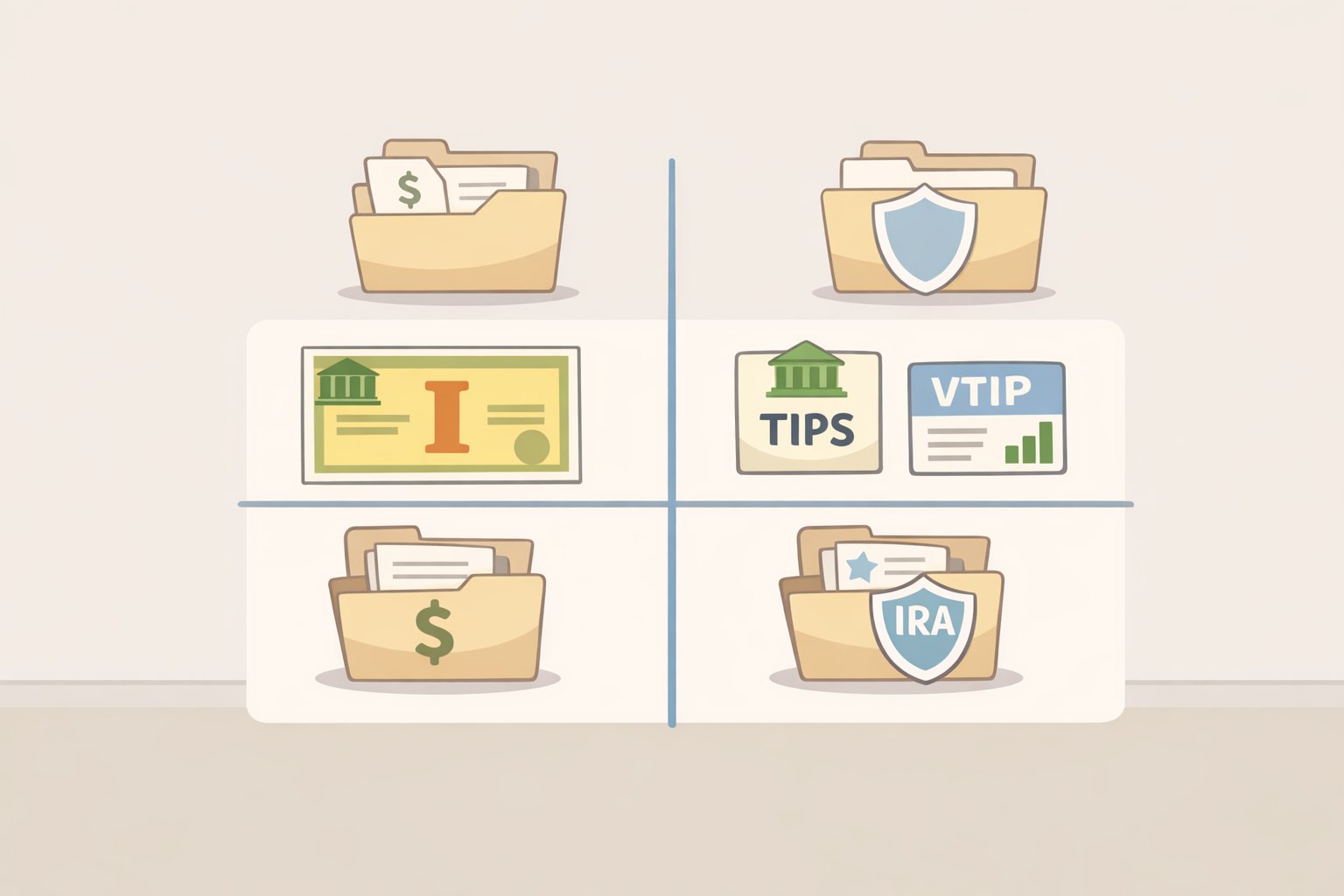
This part is dull, which is exactly why it gets ignored. It also matters a lot. The wrong account can erase a chunk of the benefit, especially for TIPS and VTIP.
I Bonds belong in taxable accounts. Mezzi said this month that federal tax is deferred until redemption and the interest is exempt from state and local taxes. TIPS and VTIP are different. Both generate taxable income annually, which makes tax-advantaged accounts such as IRAs or 401(k)s the cleaner place to hold them if that option exists.
That is not a small edge. Able Finance estimated earlier this year that smart asset placement can create a 1.2% to 2.4% annualized after-tax advantage for high-income investors without changing the underlying assets at all. Finance is full of grand strategies. Sometimes the boring one wins.
If the only account is a taxable brokerage account, the practical choices narrow. I Bonds are still useful, and VTIP is easier to live with than individual TIPS because of its liquidity and monthly distributions. The tax bill is still there. It just arrives with less drama.
What to do next
Start with the inflation type, then pick the tool, then check the account. That sequence does more for a portfolio than chasing the asset that had the best headline last quarter.
For most investors with a diversified portfolio already in place, Fidelity said last December there is usually no reason to make drastic changes because economists do not expect extreme inflation to last for years. That is sensible advice. Add I Bonds where the cap allows, use TIPS or VTIP where scale and liquidity matter, and let stocks do the heavy lifting over time.
Cash is not a defensive masterpiece. Morningstar said bills have returned just 0.5% in real terms since 1900 and -0.9% since 2006. Waiting out inflation in cash is a strategy with a very short shelf life.
Gold is not a magic answer either. It may have a place, but the label “inflation hedge” flatters it. If the goal is to protect purchasing power, the better move is to use the right tool for the right kind of inflation, then hold it in the right account. Old-fashioned discipline. Annoyingly effective.