

Trump Accounts use BlackRock, Vanguard, State Street ETFs:
The Treasury Department says Trump Accounts will use ETFs from BlackRock, Vanguard, and State Street, a choice that points the program toward broad index investing rather than something bespoke or expensive. For families who qualify, that matters because the fund lineup will shape fees, risk, and the kind of growth these accounts can deliver over time.
The accounts are intended for children born in a designated window and come with a federal seed deposit at birth, according to reporting earlier this year on the law creating them. Parents and guardians are expected to control the accounts until the child reaches adulthood.
That is the basic structure. What matters now is how much freedom families will have inside it, and how much Treasury will decide for them.
How the accounts are supposed to work

The idea is straightforward enough: give children an investment account early, put real money into it, and let time do the heavy lifting. The appeal is not complicated. The longer money stays invested, the more room it has to grow.
The comparison to the federal Thrift Savings Plan comes up for a reason. The TSP does not try to look like a full-service brokerage account. It keeps participants inside a limited set of index funds, which is part of why it has long been treated as one of the least expensive retirement options in the country.
Trump Accounts appear to borrow that logic. Narrow choices can keep costs down and reduce the temptation to chase whatever looked clever last week.
The missing piece is the default setting. If families do nothing, does the money land in a specific fund automatically, or does it wait for an election? That is not a trivial administrative detail. In default-enrollment plans, the default usually becomes the choice people stick with.
Why the ETF lineup matters

The point of having BlackRock, Vanguard, and State Street in the mix is not the brand names themselves. It is the kind of products these firms are built to offer, namely broad, low-cost index ETFs that track the market instead of trying to beat it.
That sounds dull. It is also the whole reason the lineup matters.
Fees are the quiet part of investing that turns out not to be quiet at all. A small annual charge can look harmless when the account is new, then start to matter once the money has years to compound. If the government is building a long-term children’s account, the cost structure is not a side note. It is central to how well the thing works.
The other half of the equation is risk. Market exposure can build wealth over time, but it can also fall hard in a bad stretch. This is not a savings bond with a guaranteed outcome, and it is not meant to be. The tradeoff is that a long runway gives broad index investing more time to recover from rough patches.
That makes the ETF choice more than a technical footnote. Treasury is signaling that these accounts are meant to behave like long-term investment vehicles, not cash-like stash accounts. For families who want certainty, that will be the uncomfortable part.
What remains unresolved
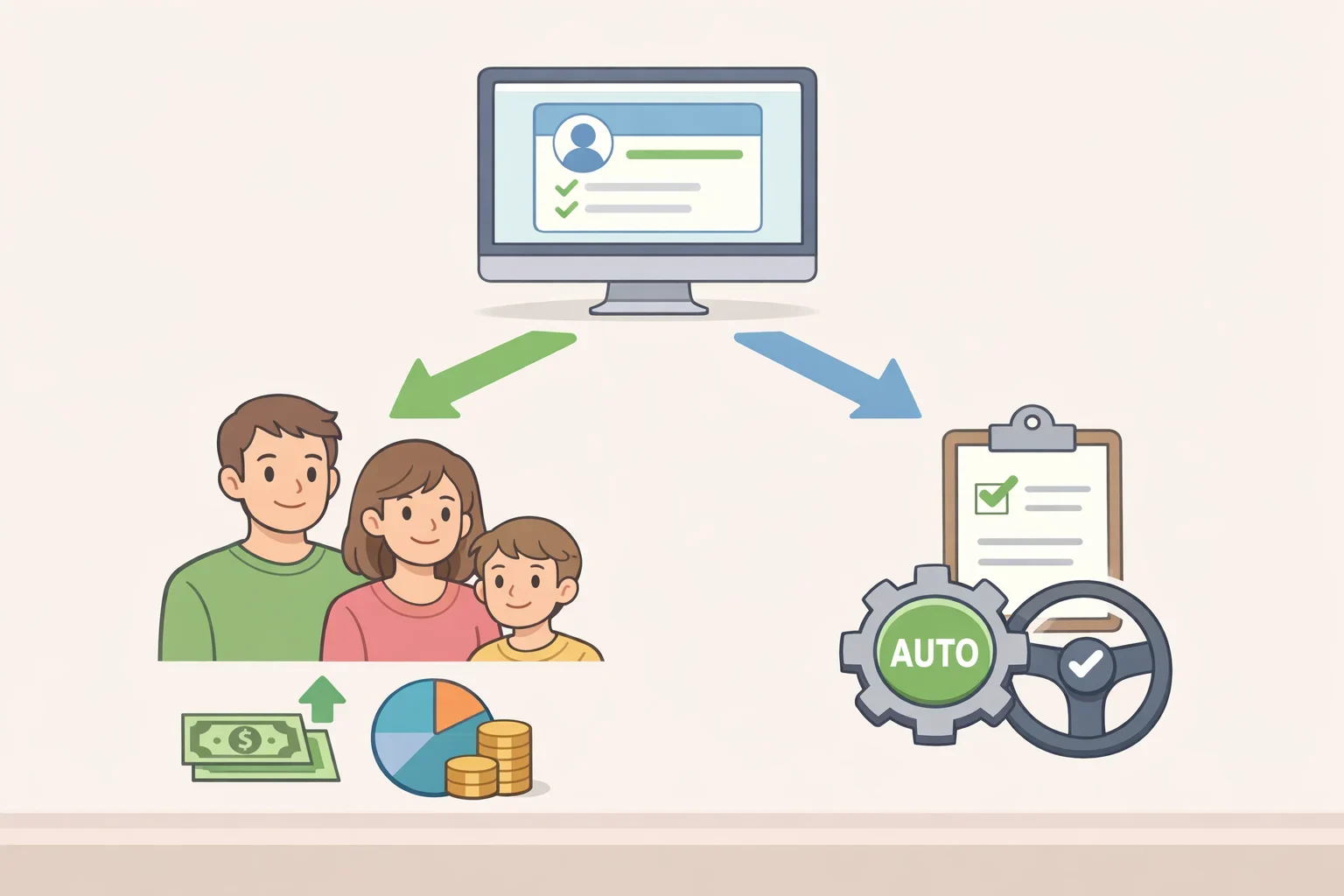
Several important details are still unclear. Treasury has not fully laid out how families will choose among funds, what the default option will be, or exactly how withdrawals will work when the child reaches adulthood. Those are not edge cases. They determine who controls the money and how usable the account feels once it exists.
There is also a practical question hanging over the program: whether families will understand it without a guidebook. A clean investment design is useful. A clean design that ordinary people cannot use is not much help.
Those unresolved pieces matter because they decide whether the account behaves like a real benefit or a promise with too many forms attached. That distinction usually shows up later, when the paperwork arrives.
Why this choice signals something larger
BlackRock, Vanguard, and State Street were not picked for novelty. They are large, established providers, and that is the point. A national program like this needs investment products that are cheap, familiar, and available in a form the government can administer without inventing a new wheel.
The message underneath the selection is plain: Treasury is steering these accounts toward mainstream passive investing rather than high-fee managers or politically tailored funds. That may not excite anyone, which is usually how sound public finance looks when nobody is trying to sell a slogan.
There is also a political subtext, even if Treasury would rather keep the brochure language bland. Choosing the biggest index-fund providers signals comfort with the machinery of passive investing, not a desire to turn the account into an ideology project. For a program wrapped in a politically loaded name, the investment side looks remarkably ordinary.
What families should take from this

For eligible families, the obvious takeaway is that the account appears built for patience. A federal seed deposit, plus the option to add money over time, gives compound growth a chance to do its work. The earlier the account starts, the more years it has to absorb market swings and recover from them.
The flip side is just as important. This is not guaranteed money, and it is not a lockbox. The balance will rise and fall with the market, which means families need to understand what they are signing up for before the first dollar goes in.
That is where the ETF lineup lands in practical terms. It does not make the program glamorous. It does make it legible. Families are being handed a long-term investment account built around the same sort of funds that anchor a lot of serious retirement portfolios, only with a more political name attached.
For now, that is the clearest thing about Trump Accounts: the branding is loud, but the investment design is conventional. In this case, that may be the point.