
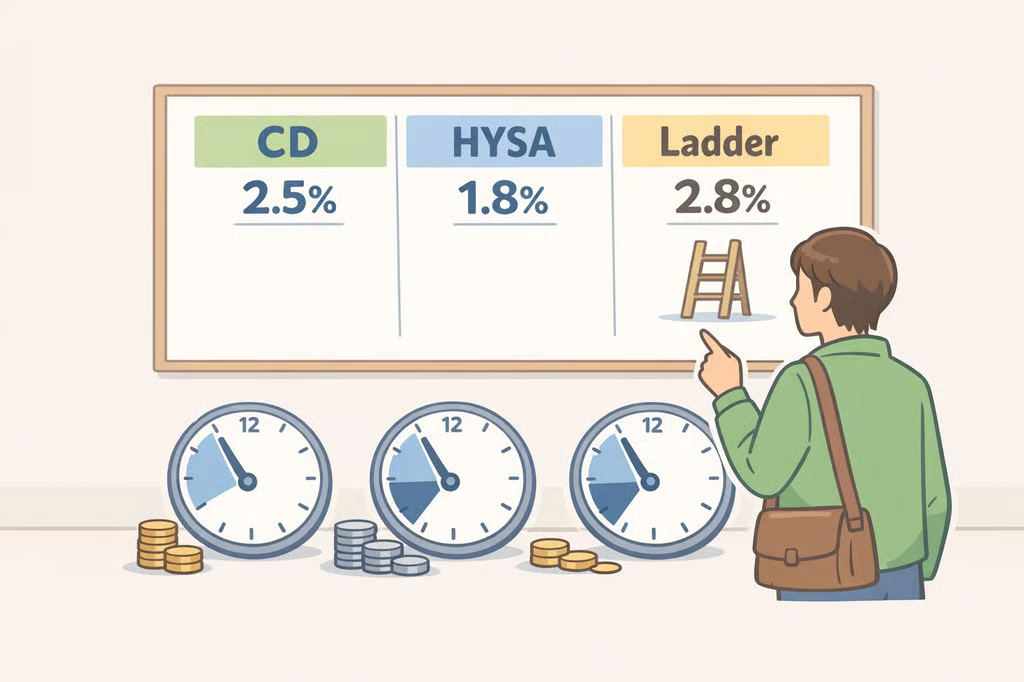
CD vs HYSA vs Ladder: Best Rates as of June 25, 2026
The best CD rates available right now top out at 4% APY, with the strongest offers concentrated in 6- and 12-month terms at online banks and credit unions. That is a solid return for money that is federally insured and locked away, but it is not a forever opportunity.
FedWatch pricing suggests at least one Federal Reserve rate cut before year-end 2026, and banks tend to move deposit rates quickly when the Fed does. The window for today’s best CDs is open, but it is narrower than it looks.
What matters now is less about chasing a slightly better number and more about whether a deposit rate can be locked before the market shifts again. For money with a fixed deadline, that distinction is the difference between a good fit and a bad habit.
Today's best CD rates by term
The strongest nationally available CD offers are still clustered in the short end of the curve, with online banks and credit unions usually leading the pack.
- 6-month CDs: up to 4.00% APY
- 12-month CDs: up to 4.00% APY
- 24-month CDs: roughly 3.60% to 3.75% APY
- 36-month CDs: roughly 3.40% to 3.60% APY
The FDIC’s weekly rate data shows the national average for a 12-month CD remains well below the top offers, according to FDIC weekly rate data. That gap is the story here. The difference between a middling national average and a top-tier offer is large enough that institution selection matters as much as timing.
High-yield savings accounts are still in the same general range as short CDs at some online banks, which makes the comparison worth a closer look. The choice is no longer as lopsided as it was when deposit rates sat near zero. That alone is worth noticing.
What the rate curve is saying
Shorter CDs paying more than longer ones is not a quirk. It is the market’s way of saying it expects rates to fall.
The Federal Reserve’s rate history shows the benchmark rate held steady through the first half of 2026 after cuts in late 2024 and early 2025 brought it down from its post-pandemic peak, Fed history shows. That pause has kept deposit yields elevated by historical standards, even as the direction of travel looks lower.
A CD locks in today’s rate for the full term. If a saver waits for conditions to improve and the market slips instead, the best available rate can be lower by the time the account is opened. Patience is fine. In rate markets, it can also be expensive.
CD vs. HYSA vs. ladder
The right choice depends on when the money will be needed. That is the part people often skip, then end up trying to make a liquidity problem fit a yield problem.
Cash needed in under 6 months: A high-yield savings account usually makes more sense. The money stays accessible, and there is no penalty for moving it when plans change. The Consumer Financial Protection Bureau notes that CD penalties typically run 60 to 180 days of interest, which can wipe out much of the return on a short-term CD if the money has to come out early.
Cash needed in 6 to 12 months: A 12-month CD is often the cleaner option if the spending date is real and the money can sit still. It trades flexibility for certainty, which is usually a fair exchange when the goal is to protect a fixed savings target from lower rates later.
Cash needed over 1 to 3 years or more: A CD ladder spreads the money across several maturities, so some portion comes due on a rolling basis. That keeps part of the balance earning a CD rate while giving regular access to maturing funds. The mechanics are simple enough: split the cash across several terms, then reinvest each rung as it matures.
The ladder is useful because it avoids the all-or-nothing trap. You are not betting every dollar on one maturity date, and you are not leaving everything in a variable-rate account that can be cut without much ceremony.
Why a CD can still beat a HYSA
High-yield savings rates move. A bank can lower them at any time, and they generally follow the direction of the Fed funds rate.
That makes a CD more useful for money that already has a job. If a saver locks in a 12-month CD today, the yield stays put even if deposit rates drift lower over the next several months. A savings account offers more freedom. A CD offers more certainty. Different tools, different jobs.
Who should act now, and who can wait
The saver most likely to benefit from a CD today is the one with a clearly timed goal, such as a car purchase, a tuition bill, or a tax payment that is not going anywhere. If the money will sit untouched, a short-term CD still does exactly what it is supposed to do: remove guesswork.
The saver who should hesitate is the one who may need the cash sooner than expected, or who is saving without a fixed deadline. For that person, liquidity may matter more than squeezing out a slightly higher APY. The penalty for early withdrawal is a poor joke when it lands on your own balance sheet.
Before opening anything, compare current offers through Bankrate then check FDIC or NCUA coverage through the institution itself. Also look at minimum deposit requirements and early-withdrawal terms. A strong rate can still be a mediocre deal if the entry ticket is too high or the penalty is ugly.
For now, the short-term edge remains with savers who can leave the money alone and move quickly enough to catch it. If Fed pricing shifts again over the next few weeks, the best offers will not wait around.