
Balance transfer vs personal loan: which saves more?
If debt is hanging around at a painful interest rate, the choice between a balance transfer vs personal loan comes down to a simple question: how fast can the debt be gone? One route gives you a temporary interest break. The other gives you a fixed repayment schedule and a fixed rate, which is often less glamorous and occasionally more useful.
Both options are designed to help you use new credit to pay off higher-interest debt, and both can work. MoneyLion reported earlier this year that a balance transfer usually makes sense when the balance can be cleared during the 0% introductory APR period, typically 12 to 21 months, while a personal loan may cost less over time if that timeline is unrealistic. That is the whole game, really. The rest is fees, timing, and how much discipline survives contact with a monthly statement.
How each option works
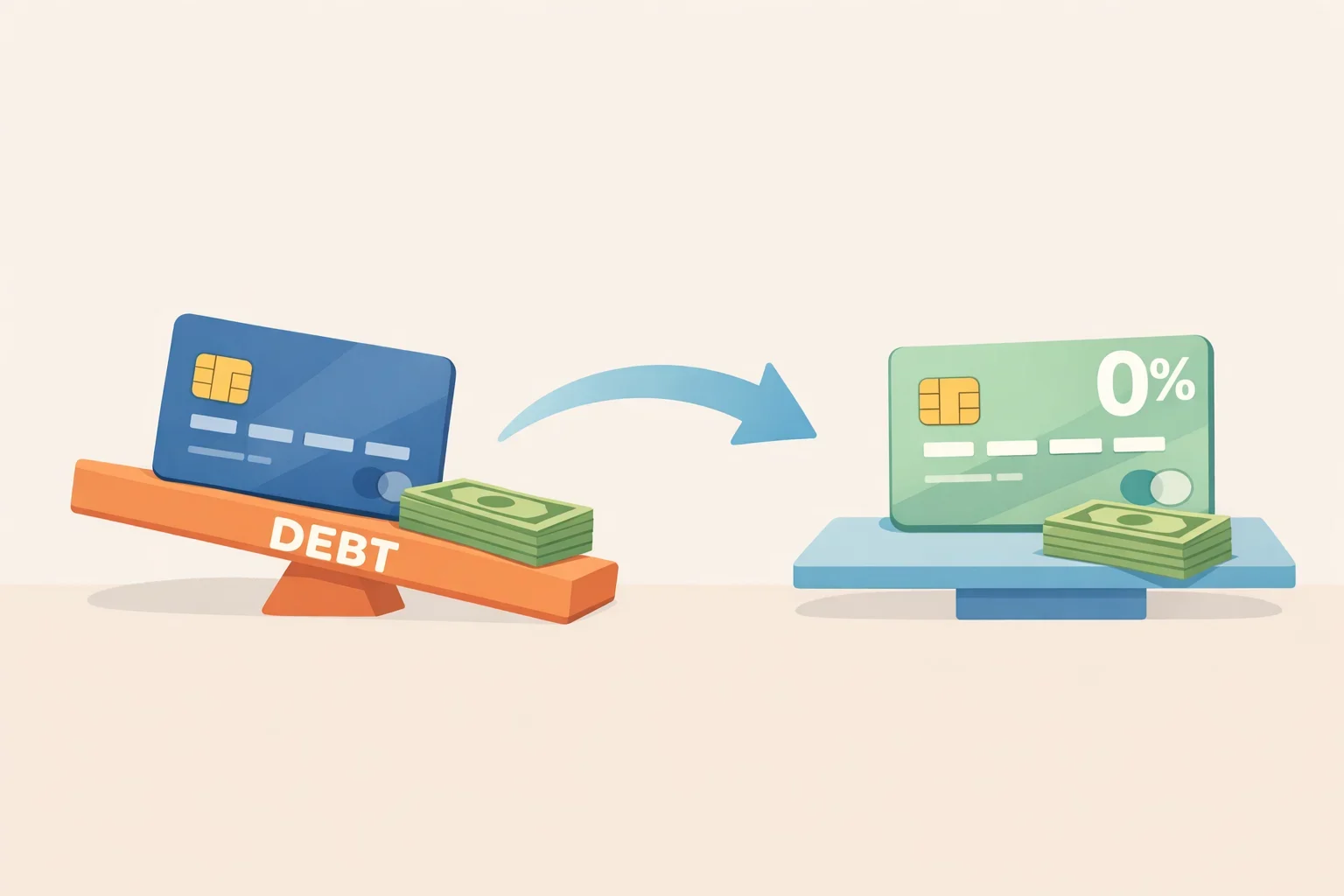
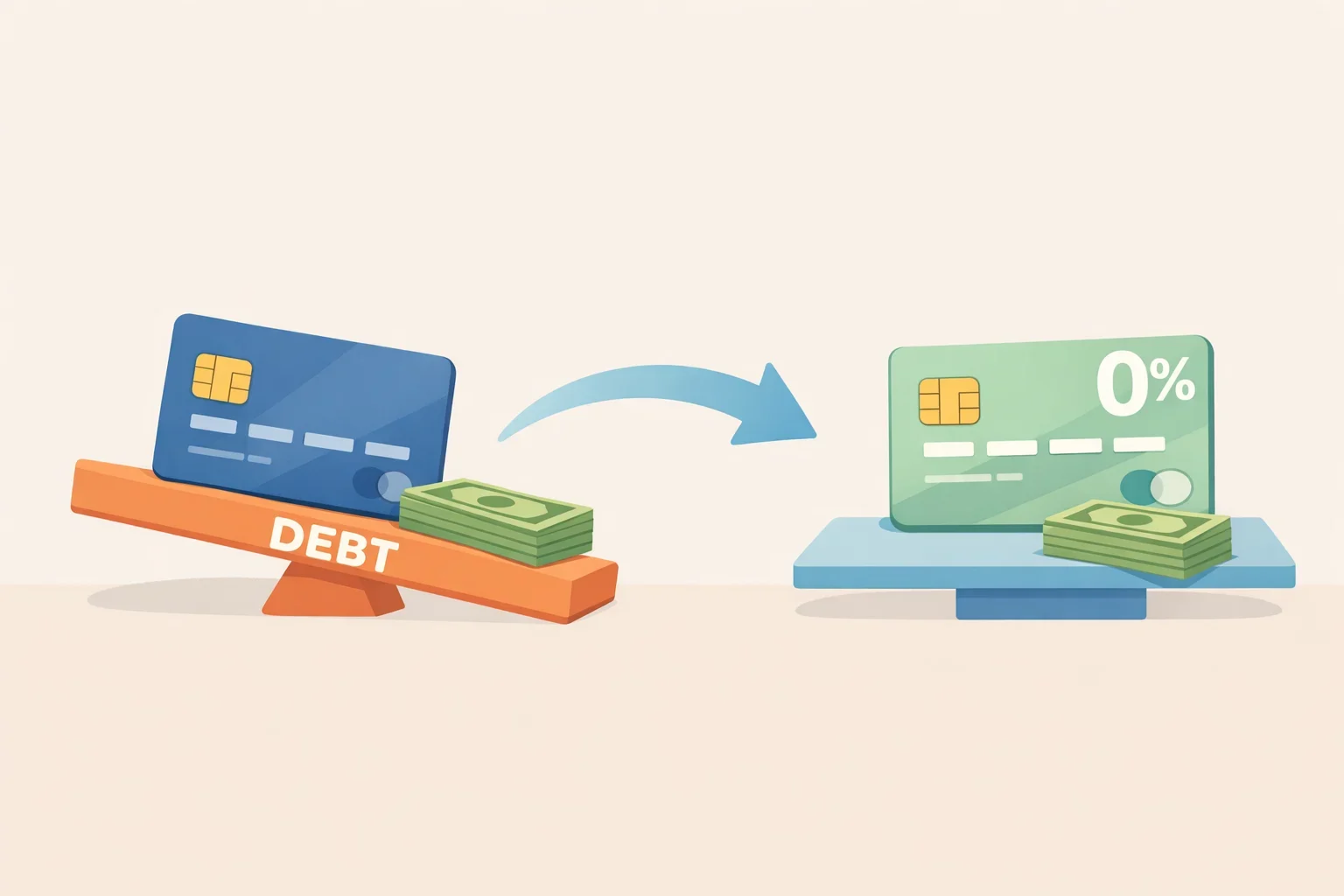
A balance transfer moves existing credit card debt to a new card, usually one with a promotional 0% APR. During that introductory period, interest pauses, which is why these cards can be so effective for someone who can pay down the debt quickly. Experian said earlier this year that you generally need to open a card with a different issuer, and you usually have to complete the transfer within a set window after opening the account.
A personal loan works differently. The lender gives a lump sum, the debt gets paid off, and the borrower repays the loan in fixed monthly installments over a set term. Upgrade reported last month that personal loans typically run 24 to 84 months, with a fixed rate from day one. No teaser period. No rate cliff. Less drama, which is not always a bad thing.
That structural difference matters more than the marketing language. A balance transfer is revolving credit with a temporary interest holiday. A personal loan is installment debt with an end date baked in. One is flexible but easy to misuse. The other is less flexible but harder to wander off course with.
Funding speed also differs. MoneyLion reported last month that personal loans usually fund within 1 to 5 days after the loan is finalized, while balance transfers usually take 14 days and can take up to 6 weeks. If a high-rate billing cycle is about to hit, that gap is not a footnote.
Balance transfer vs personal loan: where the math favors each option
The cleanest case for a balance transfer is simple: the debt is manageable, the promotional window is long enough, and the monthly payment needed to finish on time is realistic. Experian said earlier this year that paying off a $2,000 balance at 0% APR would save $1,248 in interest compared with paying the current average credit card interest rate of 21.98%. Experian also said that a 5% balance transfer fee would add $100 on that same balance. Even with the fee, the savings can still be substantial.
The same source also notes that the best 0% APR balance transfer offers are typically reserved for borrowers with a credit score of at least 670. That is the entry point, not the finish line. Better scores usually get better terms, and the offer still has to fit the balance you are trying to move.
Fees change the picture, but they do not erase the basic logic. WalletHub reported last month that the average balance transfer fee on cards with 0% intro APR on balance transfers is 3.31%, and the average intro period is 13.3 months. Those are useful benchmarks because they show how narrow the window can be. In practice, a balance transfer only works when the balance is small enough, and the monthly budget is strong enough, to beat the clock.
A personal loan tends to win when the debt is larger, the payoff period needs to be longer, or the borrower wants one fixed payment instead of a temporary discount. MoneyLion reported last month that personal loan APRs typically range from 6% to 36%, while balance transfer cards start at 0% but can switch to a variable rate of 15% to 29% after the promo period ends. That post-promo rate is the part people forget to fear until it shows up.
Fees matter on both sides. MoneyLion said last month that balance transfer cards typically charge 3% to 5% of the transferred balance, and personal loan origination fees can reach up to 10%. Experian said in 2024 that many unsecured personal loan lenders charge origination fees of 1% to 12% of the loan amount. Those fees do not make the products unusable. They just make “headline APR” a little less helpful than advertisers would like.
The part that turns a good deal into an expensive one
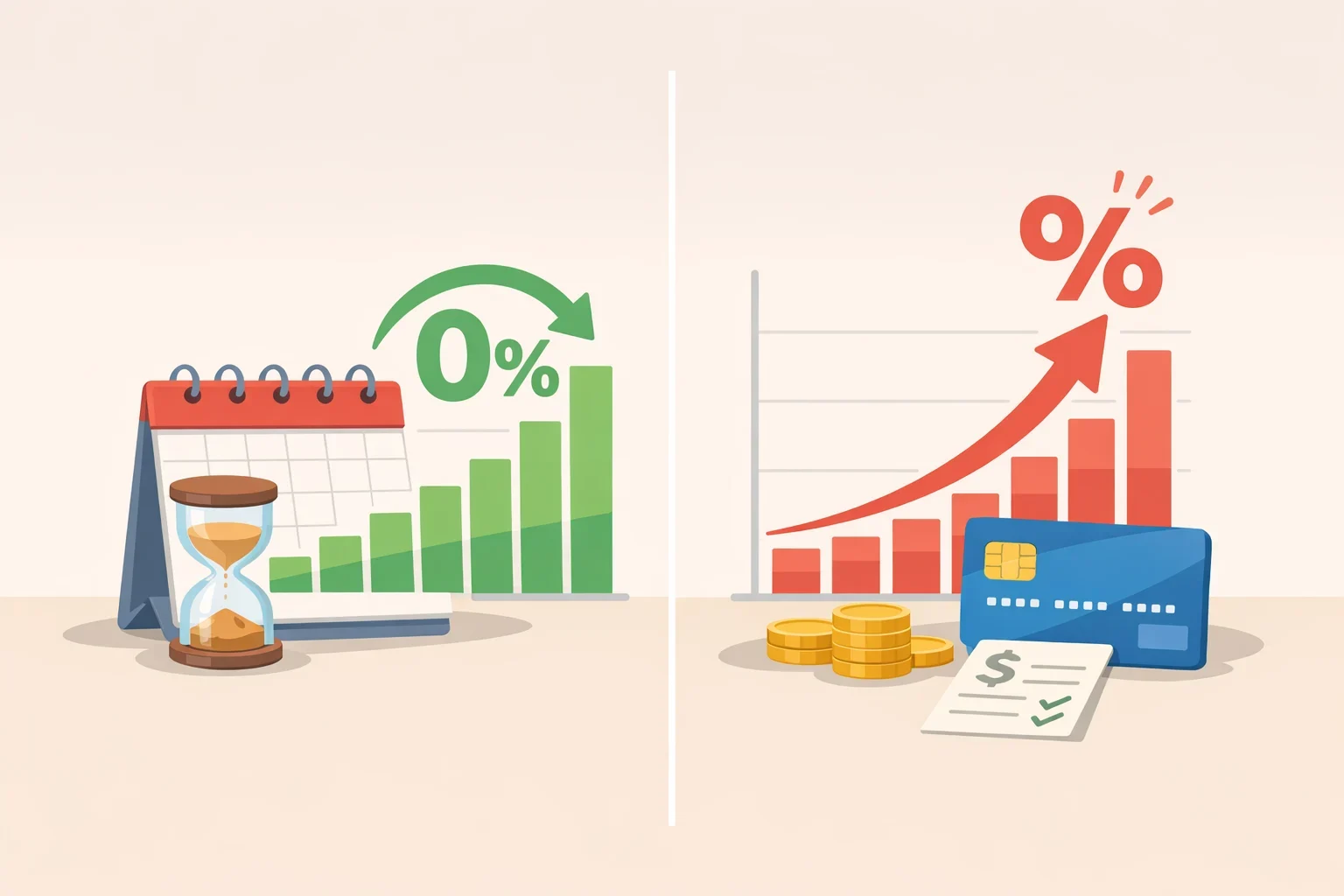
The danger with a balance transfer is not the transfer itself. It is the balance that is still sitting there when the intro period ends. Experian said earlier this year that when the intro period ends, the APR can jump to close to 30%, depending on the card and the borrower’s credit score.
That is a nasty little cliff. A minimum payment on a credit card is usually only a small slice of the balance, and MoneyLion explained last month that paying only the minimum can stretch repayment for years and drive up total interest. So the balance transfer pitch only works if the borrower plans to pay the debt down aggressively, not admire the 0% rate from a safe distance.
A personal loan avoids that particular trap because the rate and payment do not reset on a timer. Upgrade said last month that borrowers repay in fixed monthly installments, and the structure gives the debt a clear end date. That predictability is the point. It is also why some people find loans easier to live with, even when the balance transfer math looks prettier at first glance.
There is a second trap worth naming: late payments. MoneyLion said last month that a late payment may cause a borrower to forfeit the promotional rate. One missed date can undo a lot of careful planning. Credit card issuers are not known for their sentimental streak.
What kind of borrower each option suits
The balance transfer vs personal loan choice is partly about math and partly about temperament. Upgrade said last month that a balance transfer may make sense if the debt is manageable, the borrower has good or excellent credit, and the balance can be paid off quickly. That is basically the profile of someone who can make a plan and stick to it.
It also helps when the debt is mostly credit cards. Upgrade noted last month that personal loans can consolidate credit card debt and other unsecured debts into one single payment, which makes them cleaner for borrowers juggling multiple account types. A balance transfer is a narrower tool. Useful, but a little fussy.
Borrowers who need more time usually have a different problem. Upgrade said last month that if paying off debt quickly would strain the budget, a personal loan can provide a more affordable monthly payment. That is not a moral judgment. It is arithmetic. If the monthly payment required by a balance transfer is too steep, the transfer can become a delay tactic dressed up as a strategy.
Credit limits can also rule out the balance transfer option before the comparison even starts. MoneyLion reported last month that balance transfer credit limits generally range from around $500 to $10,000 or more, while personal loans can cover $600 to $100,000 or more. Large balances can simply outgrow the card option. The market has a way of settling arguments for you.
A simple way to decide
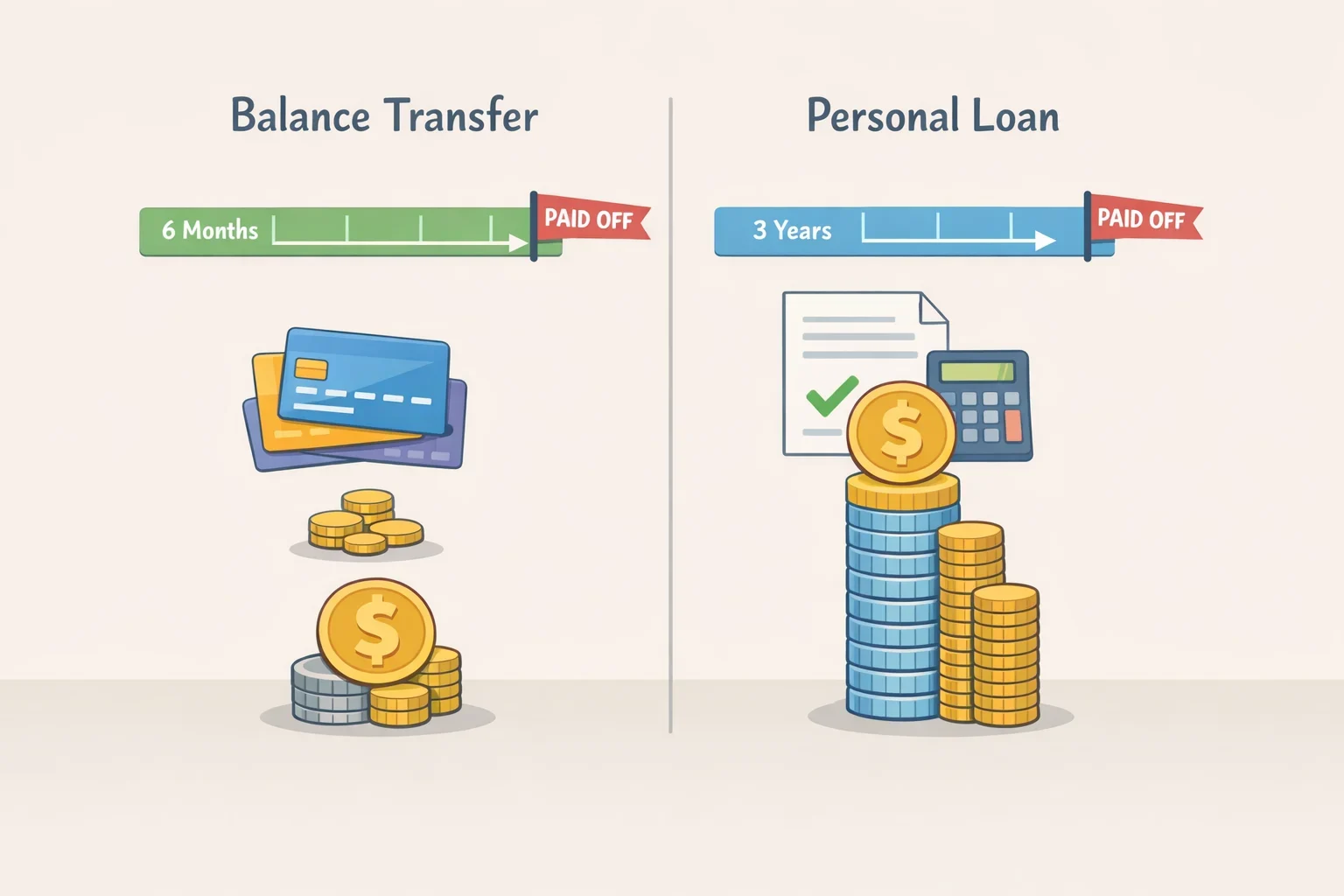
Start with the repayment timeline. If you can reasonably pay off the full balance before the 0% promo ends, a balance transfer is usually the cheaper route. MoneyLion said that window is typically 12 to 21 months, and WalletHub reported last month that the average intro period is 13.3 months.
If that payment would stretch you, price a personal loan instead. MoneyLion reported last month that personal loans typically carry fixed APRs from 6% to 36%, and Upgrade said last month that the fixed schedule can make the debt easier to manage. The question is not which product looks cheaper in a vacuum. It is which one you can actually finish.
Check the fees next. MoneyLion said last month that balance transfer fees typically run 3% to 5%, while personal loan origination fees can reach 10%. Experian said in 2024 that origination fees may run from 1% to 12% on unsecured personal loans. On smaller debts, those charges matter a lot. On larger debts, they can still matter, just less dramatically than the interest rate.
Then be honest about credit quality. Experian said earlier this year that a score of at least 670 is generally the point where competitive balance transfer offers become more realistic. Personal loans may be easier to qualify for if you need to borrow more, but they still price credit risk directly. No lender is giving away money for the charm of it.
The bottom line
For balance transfer vs personal loan, the right answer is usually the one that fits your payoff timeline, not the one with the flashier headline rate. A balance transfer can be excellent if the balance is small enough and the promotional period is long enough to wipe it out. A personal loan makes more sense when the debt needs more time, more structure, or a wider borrowing range.
If the monthly payment required to clear the balance before the promo ends fits comfortably in the budget, the balance transfer usually deserves a hard look. If it does not, a fixed-rate personal loan is the steadier bet. Either way, the useful move is the same one: run the numbers before signing anything. Credit card companies and lenders will happily do the smiling for you. The borrower still has to do the math.