
- Are Checking Account Bonuses Worth It? Taxes, Fees, Opportunity Cost
- Checking account bonus requirements: two structures, two different math problems
- How checking account bonuses are taxed
- How to calculate checking account bonus math
- When a checking account bonus is worth it
- So, are checking account bonuses worth it?
Are Checking Account Bonuses Worth It? Taxes, Fees, Opportunity Cost
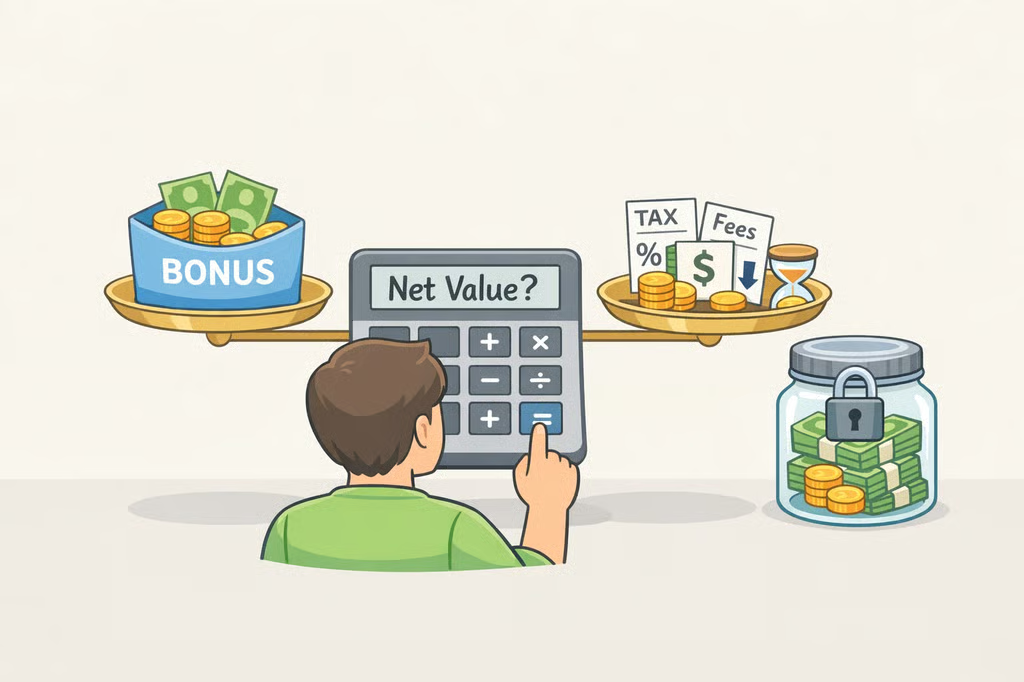
A checking account bonus can look like easy money. It usually isn’t. The real question behind are checking account bonuses worth it is simple: after taxes, fees, and the interest you give up by parking cash at a bank, how much do you actually keep?
The answer depends on the structure of the offer. A direct-deposit bonus is mostly a paperwork problem. A balance-and-hold bonus is a cash-management problem, because the money you lock up could have earned yield somewhere else. Bank Offers explains that the clean way to think about it is: Net Bonus = Bonus × (1 − Marginal Tax Rate) − Opportunity Cost − Fees − Time Cost.
That formula is the spine of this piece. Start there, then check the offer terms against it. If the headline number still looks attractive after that, fine. If not, the bank has saved you from learning the hard way.
Checking account bonus requirements: two structures, two different math problems
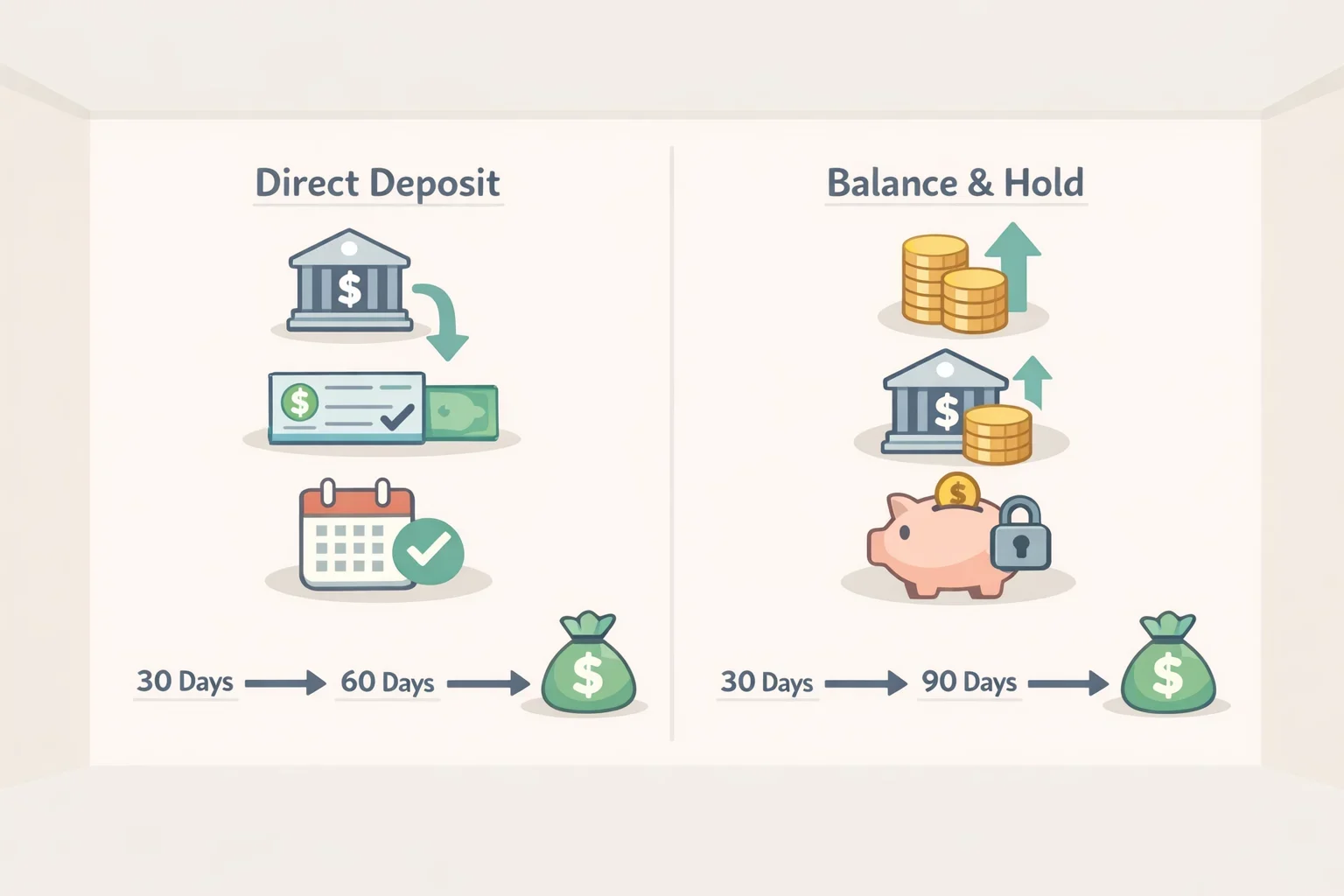
Not all checking bonuses ask for the same thing. Some require a direct deposit, usually a paycheck or government payment. Others require new money and a minimum balance held for a set period. Those are not close cousins. They are different species.
Chase currently has a $400 checking offer that requires a $1,000 direct deposit and no minimum balance, according to Doctor of Credit. If you were already going to route your paycheck somewhere, the cost of meeting that requirement is close to zero. You still need to read the terms, but the basic economics are friendly.
The bigger Chase offer pays up to $900, with tiers of $450 for $5,000 to $9,999.99, $600 for $10,000 to $14,999.99, and $900 for $15,000 or more, according to Doctor of Credit. The money has to be deposited and maintained for 90 days, and if the balance falls below the threshold during that period, the offer amount may change or the account may no longer qualify. That turns the bonus into a trade. You are lending the bank cash and getting paid for it.
A few fee details matter too. Chase says new accounts will not be charged a monthly service fee for at least the first two statement periods, and the standard fee can be waived if you meet one of the listed balance or direct-deposit conditions, as summarized by Doctor of Credit. Fine print is where these offers earn their keep.
How checking account bonuses are taxed
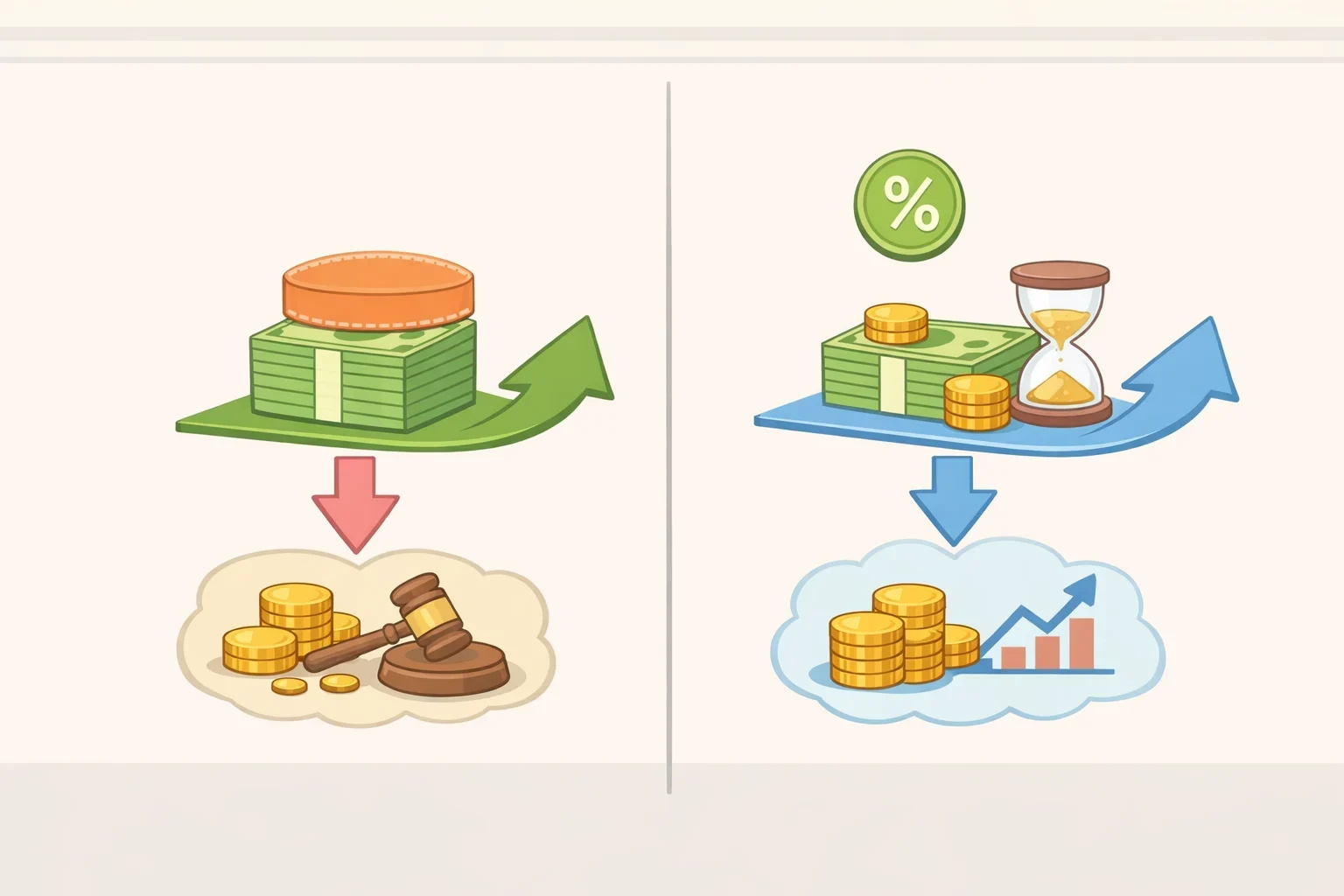
The tax part is dull, which is exactly why people miss it. Bank bonuses are treated as income, Doctor of Credit says, so the bonus amount is taxable in the year it posts. There is no special treatment because the money arrived with confetti.
That means you should always start with the after-tax value. Bank Offers makes the point plainly: tax is calculated on the bonus, not on the opportunity cost. Opportunity cost is foregone earnings, not income you actually received. The distinction matters because people sometimes subtract taxes from the wrong number and end up flattering the offer.
If you want the shortest possible version, here it is. A $900 bonus is not really $900. It is $900 minus whatever your marginal tax rate takes off, before you account for anything else. That is the number that belongs in the rest of the math.
How to calculate checking account bonus math
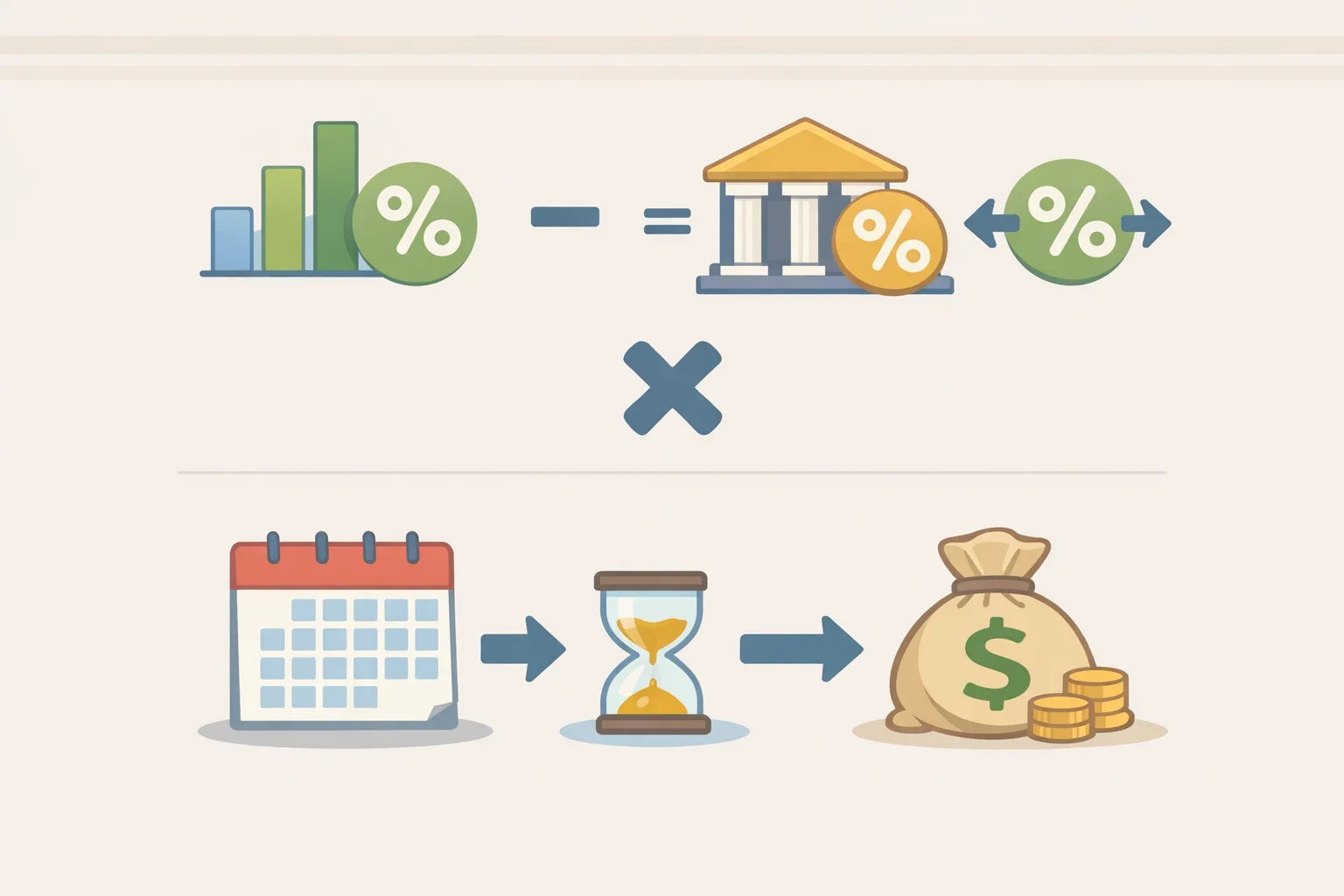
Opportunity cost is the value of the next-best use of your money. For checking bonuses, the next-best use is usually whatever that cash would have earned in a competitive high-yield savings account, according to Bank Offers. If the bonus bank pays far less than your benchmark account, the spread is the real cost of the deal.
The formula is straightforward: Opportunity Cost = Balance × (Benchmark APY − Bonus Bank APY) × (Days Held ÷ 365), Bank Offers says. In plain English, the larger the required balance and the longer you have to keep it there, the more yield you give up. If the bonus bank pays almost nothing, the math moves against you fast.
Bank Offers gives a simple hypothetical example. A $300 bonus on $5,000 held for 120 days, with a 3.95 percentage point rate spread, produces about $65 in opportunity cost, $72 in federal tax at a 24% bracket, and $100 in time cost if you value two hours at $50 per hour, leaving a net value of about $63. That is not bad, but it is not free money either. It is a modest return for a bit of account choreography. Bank Offers says the numbers are hypothetical and only meant to show the structure.
A larger headline can go the other way. In another hypothetical example from Bank Offers, a $700 bonus requires $25,000 held for 180 days. With a 3.50 percentage point spread, the opportunity cost is about $432, federal tax at 24% is $168, and three hours of time at $50 per hour adds $150. The result is roughly negative $50. Bigger bonus, worse deal. Finance has a way of doing that when the balance requirement gets heavy enough.
The reason this changes so much from one year to the next is the rate environment. Bank Offers notes that in a near-zero-rate world, the spread is small and the opportunity cost line stays tame. In a higher-rate world, with benchmark HYSAs paying around 4% to 5% and the bonus bank paying close to nothing, the cost of locking up cash rises quickly. The same offer can look generous in one market and merely decorative in another.
The Chase $900 offer is a useful live example because it requires a $15,000 deposit for 90 days, according to Doctor of Credit. Bank Offers explains why that structure deserves scrutiny: if the benchmark account pays materially more, the yield you give up over those 90 days is a real cost even when no fee is charged. That does not automatically make the deal bad. It just means the real profit is smaller than the landing page suggests.
When a checking account bonus is worth it

The best offers are the ones that ask you to do something you were already doing. A direct-deposit bonus with no minimum balance usually fits that description. Bank Offers says the opportunity cost in that case is near zero, because you are paying yourself for behavior you were already planning to use. Chase’s $400 direct-deposit bonus falls into that category, according to Doctor of Credit.
Balance-and-hold bonuses can still make sense, but only when the required cash is modest, the hold period is short, and the spread to your benchmark account is not huge. Bank Offers says those offers can still be the right call when the bonus is large relative to the opportunity cost, or when the money would have sat in a similar place anyway. That is a narrower lane than the marketing copy implies.
The offers that deserve the most caution have the same shape. Large balance. Long hold. Wide rate spread. Taxable account. Bank Offers lists those as the conditions that make locked-fund bonuses lose against simpler alternatives. Once all four stack up, the bank is paying you less than your cash could have earned on its own.
A quick checklist helps. Confirm the minimum balance needed to qualify and whether you can actually keep it there. Check for any clawback language if you close the account early. Doctor of Credit notes that Chase appears to have removed an older six-month closure penalty clause sometime in 2022, which makes it safer to close after the bonus posts, though current terms should still be checked. Also verify the tax form and whether prior customers are excluded.
That last part is not glamorous, but it is where offers become either easy or annoying. A good checking bonus should be boring once you understand it. If the terms require a spreadsheet and a prayer, the bank is probably doing better than you are.
So, are checking account bonuses worth it?
Sometimes. The answer is not a moral judgment, just a cash-flow calculation. A checking bonus is worth it when the after-tax payout exceeds the interest you give up, any fees you pay, and the time you spend managing the account.
The fast test is three questions. First, is this a direct-deposit-only offer, or does it require you to lock up real cash? Second, what is the spread between the bonus bank and a realistic benchmark HYSA? Third, what is the after-tax value of the bonus once you apply your marginal rate? If the number is still comfortably positive, the offer may be worth the trouble. If not, the high-yield savings account you already have is doing a perfectly respectable job.
For readers who want a deeper dive into the math, Bank Offers walks through the opportunity-cost framework in full. For updated deal listings and term summaries, Doctor of Credit keeps a running list. Neither replaces the actual offer terms, which remain the only version that matters when the clock starts ticking.