
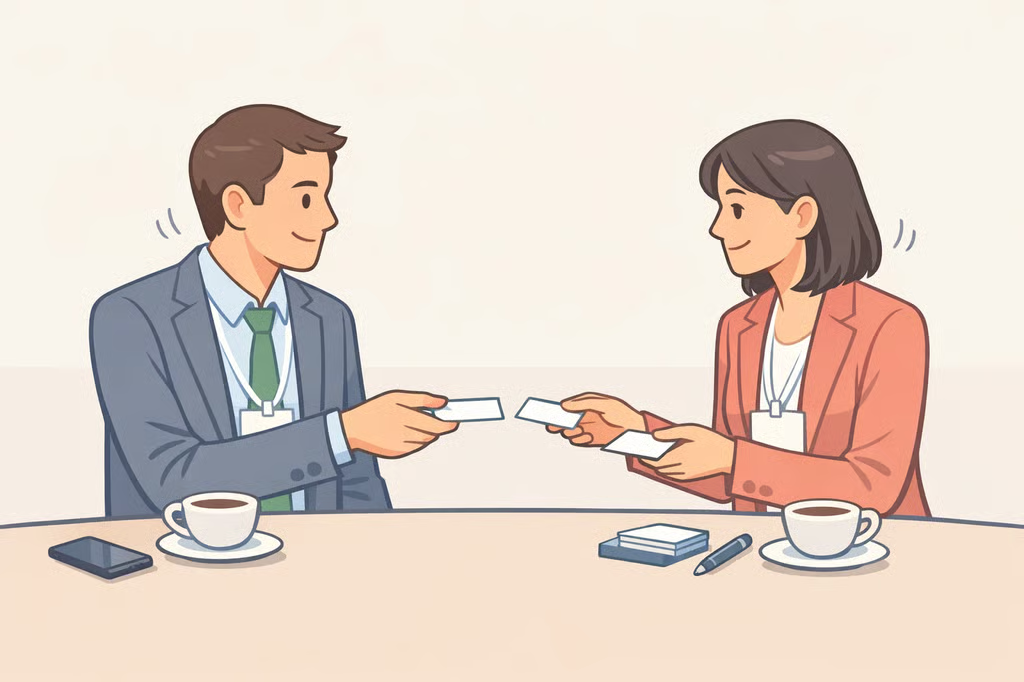
Networking mistakes to avoid: etiquette tips that last
Networking mistakes to avoid usually have less to do with slick small talk than with timing, attention, and basic manners. Get those wrong, and you start to look transactional, inattentive, or pushy, which is a quick way to turn a useful contact into a dead end.
This guide walks through eight common networking etiquette mistakes and shows what to do instead. The goal is simple: help you build professional relationships that last longer than a conference badge.
Networking works best when both sides feel the relationship has value, and the CFA Institute said that earlier last year. That matters even more now, because NeuroCorporate Training noted in spring 2026 that remote and hybrid work reduce incidental relational contact. Fewer chance encounters means every intentional interaction carries more weight.
Common networking mistakes that make you seem transactional
The ugliest networking habit is also the easiest to spot: treating people like a resource you pull from when the need arises. NeuroCorporate Training described this spring a transactional networking culture as one where relationships are activated mainly when there is something specific to gain, while relationship maintenance gets pushed aside.
1. Reaching out only when you need something
If the only time someone hears from you is when you need a referral, a job lead, or a favor, they notice. The CFA Institute said earlier last year that people quickly lose interest when a relationship turns into all taking and no giving.
This is often less cynical than it sounds. NeuroCorporate Training noted in spring 2026 that systems rewarding output over relationship maintenance can train people out of the habit of staying in touch. The result is the same, though, silence for months, then a sudden request.
Stay visible without attaching an ask. Share a useful article, comment on a post, or send a short note just to check in. It does not need to be profound. It just needs to be real.
2. Treating networking like a numbers game
There is a certain emotional comfort in collecting contacts. It feels productive, like sorting coins into a jar. The problem is that most of those coins do not buy much.
The CFA Institute said earlier last year that networking outcomes tend to follow a rough 80/20 pattern, where a small share of relationships accounts for most of the value. It also said this is about building real, long-term relationships, not collecting business cards like trophies.
So stop trying to work the whole room. Pick two or three people you actually want to talk to, and give those conversations enough room to breathe. Two honest exchanges will outlast ten polished drive-bys.
Professional networking etiquette at work events
The following common networking mistakes happen in real time, which makes them harder to ignore and harder to undo. People remember how you made them feel while they were standing there.
3. Dominating the conversation
Talking too much is one of the fastest ways to signal that you are more interested in yourself than in the person across from you. The CFA Institute said earlier last year that listening and encouraging others to talk about themselves are core networking skills, not optional niceties.
The American Bar Association listed dominating the conversation as a connection disruptor in fall 2023. That is a memorable phrase because it is true. A reputation for steamrolling people travels.
Ask a question, then let the answer land. If the other person is still talking, your turn has not started yet.
4. Checking your phone mid-conversation
Few things say, “you are not the priority here,” quite like looking at a screen while someone is speaking. The American Bar Association identified visible distraction, including being on a phone, as one of the behaviors most likely to damage a new professional connection in fall 2023.
That does not mean every conversation must be treated like a diplomatic summit. It does mean the phone should stay out of sight once the interaction begins. If something genuinely urgent comes up, excuse yourself briefly and return properly.
5. Pushing past a polite exit
Some people do not know when a conversation has run its course. Others know and keep going anyway. Neither version is charming.
Reading disinterest is part of professional social awareness, and the American Bar Association said in fall 2023 that continuing to press when someone is signaling they want to move on is one of the common connection disruptors. This is not a test of endurance. If the other person starts giving shorter answers, scanning the room, or edging away, that is your cue.
Wrap up cleanly. Say you enjoyed the conversation, mention that you would like to stay in touch, and let them go. Grace leaves a better memory than persistence.
6. Asking lazy questions
If your question could be answered by a quick search, ask something better. Tufts Career Center said last fall that questions which could be answered by Google or Glassdoor waste time and make it obvious you did not prepare.
Specific questions do more than signal effort. They keep the conversation grounded in the actual person in front of you. Tufts Career Center recommended preparing questions that build on what someone has already said, not recycled prompts that could be used on anyone.
Before a meeting or event, spend five minutes reviewing who you will be speaking with. Bring at least one question that could not be answered by their LinkedIn bio alone. That small bit of homework separates how to network professionally from just showing up and hoping for the best.
How to network professionally after the event
Follow-up is where networking either turns into a relationship or quietly dies. The conversation may have gone well, but memory is short and calendars are cruel.
7. Failing to follow up, or doing it too late
Even personable people can blow the landing. The American Bar Association said in fall 2023 that people often meet a cluster of new contacts and then forget to follow up, or do it so late that the original encounter has gone stale.
Act quickly. Tufts Career Center said last fall to reach out within the next 24 hours while the conversation is still fresh, and the ABA also recommended following up within a week. That is a practical window, not a magic spell.
Keep the message short and specific. Mention where you met, one thing you discussed, and why you wanted to stay in touch. If the note reads like a template, it will feel like one. The CFA Institute said last year that a great conversation means nothing if you do not stay in touch.
8. Following up too aggressively, or too impersonally
There is a narrow lane between attentive and overeager. Step outside it, and you start looking needy.
Tufts Career Center said last fall that sending multiple emails, plus phoning and LinkedIn requests, is excessive. Emailing once is fine. If you do not hear back, a second email a couple of weeks later is fine too. After that, let it rest.
The other mistake is sending the same note to everyone. Tufts Career Center advised sending individual messages only to people with whom you had a meaningful encounter and who are likely to respond. That applies to LinkedIn as well. Once you have had a follow-up conversation or phone call, ask to connect there if it makes sense. People who take part in networking events often get plenty of requests already, so timing matters.
Proofread before you send anything. Tufts Career Center noted that a typo or grammatical error can spoil a first impression faster than almost anything else. It is a small thing, and somehow not small at all.
A better way to build a network
The real lesson here is not that networking is difficult. It is that most people sabotage it with impatience, vagueness, or bad timing.
A stronger network is built by people who know how to make one conversation useful without trying to squeeze every possible use out of it. The CFA Institute said last year that the best results come from building relationships over time, not waiting until a job search forces the issue. That is still the simplest way to avoid looking transactional.
Start with a small circle, stay in touch before you need anything, and follow up like someone who expects to see the other person again. That is usually enough. The rest is just learning not to be the person everyone remembers for the wrong reason.