
Modern Job Hunt Mistakes Explained: Boards, AI, Experience
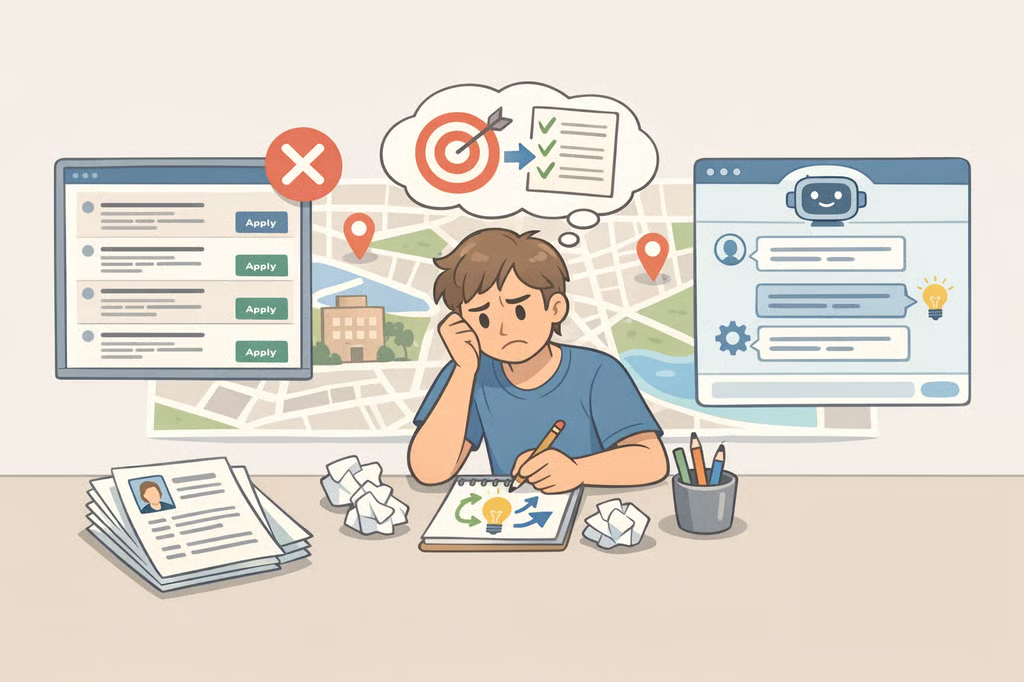
Most job seekers are still using a map for a city that has already been rebuilt. That is the heart of the modern job hunt mistakes problem. The old advice, apply everywhere, polish the résumé, keep going, no longer matches how hiring actually works.
The evidence points to a market that is tighter at the entry level, more selective about skills, and increasingly shaped by AI. Aura reported in June 2025 that, for the first time in U.S. history, the unemployment rate for college graduates ages 22 to 27 now exceeds the national average, according to The Economist as cited by Aura. Aura also reported an 11.2% drop in entry-level postings from Q1 2021 to Q2 2024, along with a 7 to 10% decrease in roles requiring no prior experience. At the same time, more than one-third of entry-level jobs now require AI skills, nearly triple the share reported six months earlier, NACE reported in April.
That combination has produced three job hunting myths that are still doing damage. One says the volume game will save you. Another says AI is simply wiping out entry-level work. The last says credentials plus persistence should still be enough. They are all partly wrong. And in a market like this, partly wrong is expensive.
Common job search mistakes: treating job boards like the whole market
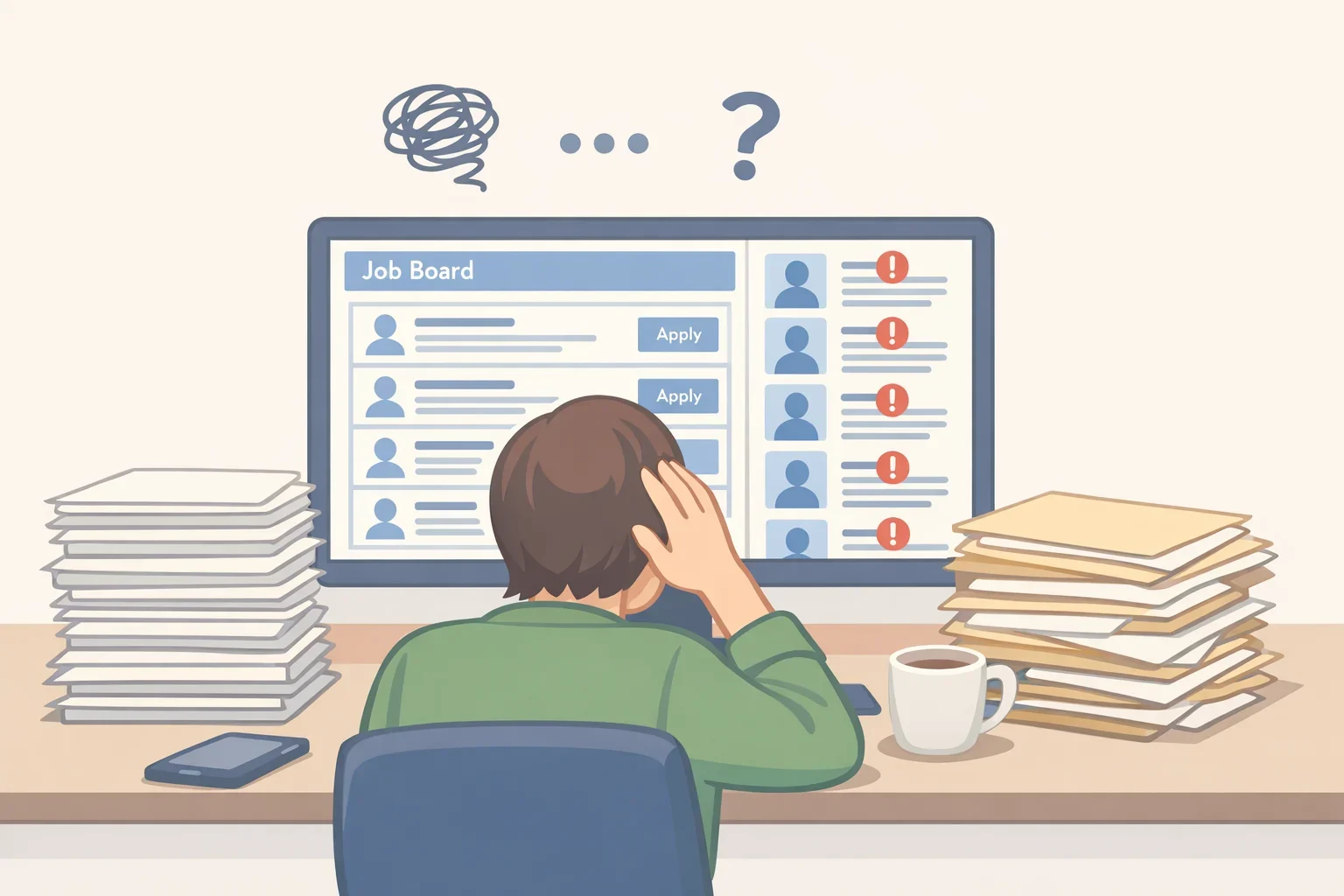
One of the biggest modern job hunt mistakes is assuming every real opening will show up on a public board. A lot of jobs, especially senior ones, never do. The hidden job market, as AIChE reported in May 2025, is filled through internal promotions, employee referrals, and direct recruiter outreach.
That makes sense once you look at the employer side. Hiring is a gamble. A bad hire can slow a team down, hurt productivity, and trigger turnover. So companies lean on people they already trust, or on candidates who arrive with a recommendation attached. A current employee vouching for someone reduces uncertainty, which is another way of saying it reduces the mental work of choosing from a pile of résumés.
That pile can be enormous. AIChE also noted that a single posting can pull in hundreds or even thousands of applications. No recruiter wants to read all of them with the same enthusiasm a tax auditor brings to a shoebox of receipts. The result is decision fatigue, and the workaround is often to narrow the field before the posting goes live.
So the smart move is not just to apply more. It is to show up earlier. The University of Colorado Boulder advised in April 2024 that connecting on LinkedIn and doing informational interviews can build a network and help with the search. That is the practical shift: stop waiting for the vacancy to appear, and start becoming a known quantity inside the companies that might hire you later.
Think of the job hunt less like a public audition and more like a casting process that starts months before the room fills up. You can still get the part from the room. It is just easier if someone already knows your name.
The payoff is straightforward. Search fewer job boards and more companies. Spend part of the week building contact points, not just sending applications. A cold résumé can still land somewhere, but it is no longer the main engine of a good search.
What people get wrong about job hunting and AI
The AI panic has a kernel of truth, which is why it has become so sticky. Some early-career jobs are being changed. Some are getting harder to land. But the broader story is more specific than the headline version.
NACE reported in May 2026 that a 2025 Stanford study found a 16% employment decline for early-career workers in occupations most exposed to AI, including software development and customer support. The same NACE summary said that if all of that decline had turned into unemployment, it would have added only 0.1 percentage points to aggregate unemployment since November 2022. That is real disruption, but not a collapse of the entire early-career labor market.
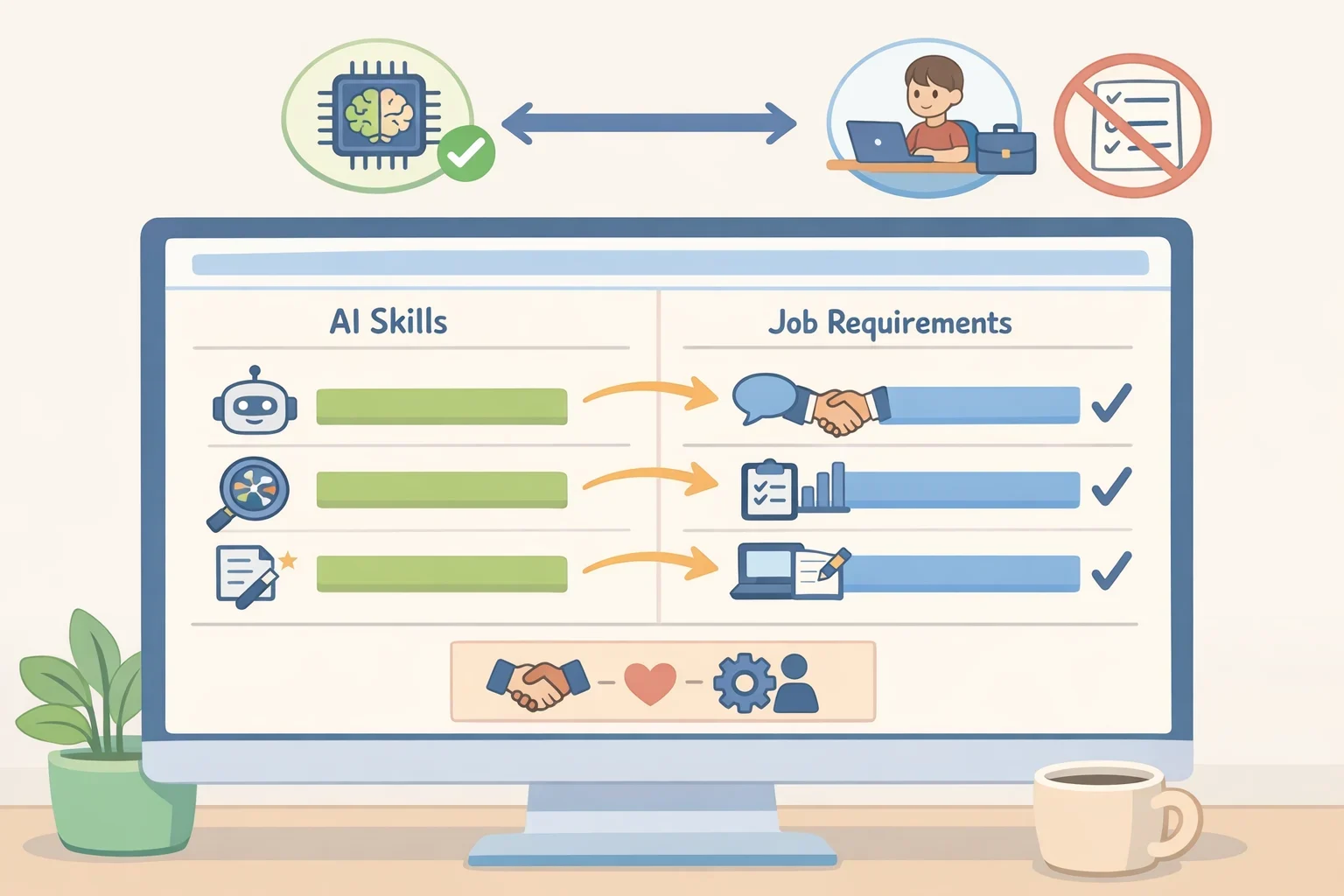
The employer data points in the same direction. In April, NACE reported that more than one-third of entry-level jobs now require AI skills. Yet more than half of employers said AI is not reducing the tasks entry-level workers perform, while just over one-quarter said it has reduced those tasks. More than two-thirds said they are thinking about how AI may be used within jobs, while just 11% were discussing how AI might replace some positions.
That is a different picture from “AI is killing all entry-level work.” It looks more like employers want early-career workers who can work alongside the tools, not hide from them.
The same report also found that among workers in AI-adopting workplaces, the skills gaining importance are problem-solving, adaptability, strategic thinking, and technical skills. In other words, the machine may do the rote part. The human is expected to handle judgment.
Jeff Crume of North Carolina State put it bluntly in NACE’s May report: AI is making entry-level jobs higher-level jobs. That is not a tidy message for candidates who expected a gentle ramp. It does explain why employers are asking for more than the old checklist of “good degree, good attitude, willing to learn.”
For job seekers, AI fluency does not mean becoming a prompt wizard overnight. It means knowing the basic tools in your field, being able to talk about how they fit into work, and not arriving as if the last two years of workplace change happened in another time zone. The candidate who can show that will usually look more useful than the one who merely says they are “comfortable with technology,” which has become résumé wallpaper.
Modern job hunt mistakes that come from trusting merit too much
The third mistake is more subtle. It is the belief that if you are qualified and persistent enough, the process will sort itself out. That would be comforting. It is also incomplete.
Aura reported in June 2025 that two-thirds of entry-level postings now ask for applied experience through internships, freelance work, or certifications, and more than half include at least one technical or digital requirement. The phrase “entry level” has quietly become a moving target. Many roles are still labeled as starter jobs while expecting proof that someone has already started.
That is where a lot of candidates get stuck. They read the title and assume the job is asking for no experience, then hit a wall when the posting wants experience anyway. It is not always a bait-and-switch, though sometimes it feels close enough. It is more often a sign that employers are using the entry-level label to mean “less experienced than our other openings,” not “fresh out of school.”
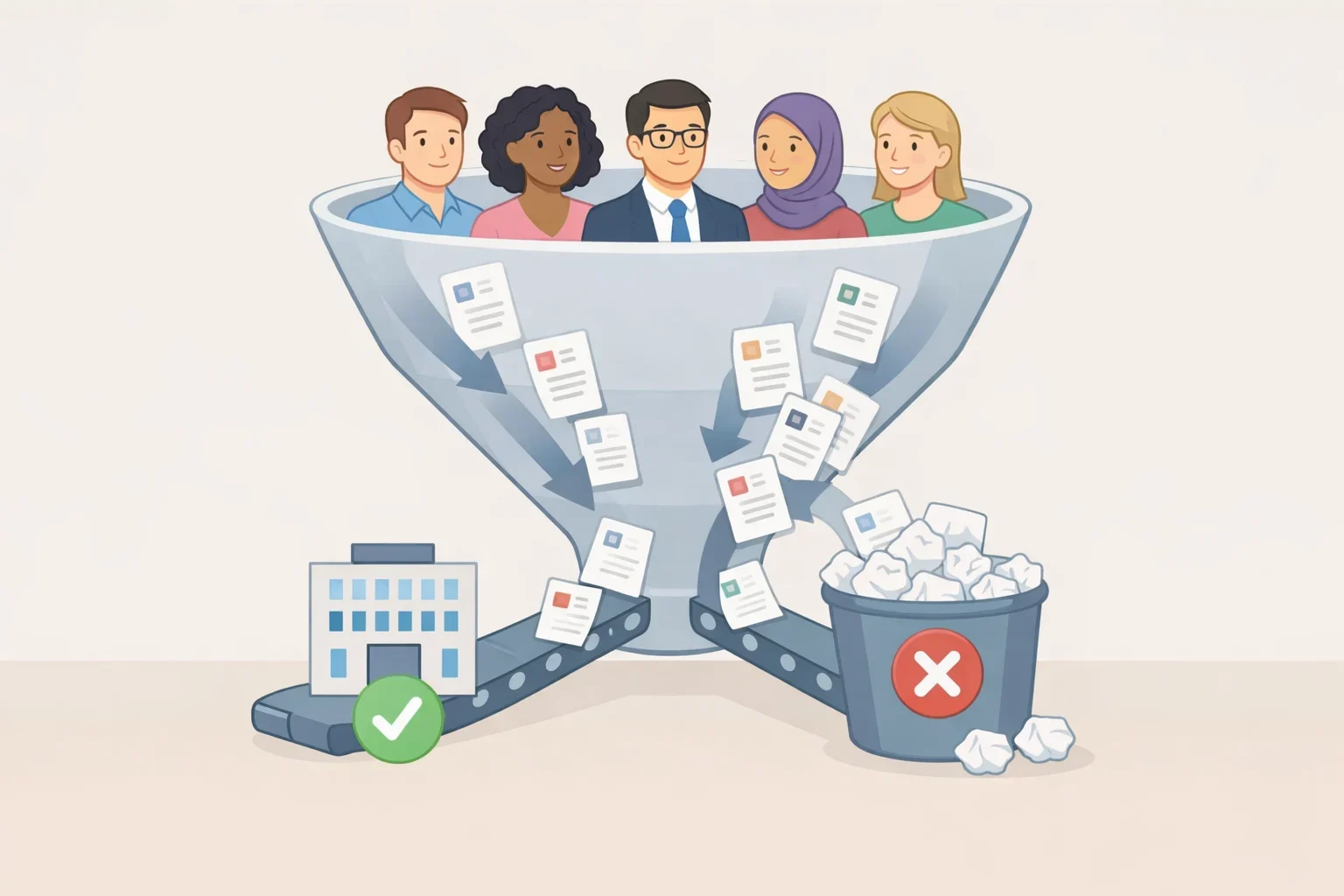
The problem is not only rising expectations. Hiring is also uneven. A large correspondence study from the University of Chicago BFI sent more than 83,000 fictional applications to 108 Fortune 500 employers and found that 23 companies were very likely discriminating against Black applicants with greater than 95% certainty. The study also found that the worst 20% of firms accounted for roughly half of the discrimination against Black applicants in the experiment.
That matters because it tells candidates something useful and unpleasant: not every rejection is a clean measure of merit. Sometimes the problem is the firm. The study does not justify giving up, but it does argue against taking every no as a verdict on personal worth. A bad outcome can reflect a bad process.
It also changes how to interpret a job search. If some companies are structurally harder to break into, then sending the same résumé into the same funnel over and over is not perseverance. It is repetition. Better to compare companies, not just roles. Better to track which employers actually respond to applied experience, which ask for AI familiarity, and which show signs of being inhospitable before the interview stage even starts.
That is the useful correction. Keep applying, but do not mistake volume for strategy. Build experience in small, visible ways, through projects, certifications, freelance work, or internships that can be pointed to. Then aim those signals at employers most likely to value them.
What a better search looks like now
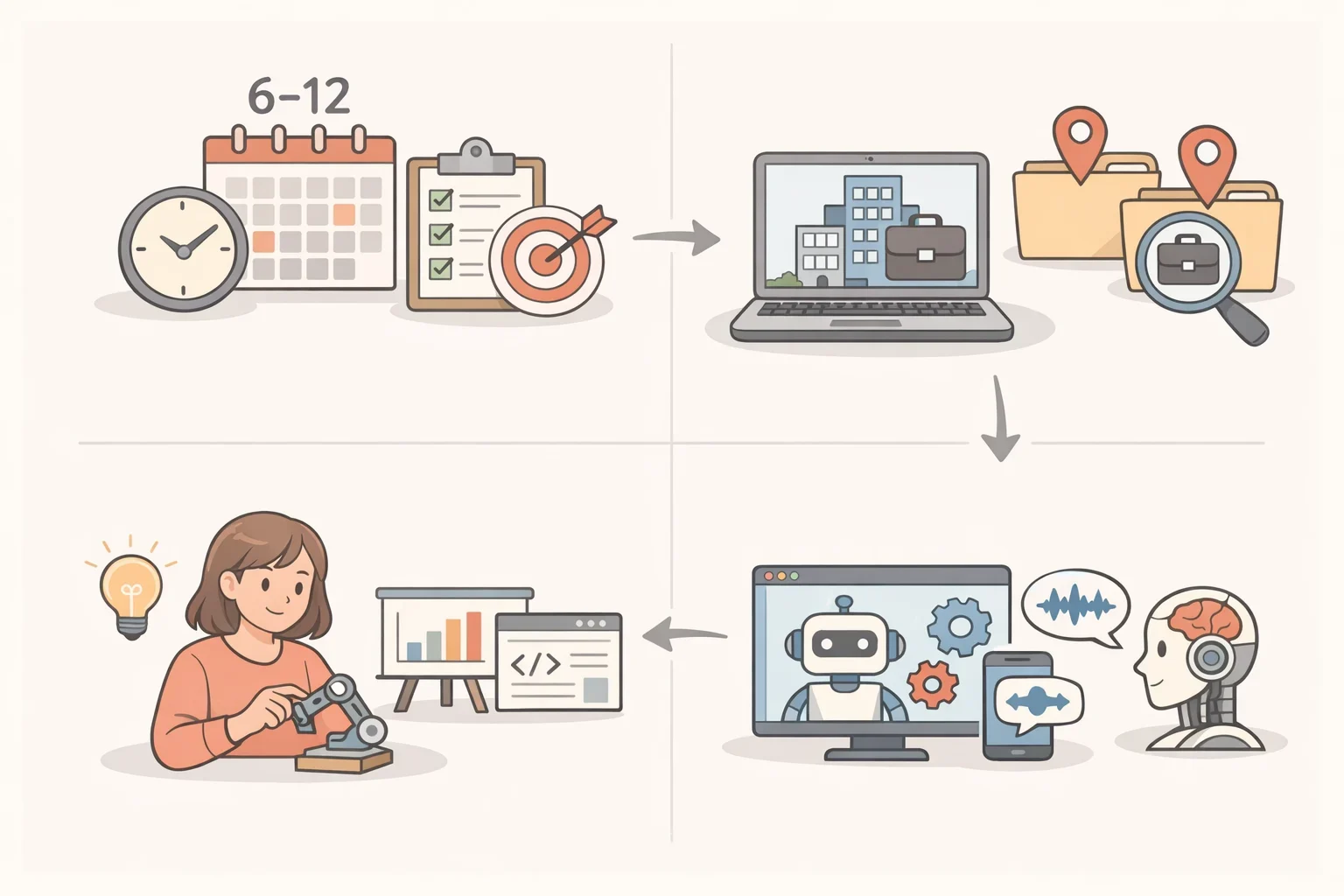
A better job search in 2026 looks less like a sprint through listings and more like a steady campaign. It starts before the opening exists. It assumes AI is part of the workplace, not an optional appendix. And it treats the labor market as uneven, because it is.
NACE reported in May 2026 that 40% of early-career workers have changed or are considering changing their career plans because of AI. That is a lot of people adjusting in real time. The sensible response is not panic. It is calibration.
For job seekers, the next six to twelve months will probably reward three habits. First, keep a smaller but more intentional list of target companies. Second, build proof that you can work with the tools employers are already using. Third, read rejection as data, not destiny. If a company wants applied experience and AI fluency, give it those signals. If a company has a track record of bad outcomes for certain applicants, do not treat it like a neutral referee.
That is the actual reset. The market has changed, but not into chaos. It has changed into something more selective, more networked, and more demanding about how candidates present themselves. The people who adapt fastest will not be the ones who apply the most. They will be the ones who stop using stale rules and start reading the room.