
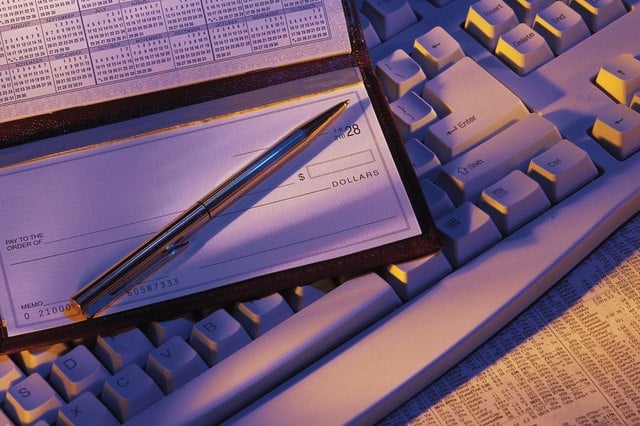


Your checking account number is printed at the bottom of every check, so every merchant and individual receiving a check from you also gets your checking account number. While it may seem logical to assume that since you are "giving out" your checking account number with every check you write it is indeed safe, the technology that has spawned a new breed of scammers makes that assumption dangerous. Never give out your checking account number -- and exercise extraordinary diligence when handing over a paper check.
When It’s OK to Reveal Your Account Number
The U.S. Federal Reserve System supervises, regulates and provides services to the nation's financial institutions but also works to protect consumers' rights. Its advice in the modern world is to never give out your account information to unfamiliar companies. When this isn't possible, do so only once a transaction is in process -- not before. Do not ever give out your account number over the telephone, regardless of who the caller claims to be.
The Numbers Combination
Even more dangerous than giving out your bank account number is giving it out in conjunction with your bank's routing number -- the nine-digit string of numbers that identifies each specific bank. You will find your bank's routing numbers to the left of your account number at the bottom of your check. These two number sets are all a nefarious individual needs to potentially access your bank account. Many online payment systems require these two pieces of information to create a demand draft -- a form of electronic check. If you make a payment using this method, make sure it's with a reputable company or entity, preferably one with which you have a history.
Other Ways to Get Your Numbers
Phishing emails are designed to lure you into divulging your bank account numbers or other personal information so that the sender has access to your financial information. The emails create bogus website links that, once you click on them, run malicious software or a "Trojan horse" -- a program that can, among other things, record your keystrokes as you log into your previously secure banking sites. Criminal telemarketers may try to scare you into providing your account information over the phone -- for example, purporting to be the Internal Revenue Service with claims of you owing taxes or penalties, or impersonating a charity group and asking for a donation.
Safer Ways to Pay
Credit card companies offer consumer protection for unauthorized charges, and you can dispute charges on your bill while a charge is being investigated. Many banks offer some protections against unauthorized charges on a debit card connected to your bank account, but it can take them as long as 45 days to research the charge. Reputable online payment services such as PayPal claim to be secure, but you are required to input banking or financial card information, which always carries some risk. Cash, cashier's checks and money orders are typically safe but not always convenient or practical.
Minimizing Your Risk
Minimize your online personal information. Your public records, such as driving or court records, combined with social media information, may be enough for even an amateur computer hacker. Monitor your financial accounts for suspicious activity and report it as soon as possible. Change your passwords frequently.