
- AI infrastructure debt market explained: pricing risk
- The capital stack is stranger than it looks
- Financing structures built for assets credit has not priced before
- Spread behavior shows a market that is open, but not settled
- Why the hedging burden is likely to grow
- What a mature market would actually look like
AI infrastructure debt market explained: pricing risk
The AI infrastructure debt market has moved from a niche financing story to a credit-market event. High-yield and unrated AI infrastructure issuers had raised more than $107 billion of committed and funded debt by early May 2026 Octus, May 2026, and the question is no longer whether the sector can tap capital. It is what kind of market gets built around that capital, and who ends up carrying the risk.
The scale alone is striking. Octus reported in May 2026 that the seven largest non-investment-grade issuers may need to raise over $400 billion over the next four years to meet disclosed capacity targets. That is before counting the investment-grade side, where the Dallas Fed estimates cited by Octus point to as much as $300 billion in AI-related issuance in 2026 Octus, May 2026.
This is not just a tech buildout. It is a new credit stack forming in public.
The capital stack is stranger than it looks
The market has settled into three ownership models, and each one pulls financing in a different direction. AI-native data center owners, such as Core Scientific, Applied Digital, TeraWulf and Cipher Mining, lease out the powered shell but not the hardware. Independent neoclouds, including CoreWeave, Nebius, IREN, Fluidstack and Lambda, own GPU racks and rent compute capacity to end customers. Then there are hyperscaler-backed joint ventures, such as Meta’s Hyperion or the various Oracle-Stargate entities, which Octus describes as functionally powered-shell owners that often operate much larger facilities and serve as off-balance-sheet financing vehicles for their sponsors.
That split matters because the funding gaps are not the same. Octus says the three publicly traded neoclouds, CoreWeave, Nebius and IREN, have communicated long-term capacity goals of at least 16.5 GW, up from a little over 1 GW today, with about 14 GW of that increase still unfunded Octus, May 2026. At $25 per watt, that implies roughly $344 billion in financing before any capital returns from the current portfolio Octus, May 2026.
The big four publicly traded powered-shell operators are also chasing more than 10 GW from roughly 445 MW today Octus, May 2026. Octus says only about a quarter of that increase has been funded so far, and using $12.50 per watt gets you to a financing need of about $91 billion before any cash flow from already-funded deals is taken into account Octus, May 2026.
Not all of this will be debt. Some of it will be equity, and some will come from capital recycled out of existing contracts Octus, May 2026. But even with that caveat, Morgan Stanley’s estimate that roughly half of a $3 trillion buildout from 2025 to 2028 would require external financing still leaves a $1.5 trillion credit problem in the middle of the market Octus, May 2026. That is roughly the size of either the U.S. high-yield market or the U.S. used loan market on its own Octus, May 2026.
What follows from that scale is not one market, but several. Different asset types, different cash flows, different collateral. Credit markets do not get to pretend that all of that is the same thing.
Financing structures built for assets credit has not priced before
Of the $107 billion raised so far, about $73 billion was asset-based in nature Octus, May 2026. GPU-backed deferred-draw term loans, a structure CoreWeave pioneered, and secured single-asset data center SPV bonds each account for close to $30 billion Octus, May 2026. Plain unsecured corporate bonds remain the outlier.
At the corporate level, convertible bonds have done most of the work. Octus says CoreWeave is the only below-investment-grade issuer in the space to date to have sold nonconvertible, non-asset-level bonds, and that those bonds have been volatile since issuance Octus, May 2026. The broader high-yield market is still getting comfortable with the long-term business risk of neoclouds and powered-shell data centers, so equity-linked paper has been an easier fit Octus, May 2026.
The economics explain why. Morgan Stanley estimates compute infrastructure at about $23 per watt, split between roughly $16.50 per watt for AI hardware and $6.50 per watt for supporting equipment Octus, May 2026. By comparison, a recent U.S. Energy Information Administration report puts capital costs for widely used utility-scale power generation at between $1 and $4 per watt Octus, May 2026. That gap is enough to make AI infrastructure a very different lending proposition, even before you get to the hardware cycle.
Octus adds another useful data point: as of March 31, CoreWeave had about $31.40 of gross depreciable property, plant and equipment per watt of active power, while the implied weighted industry average sits closer to $30 per watt Octus, May 2026. The lesson is not that these assets are impossible to finance. It is that they need structures that match the asset.
GPUs depreciate fast. Their residual value is uncertain. Powered shells are real estate, but only up to the point where the power stops flowing. That is why lenders have gravitated toward asset-specific structures instead of broad corporate obligations, and why convertibles have become the bridge when unsecured paper is a step too far.
Once those structures are issued, though, they stop being just loans and bonds. They become tradeable risk objects, which is where the pricing starts to tell the real story.
Spread behavior shows a market that is open, but not settled
The 11 data center SPV notes tracked by Octus priced at an average option-adjusted spread roughly double the ICE BofA BB High Yield Index at issuance Octus, May 2026. In secondary trading, they have tightened by 84 basis points relative to the index on average, but they still trade about 105 basis points wide to rating Octus, May 2026.
That is a useful clue. Ratings alone are not pricing the sector cleanly, which suggests the market has not yet settled on how to value the collateral, the business model, or the speed at which both could change. Investors are buying the paper, but they are not buying the story in full.
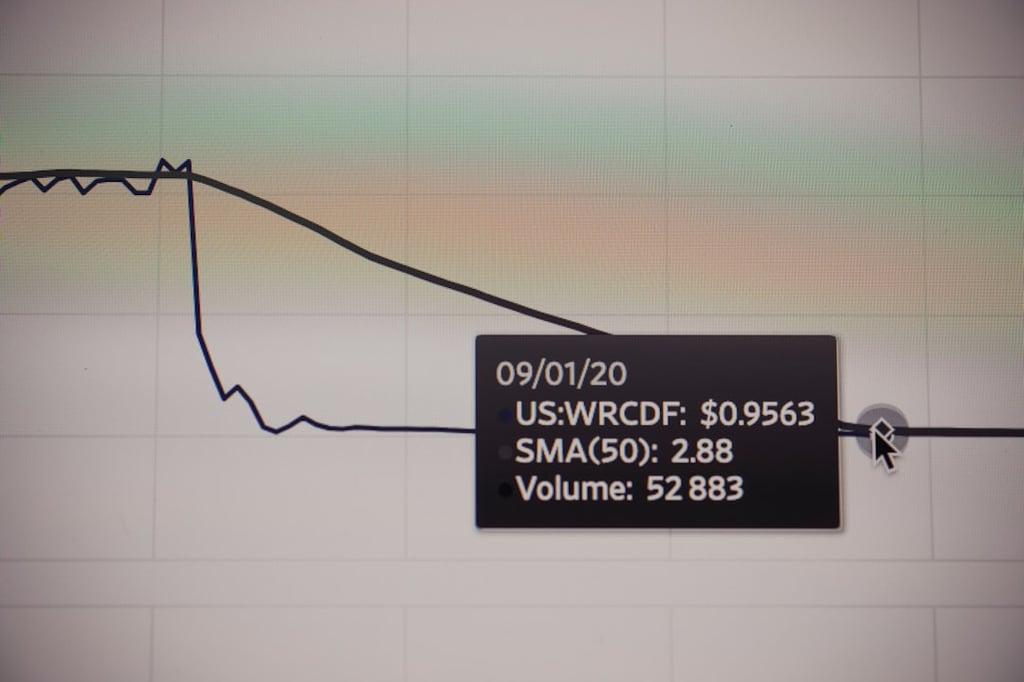
CoreWeave’s four bond issues tell a similar tale. Octus says they trade at an average OAS 186 basis points above the ICE BofA B High Yield Index Octus, May 2026. Its inaugural 9.25% bond due 2030 has traded as tight as 430 basis points and as wide as 845 basis points over comparable Treasurys, while prices have ranged from 90 to 104.5 Octus, May 2026.
A spread range like that on a single issue is not market noise. It is a sign that holders need to actively manage exposure. The more the paper moves, the more value there is in hedging, in position management, and in the plumbing that supports both.
That is the point at which spread data stops being a curiosity and starts becoming a map of where intermediation earns its keep.
Why the hedging burden is likely to grow
The market is already funding AI infrastructure aggressively. The reason it also creates demand for hedging is simpler: the structures in use are the kind that tend to spill into derivatives markets.
Floating-rate GPU-backed loans create interest-rate exposure. Convertible bonds pull in equity-derivatives and repo activity. SPV bonds trading wide to rating sit in portfolios where credit hedges are not a luxury, they are a basic risk-control tool. None of that proves a derivatives boom on its own. It does, however, show the conditions under which one can grow fast.
That matters because the market plumbing is not flawless. In a May 2025 speech, Bank of England Deputy Governor Sarah Breeden said margining practices, while individually prudent, helped intensify stress in the 2020 dash for cash, the early 2022 commodity price spike and the UK gilt dysfunction in autumn 2022 BIS/Bank of England, May 2025. She also said the Bank found material differences between clearing members’ projections for initial margin calls and what CCPs actually required BIS/Bank of England, May 2025.
The BIS has made a related point in its work on multi-CCP markets. A small number of large banks hold joint clearing memberships across multiple CCPs, which creates contagion pathways that the standard Cover 2 framework may not fully capture BIS Working Paper 1052, November 2022. That does not make AI infrastructure finance systemic by default. It does mean that a fast-growing new source of hedging demand arrives into a market structure that regulators already know can strain under volatility.
The direct evidence linking this issuance wave to derivatives volumes is not in the public record. The inference is narrower and, at this point, safer: when an asset class is funded through floating-rate loans, convertibles and wide-spread structured bonds, the hedging ecosystem grows around it whether anyone planned for that or not.
What a mature market would actually look like
A more mature AI infrastructure debt market would not just be bigger. It would look different. More conventional unsecured corporate issuance would suggest that lenders and investors had become comfortable enough with the business model to price it without so much collateral support. More stable spreads would suggest the market had developed a cleaner benchmark for the risk.
That is not where the market is yet. The current mix is still dominated by convertibles, asset-backed structures and highly volatile corporate paper, which tells you that the sector is still being financed as a special case. For banks, structured credit desks and hedging counterparties, special cases are usually where the fees are.
The better question is how long the market keeps needing special treatment. If AI infrastructure spending keeps following the paths Octus and Morgan Stanley sketch out, the financing innovation will not remain confined to one issuer or one structure. It will spread, and so will the need to manage the risks that come with it.
That is the real significance of the AI infrastructure debt market. It is not just funding servers and shells. It is building the market machinery that will price them, hedge them and, eventually, decide how much use the system is willing to tolerate.