
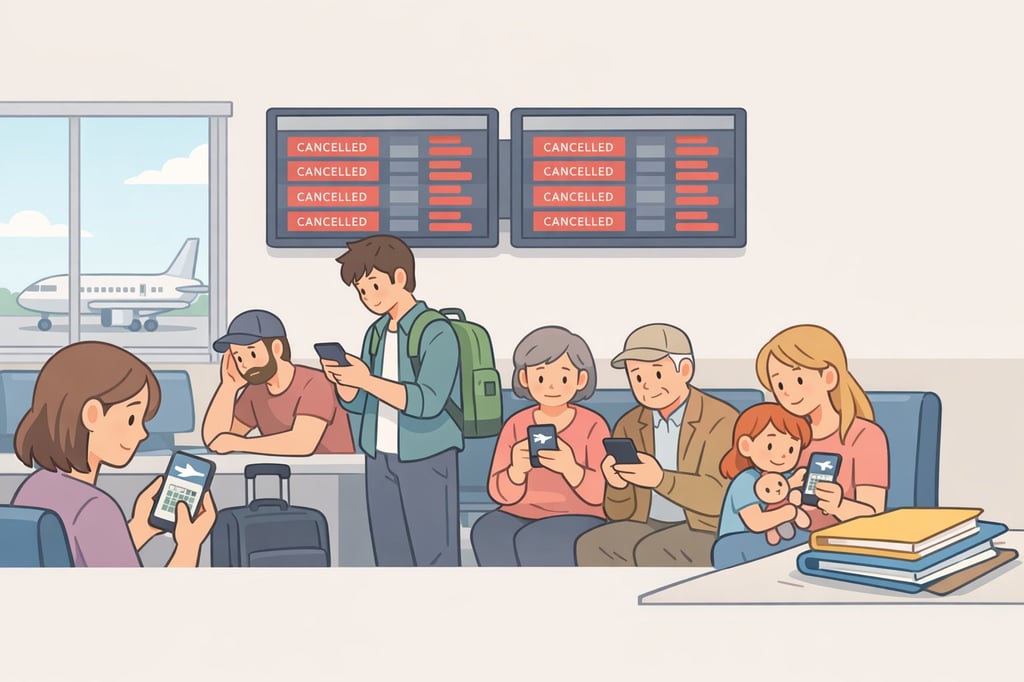
What to do if Spirit Airlines shuts down: Steps
If you need to figure out what to do if Spirit Airlines shuts down, start with the part that matters most: getting yourself another flight, then locking down your paperwork so you can chase the money later. Spirit’s collapse has already stranded thousands of travelers, and CNN reported this week that the airline canceled all flights, halted customer service and told travelers not to come to the airport.
This guide walks through the recovery process in order. First, rebook travel before the rescue fares disappear. Then gather your records, pursue a refund through the right channel, and, if you want to avoid getting trapped in this mess again, change how you book flights next time.
Step 1: Rebook before you do anything else
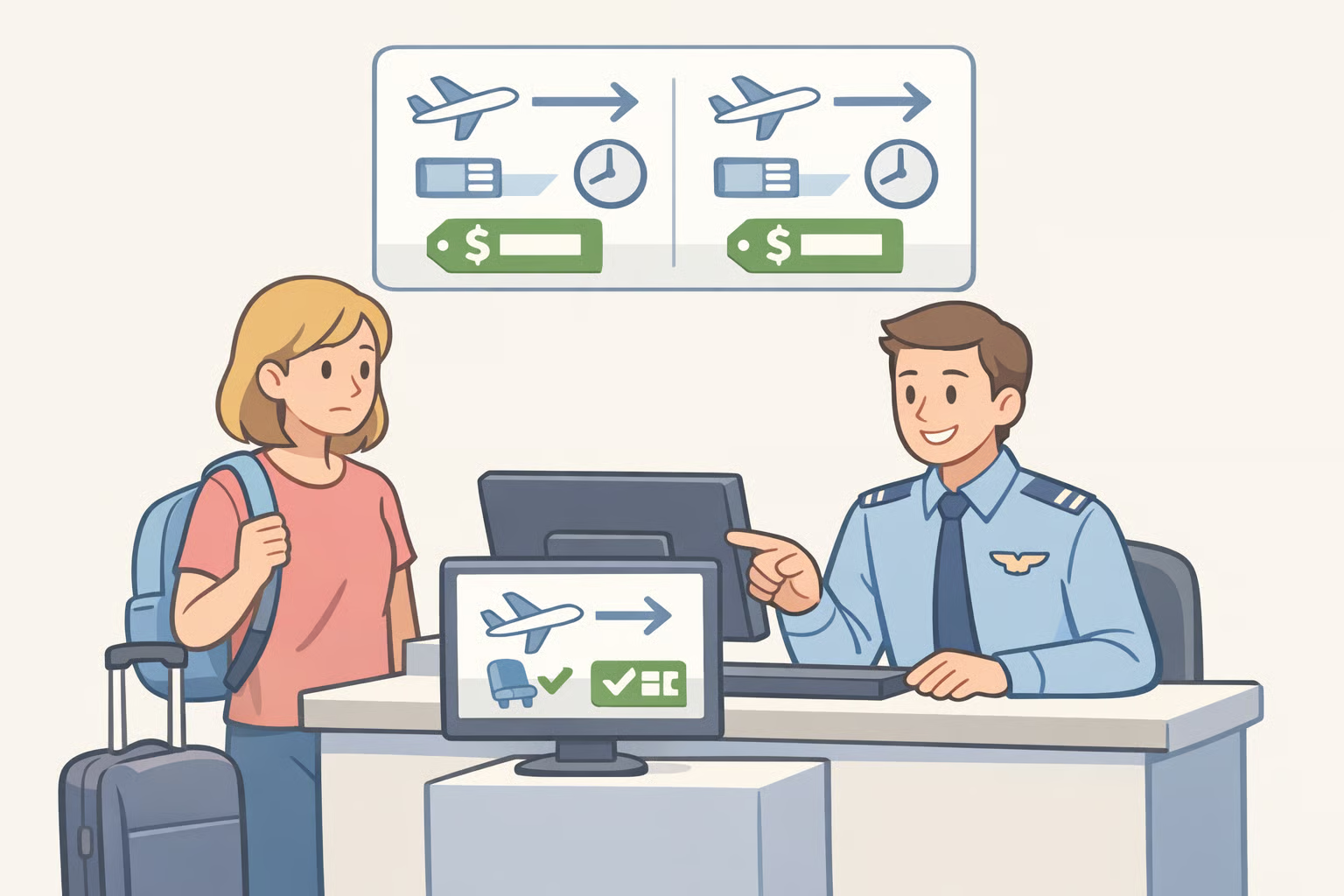
Spirit said it is not able to help rebook passengers onto other airlines, so this is one of those moments when waiting feels tidy and does you no favors. The Department of Transportation has urged travelers to check with other carriers to see whether they will accept a Spirit ticket, on a confirmed or standby basis, or offer a discount by waiving advance-purchase rules and similar restrictions, CNN reported this week.
Several airlines have stepped in with rescue fares. CNN reported this week that United, Delta, JetBlue and Southwest are capping fares for stranded Spirit passengers at about $200 one way, while WFTV reported this week that United’s fare caps are available online for two weeks, Delta’s for five days, JetBlue’s for 72 hours and Southwest’s for 72 hours at airport ticket counters only.
That last detail matters. Southwest’s offer is not something to click through on a sofa. If Southwest is the best route home, the airport counter is the only place to book it.
AP reported this week that American Airlines, Frontier, Allegiant, Avelo and Breeze are also part of the broader response, with Frontier offering 50% off base fares across its network through May 10. Hertz is offering one-way rental deals as another escape hatch, with up to 25% off for passengers who need to drive instead, AP reported this week.
The paperwork gate is real here. Travelers must provide a Spirit confirmation number and proof of payment to access the rescue fares, so don’t start shopping blind. Get the booking details first, then move fast. The offers are not going to sit around forever, and airlines have a habit of acting like they invented scarcity.
Step 2: Gather and save every document now
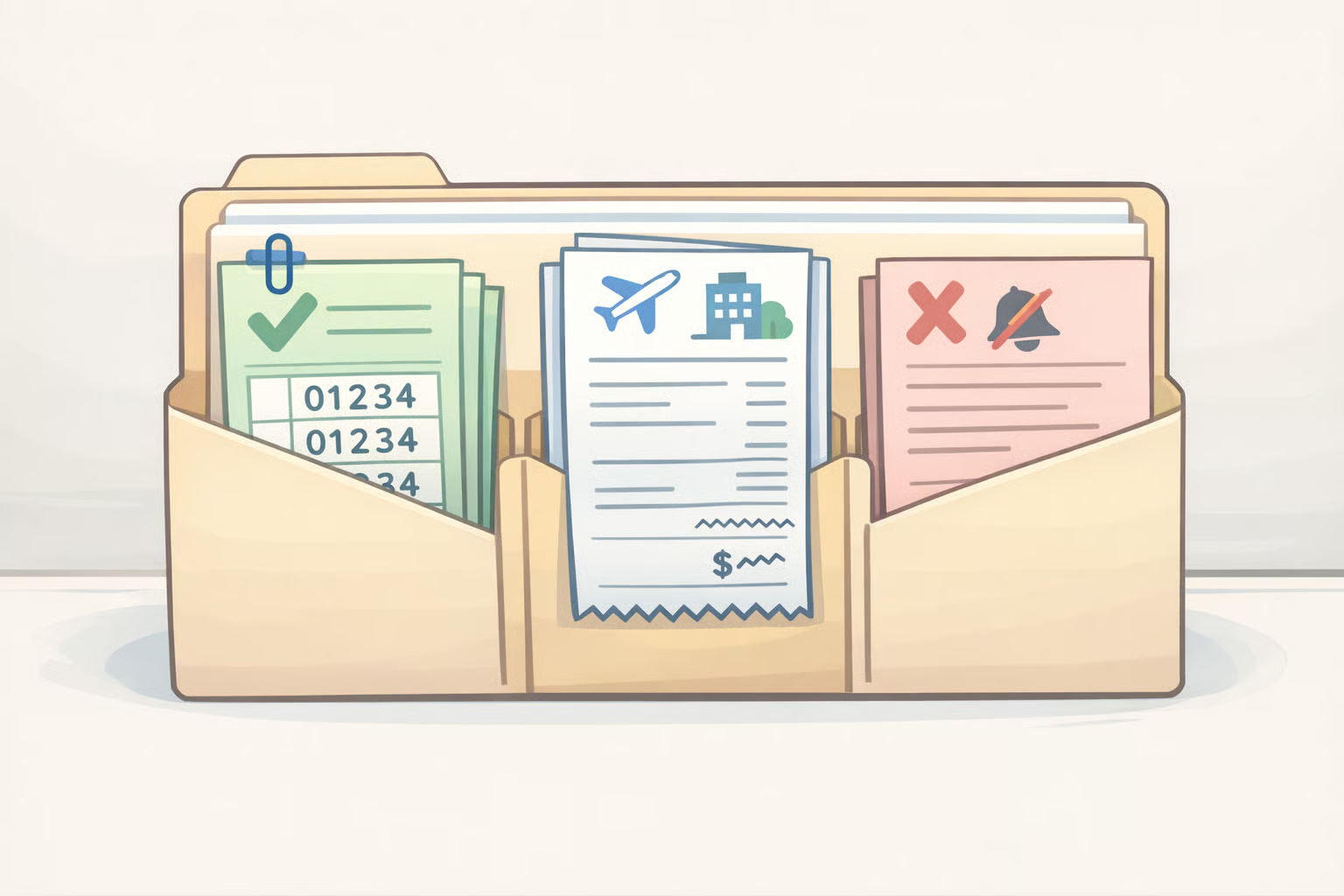
Before you file a chargeback, contact insurance, or make a bankruptcy claim, build a clean paper trail. The National Consumers League warned travelers this week, via AP reported, to keep booking confirmations, payment receipts, cancellation notices and any written correspondence with the airline.
Save more than you think you need. Pull the Spirit confirmation number, screenshot the cancellation notice, keep the original payment receipt, and save any email or app message about the flight being canceled. If you had to buy a new ticket, keep that receipt too.
The same goes for downstream losses. Hotel cancellation fees, prepaid events and car rentals may be relevant later, especially if a card issuer or insurance company asks what the shutdown cost you. If you have a record, you have use. If you don’t, you have a story and not much else.
Do this now, while the app and website still work. Once the dust settles, access can get messy in a hurry.
Step 3: Decide how to get your money back
If you are looking up what happens if your airline goes out of business, the answer depends on how you paid. Some passengers have a straightforward path. Others are headed into a queue that moves at the speed of bankruptcy court, which is to say, not quickly.
If you paid Spirit directly by credit or debit card
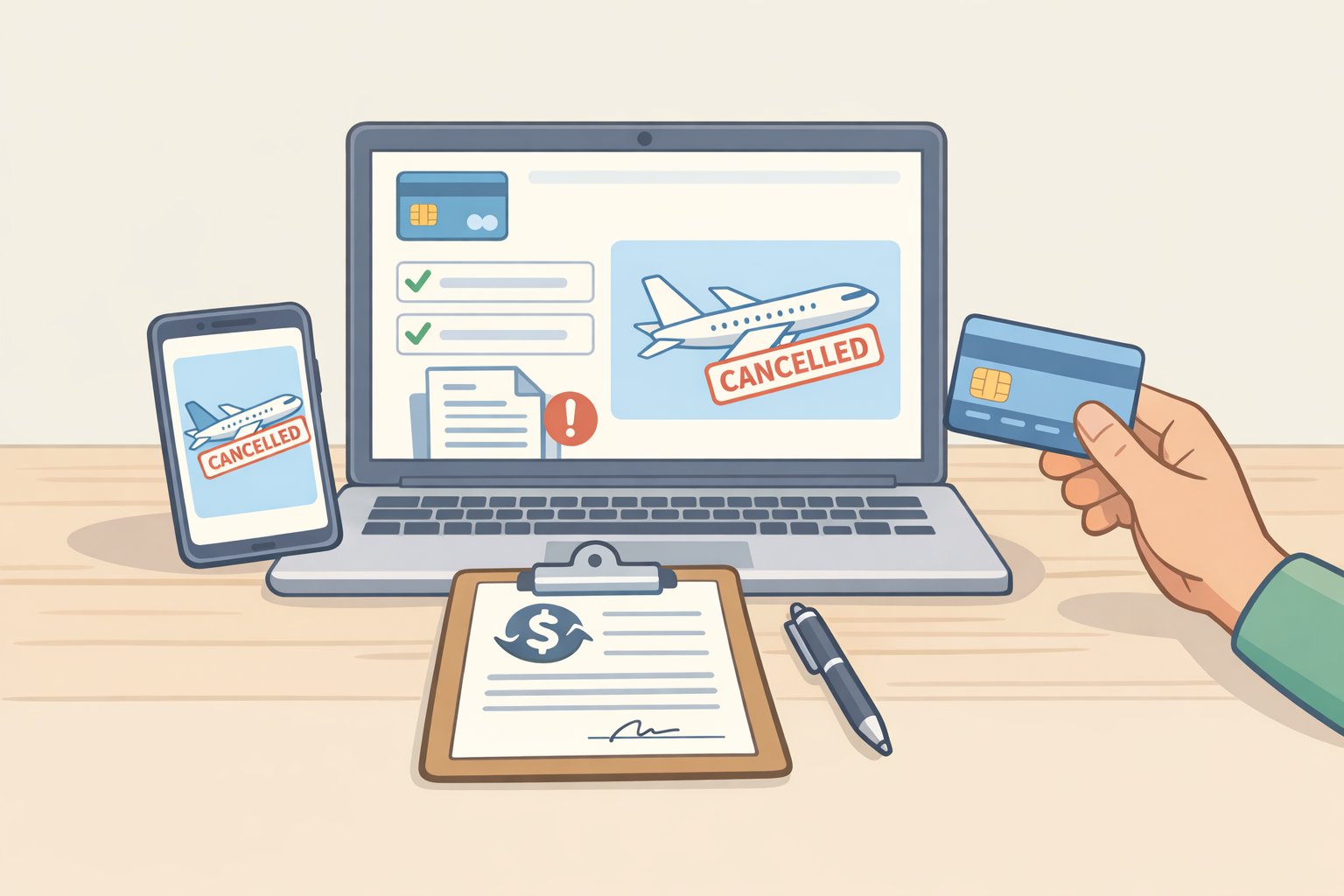
Spirit has said it will automatically issue refunds for tickets bought directly with a credit or debit card, according to CNN reported this week and AP reported this week. That is helpful, but not the same thing as certainty. Consumer advocates have already warned travelers not to assume the money will simply reappear.
The strongest move is to contact the card issuer and request a chargeback under the Fair Credit Billing Act for services not delivered, AP reported this week and WFTV reported this week. That route is usually the cleanest because it goes to the bank that processed the payment, not the airline that just shut the lights off.
Debit card disputes are possible too, but they are weaker. USA Today reported in April that debit protections are not as strong under federal law. That is one more reason credit cards remain the adult option in a travel system that often behaves like a flea market.
If you booked through a travel agent or online travel agency
Spirit said travelers who booked through a travel agent should contact that agent directly for a refund, CNN reported this week and AP reported this week. Spirit itself will not process those refunds.
If the agent stalls or cannot help, go back to the original card charge and dispute it there. The middleman is not the end of the road unless you let it be.
If you paid with vouchers, credits or loyalty points
This is the least favorable lane. Spirit said those claims will be sorted through the bankruptcy process, CNN reported this week. NBC reported this week that one expert said Spirit points are essentially worthless, and any claim tied to them would likely sit near the back of the line.
That is bankruptcy in plain English. Creditors get first crack, and consumers and employees tend to wait until the end, if anything is left. There is no elegant version of that sentence, just the one the process hands out.
If you bought travel insurance
Check the policy itself, not the marketing gloss. AP reported this week and USA Today reported in April that airline insolvency coverage is not standard and depends on language such as “financial insolvency” or “service cessation.” Standalone policies are more likely to include it than the basic travel coverage bundled with a credit card.
One more catch: if you bought insurance after Spirit’s financial trouble was already public, the policy may exclude the claim. Read the fine print before you file. The fine print, annoyingly, is where travel companies hide the sharp edges.
Step 4: Book the next trip like something could go wrong
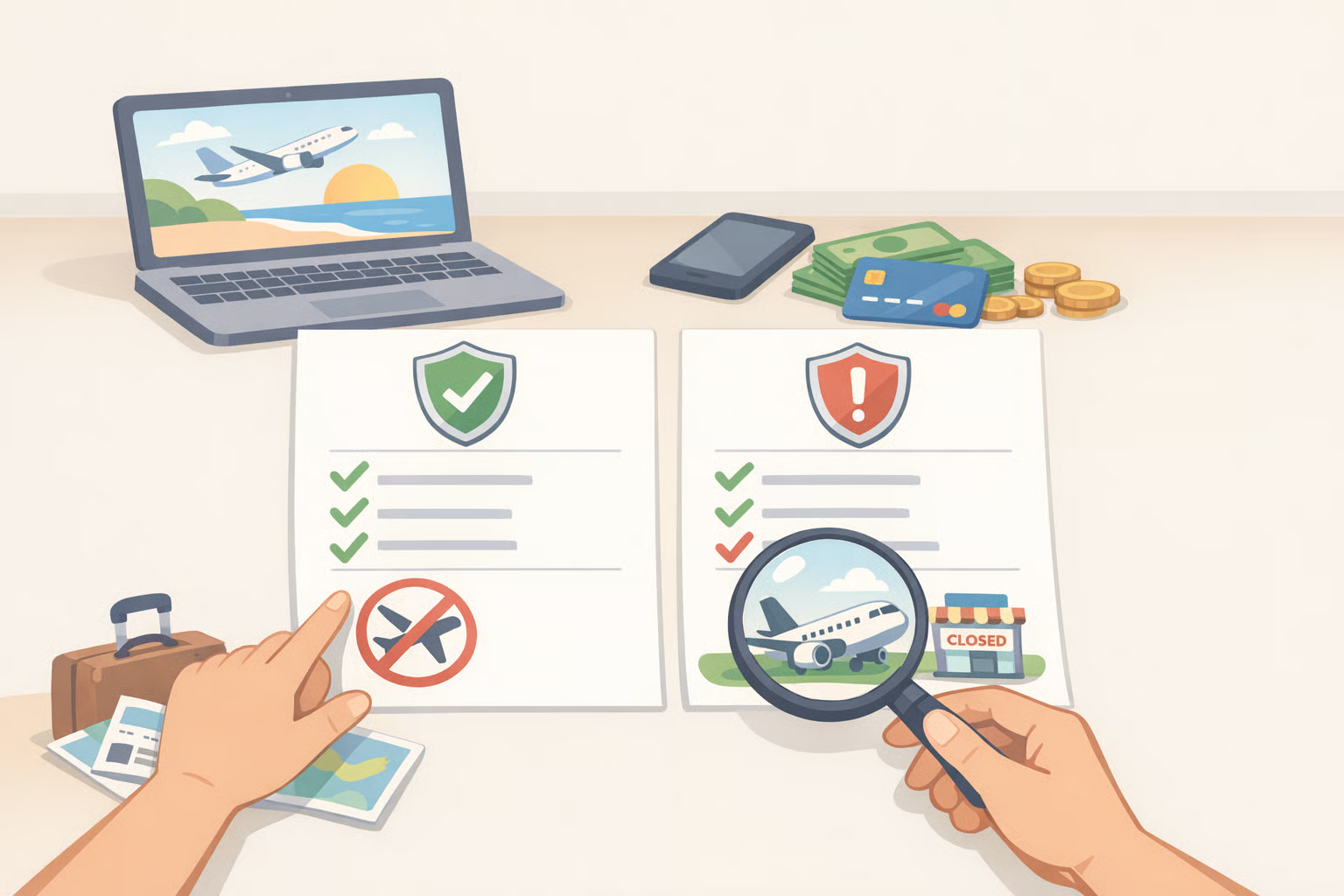
Spirit’s shutdown removed roughly 2% of scheduled domestic U.S. flights this summer, and CNN reported this week that the loss of low-cost competition could push fares higher. NBC reported this week that some analysts expect fares to rise by 15% or more on routes Spirit used to dominate, including Orlando, Las Vegas and Fort Lauderdale.
That is the practical lesson here. A shutdown is bad enough once. Paying for the next one in advance is worse.
Start with payment method. Always use a credit card if you can, because it gives you the clearest path to a dispute if an airline fails. That is not glamorous advice. It is just useful.
Then look at coverage before you buy. Standalone travel insurance with insolvency coverage may be worth the extra cost on expensive or multi-leg trips, especially if the alternative is relying on whatever free benefit came attached to your card. USA Today reported in April that coverage depends on the policy, so “I have insurance” is not the same as “I have the right insurance.”
Finally, pay attention to warning signs. CNN reported this week that Spirit had filed for Chapter 11 twice in the last two years and had repeatedly said there was “substantial doubt” about its ability to keep flying. Route cuts, fee hikes and public statements about financial uncertainty are the sort of clues travelers usually ignore right up until they are standing at a dead airport curb.
The real lesson
If Spirit’s collapse teaches anything useful, it is this: the order of operations matters. Rebook first, save every record, then pursue refunds through the right channel for the way you paid.
The people in the weakest position are the ones who paid with points or credits and assumed the airline would sort everything out later. The people in the strongest position are the ones who used a credit card and moved fast. In a situation like this, speed is not a personality trait. It is a strategy.