
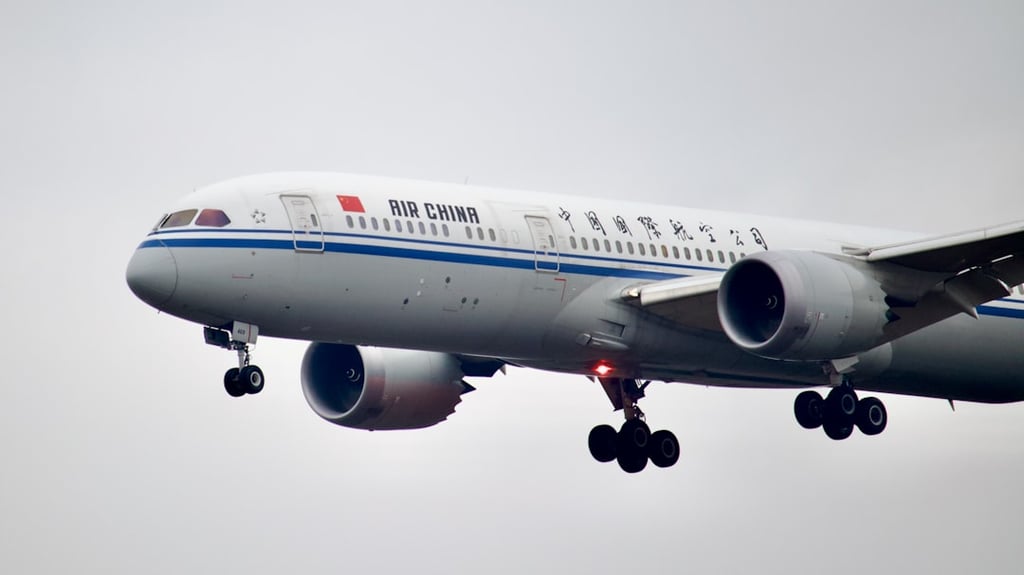
Boeing China order explained: Trump-Xi summit impact
Boeing’s China order is back on the table, at least in rumor form, with reports pointing to a package that could include as many as 500 737 MAX jets and about 100 widebody aircraft. That would be a monster deal by any measure, and it lands just as President Donald Trump meets Xi Jinping in Beijing on May 14-15, which is why the timing matters.
The bigger point is simpler: China has not placed a major Boeing order since 2017, and Boeing CEO Kelly Ortberg has said near-term large orders from China depend on White House support, AeroTime reported last week. If anything happens in Beijing, it will be as much a political signal as a commercial one.
Why the Boeing China order is suddenly plausible
Boeing’s own order book has recovered enough to make a China deal look executable rather than theatrical. Through the first four months of 2026, the company booked 284 net new orders after cancellations and conversions, its best January-through-April tally since 2014, CNBC reported this week.
April did a lot of the heavy lifting. Boeing booked 135 net new orders that month, and those included 57 737 Max jets and 51 787s, mostly from unidentified customers, plus 28 777X orders from undisclosed buyers, CNBC reported this week.
That still leaves Boeing behind Airbus, which had booked 405 orders after cancellations and conversions through April 30, CNBC reported this week. But the more relevant issue for China is production capacity. Boeing is close to the FAA-imposed monthly ceiling of 38 737 MAX aircraft and has approval to raise 787 output from five to seven a month, with ambitions to get the 737 MAX to 42 pending review, ch-aviation reported last June.
That matters because a giant order is only useful if Boeing can actually deliver the jets on a reasonable timetable. Ortberg has framed the issue that way himself: “Our challenge is ramping up production and delivering on that backlog and making sure we have slots available for the customers who want the aircraft,” he said, per ch-aviation.
Why China needs planes, and why Comac cannot fill the gap alone
The case for a Boeing China deal starts with a shortage that is not going away. IATA data shows the wait between ordering an aircraft and taking delivery is about seven years, which pushes up operating costs as airlines keep flying older, less fuel-efficient planes, the BBC reported in February. Willie Walsh, IATA’s director general, said Asia-Pacific airlines could see double-digit growth in 2026 if planes were available.
China’s homegrown alternative, Comac’s C919, has made progress, but not enough to remove Boeing from the picture. The plane has been flying beyond Chinese territory for two years now, BBC reported in February, yet delivery numbers have lagged expectations.
That gap has become harder to ignore. The South China Morning Post reported last October that Comac had cut its 2025 delivery target by two-thirds, from 75 aircraft to 25, and said Air China and China Eastern each had received one C919 in the first half of 2025 despite planning to take delivery of 10 this year, South China Morning Post reported last October. China Southern, meanwhile, had expected 12 units this year and had received three by the end of June, the paper reported.
Shanghai-based analyst Yang Bo put it bluntly to the SCMP: “China’s leading carriers have been hungry for new planes for years.” He added that if airlines cannot count on timely C919 deliveries, some may look again at Boeing.
That does not make a Boeing China order automatic. Chinese fleet planning still bends to politics. But when domestic supply keeps missing the mark, the argument for waiting gets a lot weaker.
What the Trump-Xi meeting means for the Boeing China mega order
There is a precedent for this kind of summit-side aircraft splash. In November 2017, Boeing and China Aviation Supplies Holding Co. announced orders and commitments for 300 aircraft during Trump’s state visit to Beijing, and Boeing valued the package at more than $37 billion at list prices, AeroTime reported last week.
This time, the reported package is larger. US and Chinese media reports have put the potential Boeing China order at roughly 600 aircraft, including about 500 737 MAX jets and around 100 widebody planes, AeroTime reported last week. That would be a headline-grabber. It would also be only a headline unless the paperwork is real.
Ortberg has been unusually direct about what he thinks it takes. “Without the administration’s support, I don’t think we’ll see any near-term large orders out of China,” he told Reuters in April 2026, AeroTime reported last week. He also said it was “something that would be tied to the effort from the administration.”
The structure of any deal is messy. AeroTime noted that any aircraft order would need agreement among Boeing, Chinese airlines, Chinese government officials and the Trump administration, while Washington and Beijing remain split on technology exports, tariffs, Taiwan and the wider relationship. Boeing declined to comment on Ortberg’s travel to Beijing, while Qualcomm confirmed it had received an invitation, AeroTime reported last week.
There is also fresh baggage. The Chinese government told its carriers to stop accepting Boeing aircraft in April 2025 after imposing a 125% tariff on US-manufactured goods, ch-aviation reported last June. Some recently manufactured aircraft ferried into China pending delivery were then returned to the United States for remarketing, ch-aviation reported.
How big the Boeing China order really is
The numbers floating around sound huge, but the broader context is less dramatic. As of spring 2025, China accounted for 130 aircraft in Boeing’s firm-order backlog of 6,319, or about 2.05%, AirInsight reported in April 2025. China’s share of the 737 MAX backlog was similar, at 96 out of 4,775, or 2.01%, AirInsight reported in April 2025.
That is why Boeing can absorb Chinese deferrals without too much pain. AirInsight reported in April 2025 that, because demand for new aircraft is so strong and the backlog so long, Boeing can reschedule deferred orders when other customers are ready to move up. The company has already shifted some Chinese aircraft to carriers in India, AirInsight reported in April 2025.
Still, a Boeing China order in the 500-600 aircraft range would matter. It would be symbolically large, it would help Boeing narrow the booking gap with Airbus, and it would signal that both sides are willing to use aircraft sales as a political pressure valve. Just don’t confuse that with immediate revenue. Aerospace discounts are real, and delivery schedules stretch for years.
What to watch next
The next 48 hours should tell the story. A signed Boeing China order with named airlines would be a real commercial breakthrough. A joint statement about aviation cooperation would be something else entirely, useful perhaps, but mostly ceremonial.
That is the gap between a deal and a photo opportunity. In Beijing, it may turn out to be the whole story.