
- What to Do If You Are Behind on Taxes: File, Pay, Plan
- Step 1: File the return, even if you cannot pay
- Step 2: Pay something today
- Step 3: Set up a payment plan before the balance gets stubborn
- IRS payment plan for back taxes and the 10-year clock
- When standard payment plans will not work
- What comes next
What to Do If You Are Behind on Taxes: File, Pay, Plan
Most people who owe back taxes do not have a tax problem so much as a delay problem. If you are behind on taxes, the fix is usually plain enough: file the return, pay something, then set up a formal payment plan before the balance grows teeth.
The IRS is not going away, and that is almost the mercy of it. Taxpayers who cannot pay in full should still file on time and pay as much as possible, because, as the IRS said this week, “The sooner and the more you pay, even though it’s late, the less you will end up owing” IRS reported. Filing without paying is painful. Not filing is worse.
That is because the failure-to-pay penalty runs at 0.5% of the unpaid balance per month, capped at 25%, and it can sit on top of a separate failure-to-file penalty IRS said in 2022. Two meters, both running. Not a lovely setup.
This guide walks through how to catch up on back taxes in three practical moves, plus the relief options worth knowing if a standard IRS payment plan for back taxes will not fit. It covers federal income taxes only. State tax agencies play by their own rules, which is their idea of fun, not yours.
Step 1: File the return, even if you cannot pay
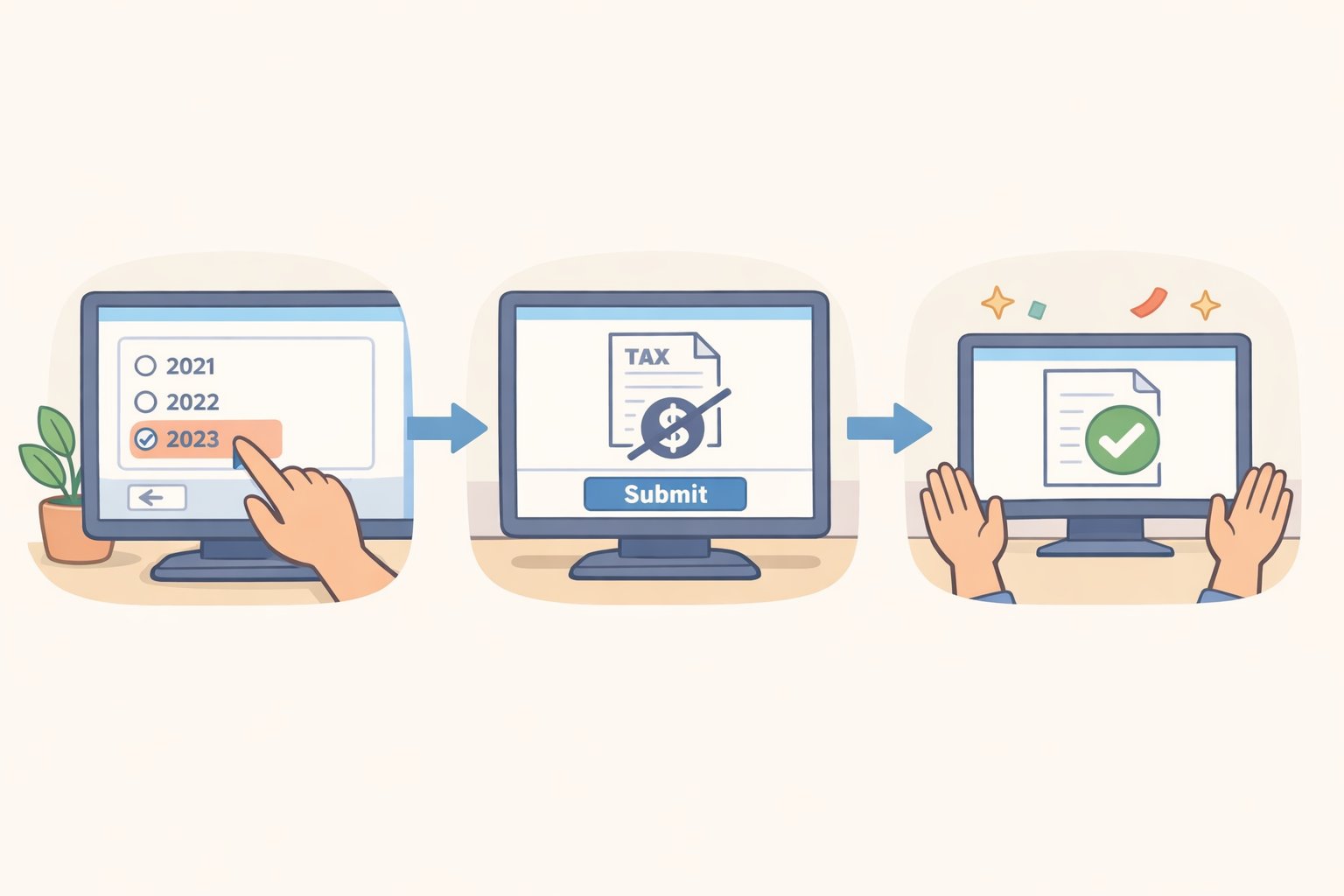
Filing comes first because it stops the worse penalty from piling on. The IRS has been blunt about this for years: taxpayers who owe but cannot pay in full should file their return on time and pay as much as possible IRS said in 2022.
An extension to file is not an extension to pay. That part trips people up every year, and the IRS has not found a softer way to say it IRS said in 2021, later updated in February 2024. If the return is late, the bill keeps gathering interest and late-payment charges from the original due date.
If you have several years of unfiled returns, do not treat them as one giant problem. File the most recent year first, then work backward. Older years can wait a minute; the IRS will not.
What to do now:
- Log into tax software, IRS Free File, or your preparer’s portal.
- Submit the return even if the payment box stays empty.
- If the return is complicated or covers multiple years, get a tax professional or a Low Income Taxpayer Clinic involved before the week is over.
One useful thing happens once the return is filed. You do not have to wait for a bill in the mail before setting up help. The IRS says taxpayers can often arrange a payment plan online before a notice ever arrives IRS reported in 2022. Bureaucracy, on occasion, does move faster than expected.
Step 2: Pay something today
The amount does not need to be heroic. It needs to be real. Every dollar you send now reduces the balance that keeps accruing interest and the failure-to-pay penalty IRS said in July 2025.
That matters because the penalty is calculated on what remains unpaid. Pay $500 on a $5,000 bill, and you have at least stopped the penalty math on that $500 going forward. Small victories still count in accounting.
The IRS offers several payment methods. You can pay online through Direct Pay, by debit or credit card, or through the Electronic Federal Tax Payment System IRS said in July 2025. The agency also says electronic payment options are safe and secure.
To make the payment:
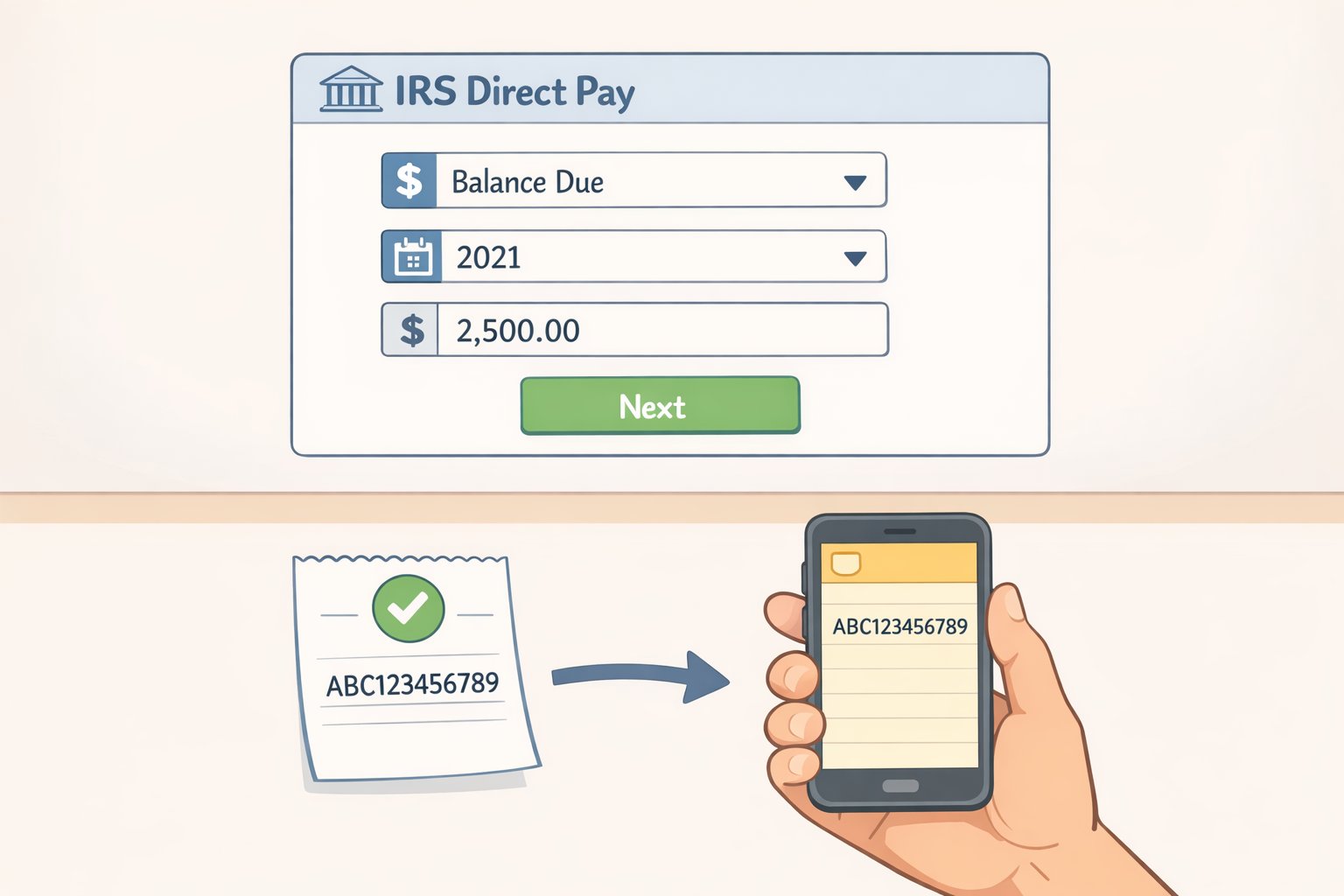
- Go to IRS Direct Pay.
- Choose the option for a balance due.
- Enter the tax year.
- Fill in the bank or card details.
- Save the confirmation number.
That confirmation number is not decoration. Keep it.
There is one decent reason to pause before using a credit card. The IRS noted in 2022 that in many cases, loan costs may be lower than the combination of IRS interest and penalties IRS reported. That does not mean borrowing is automatically the answer, but it does mean the cheapest money you can find may beat letting the tax debt sit untouched.
A couple of guardrails:
- Direct Pay from a checking or savings account does not carry a fee.
- Credit card payments can come with processing fees, so the card math should be checked before you lean on plastic.
Step 3: Set up a payment plan before the balance gets stubborn
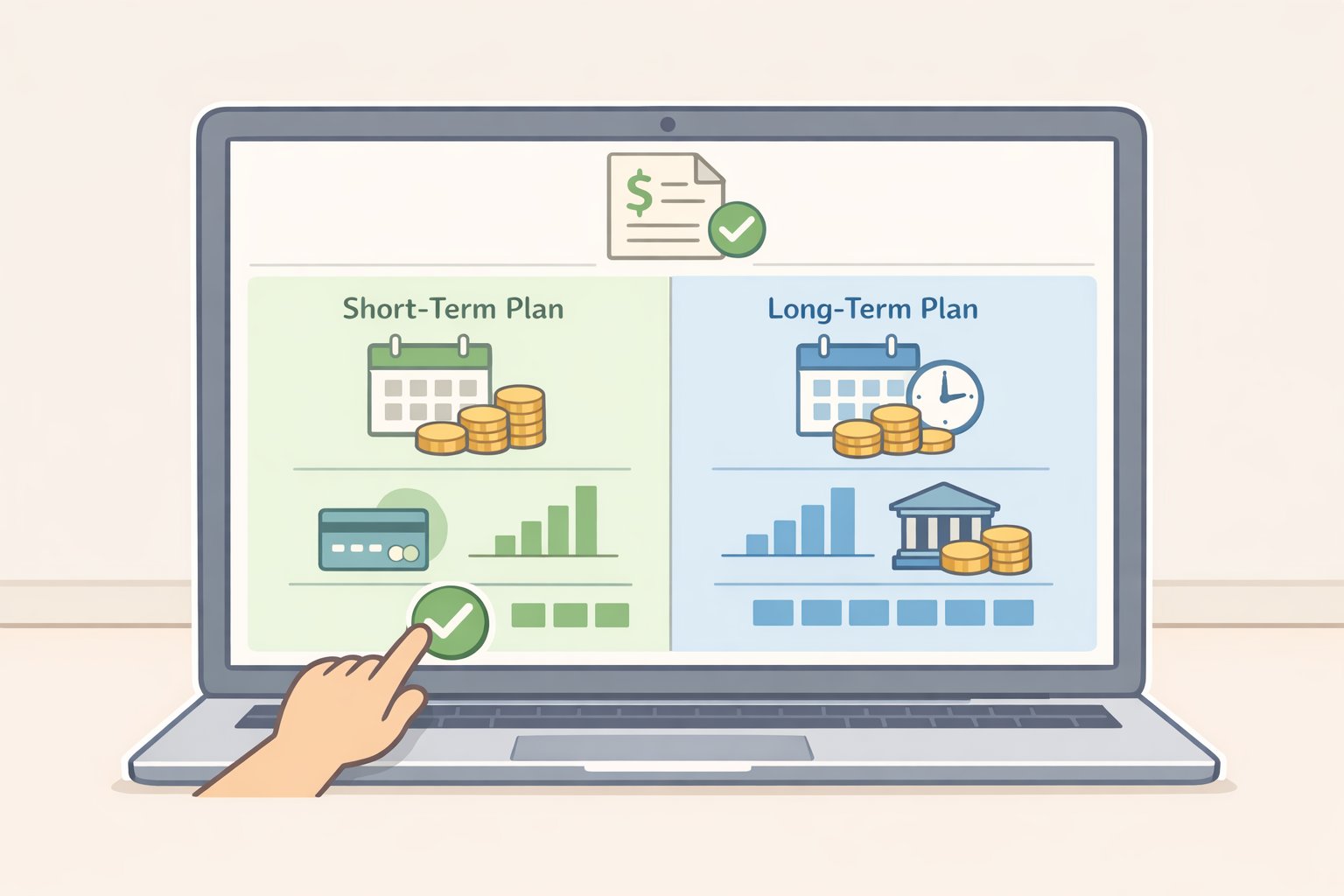
If you cannot clear the debt right away, the IRS online payment agreement tool is usually the next move. Most individual taxpayers can apply online in a few minutes, and the IRS says applicants are notified immediately whether the request is approved IRS reported in 2022, with faster processing than some other routes IRS said in May 2025.
The basic choice is between short-term and long-term. A short-term payment plan applies if you owe less than $100,000 in combined tax, penalties, and interest, and the payment period is 180 days or less IRS said in 2022. There is no setup fee, though interest and the late-payment penalty keep ticking.
A long-term plan is for balances under $50,000 in combined tax, penalties, and interest, with monthly payments over more than 120 days IRS said in May 2025. If the IRS approves a long-term online payment plan, a setup fee may apply depending on income IRS reported in May 2025. For direct-debit long-term plans, the IRS said the fee is $22, and it is waived for qualified lower-income taxpayers IRS reported in July 2025.
That is the clean version. The less cheerful version is that a payment plan is not a debt freeze. Interest and the reduced late-payment penalty still accrue on the unpaid balance IRS said in July 2025. The point is to get ahead of the balance, not merely keep pace with it.
To apply online:
- Go to the IRS Online Payment Agreement page.
- Log in or create an IRS online account.
- Choose the plan that fits your balance and timeline.
- Enter the monthly amount you can pay and the date you want it drafted.
- Submit the request.
If you already have a plan, the IRS says you may also be able to revise payment dates, payment amounts, and banking information online IRS reported in May 2025. That saves a little friction. Which, in tax matters, counts as luxury.
IRS payment plan for back taxes and the 10-year clock
There is a wrinkle most people miss: the IRS normally has ten years from the date of assessment to collect a tax debt Taxpayer Advocate Service explained this week. That deadline is called the Collection Statute Expiration Date, or CSED.
Requesting an installment agreement suspends that collection period while the request is pending Taxpayer Advocate Service said this week. If the request is rejected, the collection period is suspended for 30 more days Taxpayer Advocate Service added. If the debt is old enough that the ten-year window is getting thin, that timing can matter a great deal.
For most taxpayers, though, the lesson is simpler. Do not wait. The clock is not your friend, and it is not sentimental.
When standard payment plans will not work
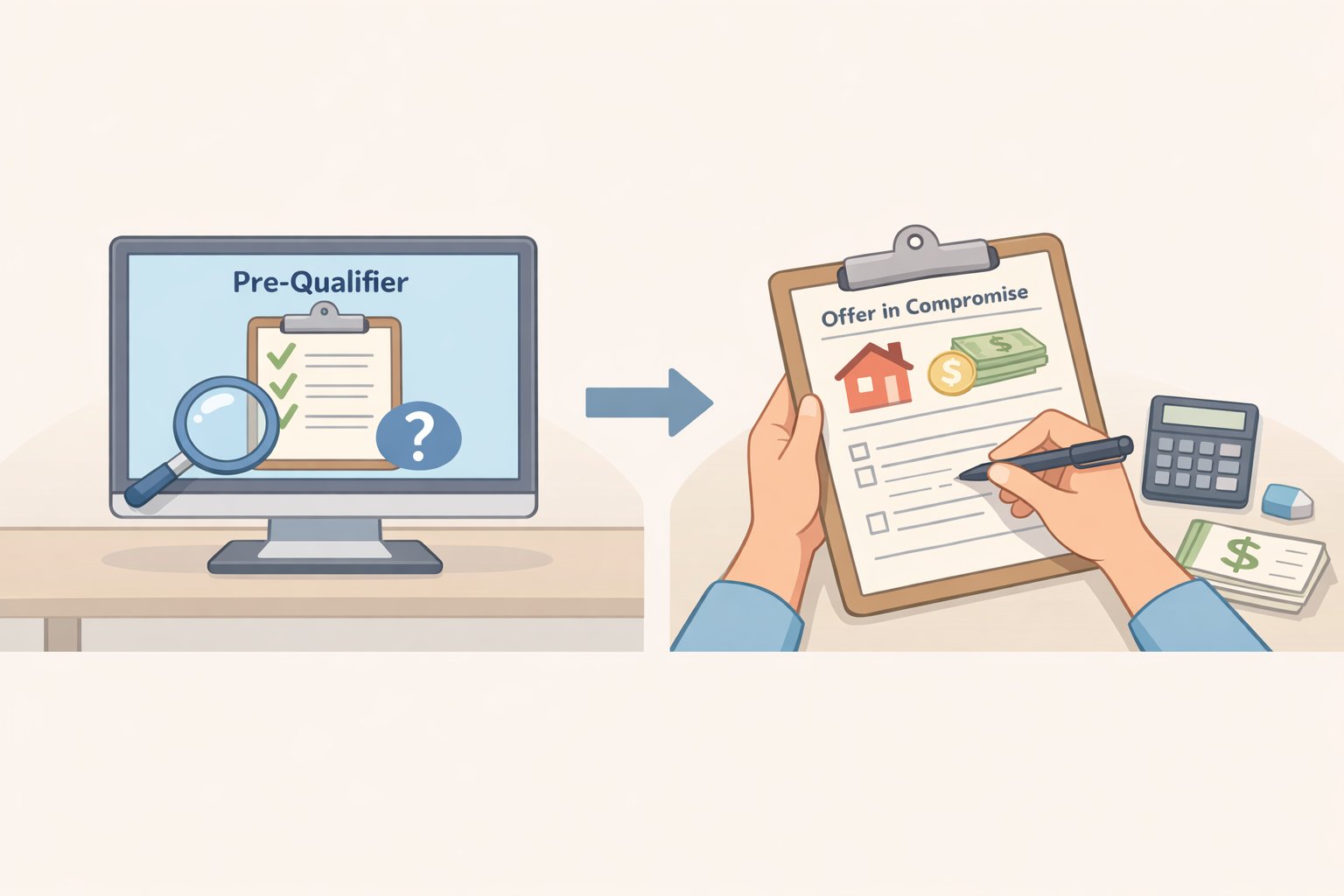
If you truly cannot pay your full tax bill, the IRS says you may be able to settle for less through an Offer in Compromise IRS reported in 2022. That is not a casual fix. It is a hardship tool, and the IRS says taxpayers should explore the OIC Pre-Qualifier before submitting an offer IRS said in December 2025.
That screening step is worth doing because an OIC is not the right answer for everyone. The IRS says taxpayers may submit one if they cannot pay their full tax liability, or if paying it would create financial hardship IRS reported in December 2025. But it is still a formal application, and the paperwork will not be doing anyone any favors.
There is also a fee. The IRS says the OIC application fee is $205 and that it is generally waived for individual low-income taxpayers IRS reported in 2022. The IRS also says offers require a partial payment of the offer amount except for offers filed based on doubt as to liability IRS reported in 2022.
One tradeoff is easy to miss. Submitting an OIC suspends the IRS collection period while the offer is pending, and if the offer is rejected, the period is suspended for an additional 30 days, with more suspension time if the rejection is appealed Taxpayer Advocate Service explained this week. That can matter if the debt is old. It is not a reason to avoid the tool, just a reason to use it with eyes open.
There is one more option for people in real hardship. The IRS can delay collection until the financial picture improves IRS reported in 2022. The debt does not disappear, and penalties and interest continue to accrue IRS said in 2022. To request it, call the number on your IRS notice or 800-829-1040.
Penalty relief can also help. The IRS says some taxpayers qualify to have late-filing or late-payment penalties reduced or eliminated on a case-by-case basis, and taxpayers with a history of compliance may qualify for First Time Abatement IRS reported in 2022. That will not erase the tax itself, but it can trim the damage.
What comes next
The best sequence is still the simplest one. File the return, pay what you can, and set up the payment plan before the balance has more room to breathe. The IRS has said the sooner and more you pay, the less you owe IRS reported in July 2025.
If your balance is large, old, or tied to multiple years, the details matter more than the panic. Use the online payment tools, check whether a short-term plan or long-term installment agreement fits, and only then look at hardship relief. Tax debt is rarely pleasant. It is usually fixable, which is better than the alternative and not a high bar to clear.