

- Does debt follow you to another country? Portugal guide
- What “debt following you” actually means
- Can creditors collect debt if you live abroad?
- The private-debt trap, and why the statute of limitations is not a getaway plan
- Why government debt is the real red flag
- What to do before you get on the plane
- Conclusion
Does debt follow you to another country? Portugal guide
If you are packing for Portugal with a few ugly balances back home, the question is not academic. Does debt follow you to another country? Yes, in the legal sense it does. The obligation does not vanish when you cross the Atlantic, even though collecting it can become much harder once you are outside the United States (LegalClarity, January 2026).
That is the plain answer. The messier one is that private debt and government debt play by very different rules, and the difference decides whether a creditor has a headache or a real path to your money.
What “debt following you” actually means
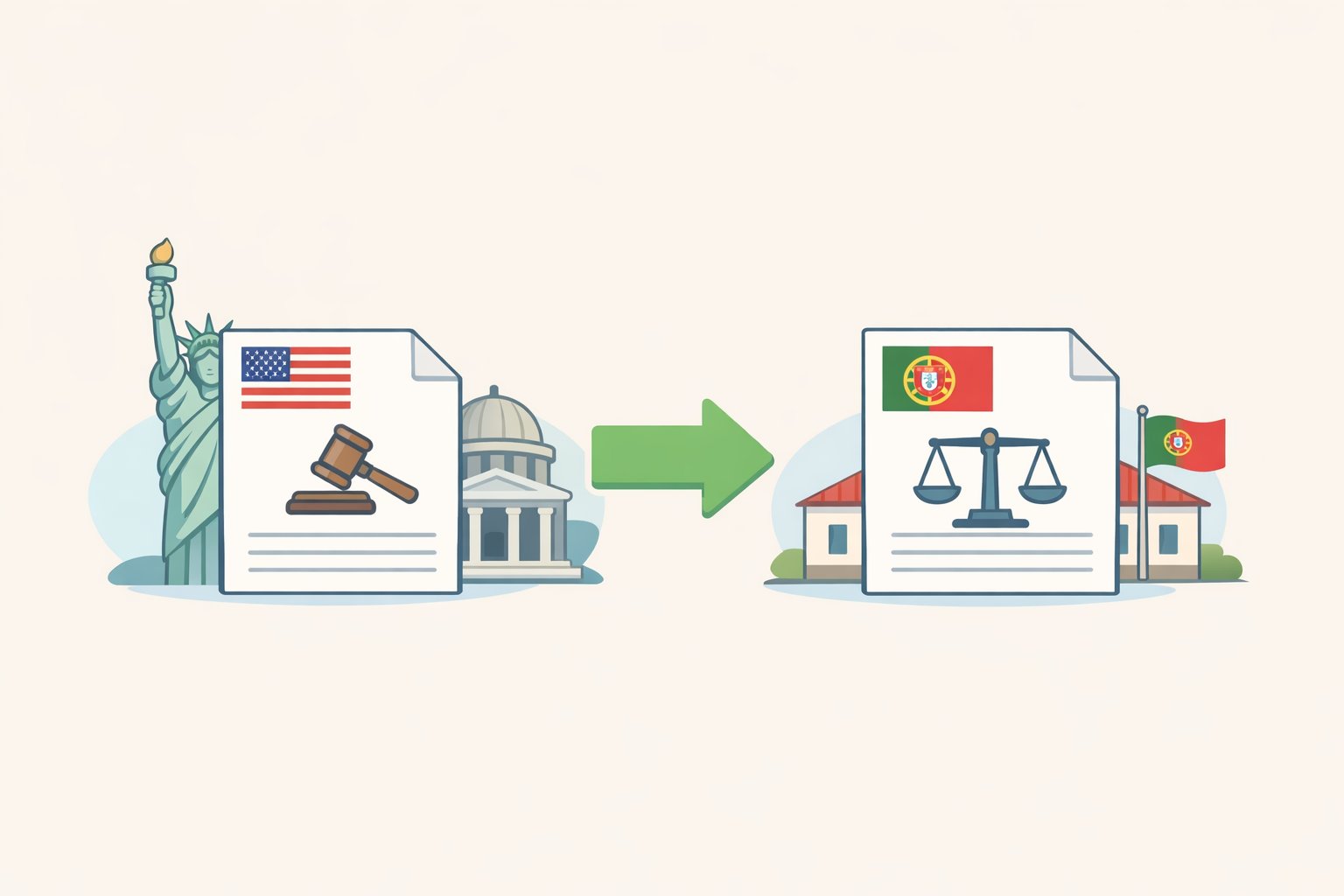
A debt still exists after you move. What changes is enforcement. Think of it like a contract that keeps breathing after you leave the country, while the creditor now has to decide whether chasing it is worth the airfare, the lawyers, and the paperwork.
A U.S. court judgment does not automatically become enforceable in Portugal. There is no international treaty that makes that happen by default, and to pursue assets abroad a creditor usually has to go through a separate recognition process in the foreign country’s courts (LegalClarity, January 2026; LegalClarity, January 2026). Portugal also has its own enforcement rules and fees, and the Mondaq overview of Portuguese procedure says enforcement proceedings begin with court fees of roughly €204 to €612, with additional fees if there is an objection (Mondaq, September 2025).
That matters because collection across borders is not a quick phone call. It is a second lawsuit, in another legal system, with another set of costs and another round of delay. For smaller consumer debts, that expense often makes the whole exercise pointless (LegalClarity, January 2026).
A short scenario makes the mechanics easier to see. Say someone stops paying a $12,000 credit card balance, moves to Porto, keeps a U.S. bank account open, and ignores a lawsuit filed back home. The card issuer can still seek a U.S. judgment, then use that judgment against any assets left in the United States. To reach money in Portugal, the creditor faces the separate Portuguese enforcement process, which is where the cost and friction start to bite (LegalClarity, January 2026; LegalClarity, January 2026; Mondaq, September 2025).
Can creditors collect debt if you live abroad?
For ordinary private debts, the answer is usually “maybe, but often not worth it.” Credit cards and unsecured personal loans are the most common consumer debts, and they are the type most likely to run into the economics problem of international collection (LegalClarity, July 2025; LegalClarity, January 2026).
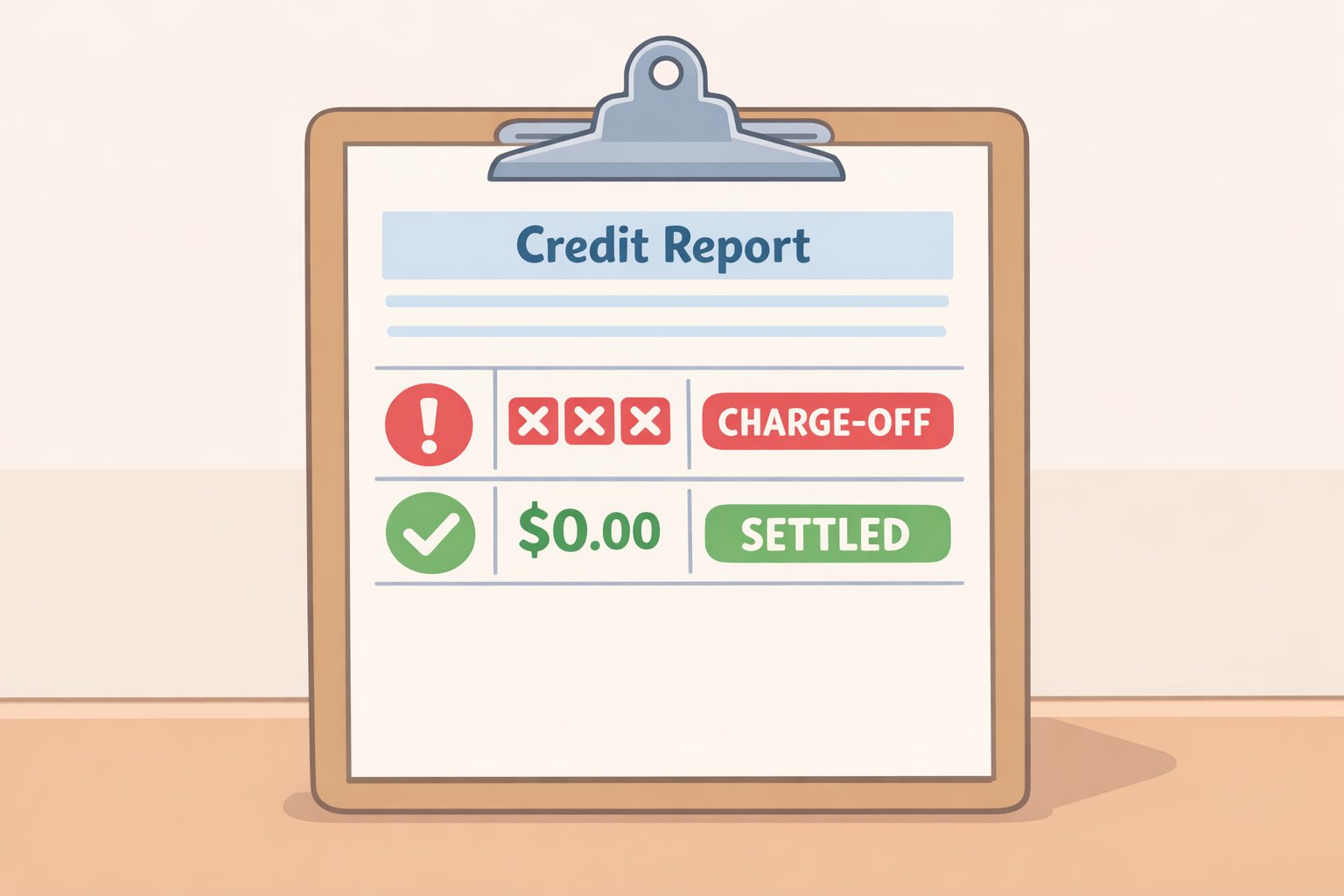
The sequence usually starts with delinquency. When payments stop, the account becomes delinquent. After about 180 days past due, the lender may classify the balance as a loss and close the account in a charge-off, which is an accounting move, not a pardon (LegalClarity, January 2026). The debt still exists. It can also be sold to a collection agency or collection lawyer.
The U.S. credit fallout is the part people feel first. A charge-off can remain on a credit report for seven years from the date of first delinquency, and that reporting window usually starts after the 180-day period (LegalClarity, January 2026). Even if the debt is later paid or settled, the record can remain for the full allowed period, simply updated to show the balance was satisfied.
Co-signed debt is a different headache altogether. If a parent, spouse, or sibling co-signed a loan, that person remains fully responsible for the balance, no matter where the main borrower lives (Ooraa, November 2025). In practical terms, the creditor can pursue the co-signer in the United States with the usual tools, including lawsuits, wage garnishment, and bank levies.
One thing this article cannot cleanly settle is whether private creditors can reach Social Security or pension income. That turns on federal protections and state exemptions, which need a debt attorney’s view rather than a tidy rule of thumb.
The private-debt trap, and why the statute of limitations is not a getaway plan
People often assume leaving the country puts a clock on debt collection. It does not work that way.
Each state has a statute of limitations for debt collection lawsuits, and for credit card debt the usual range is three to six years, though state law varies (Ginsburg Law Group, February 2026). If the creditor does not sue in time, the debt may become time-barred. But in some states the clock can be tolled, meaning paused, if the debtor leaves the state, cannot be located, or service becomes impracticable (Ginsburg Law Group, February 2026).
So moving to Portugal does not necessarily buy time. In some cases, it buys the creditor more time.
That is the part people dislike hearing. Distance feels like a reset button. Legally, it can be the opposite.
If a creditor gets a judgment, the problem gets heavier. Judgments can last 10 to 20 years depending on state law, many can be renewed, and interest keeps accruing during that period (Ginsburg Law Group, February 2026). A judgment is not just an unpaid balance. It is a court-confirmed debt with enforcement tools attached.
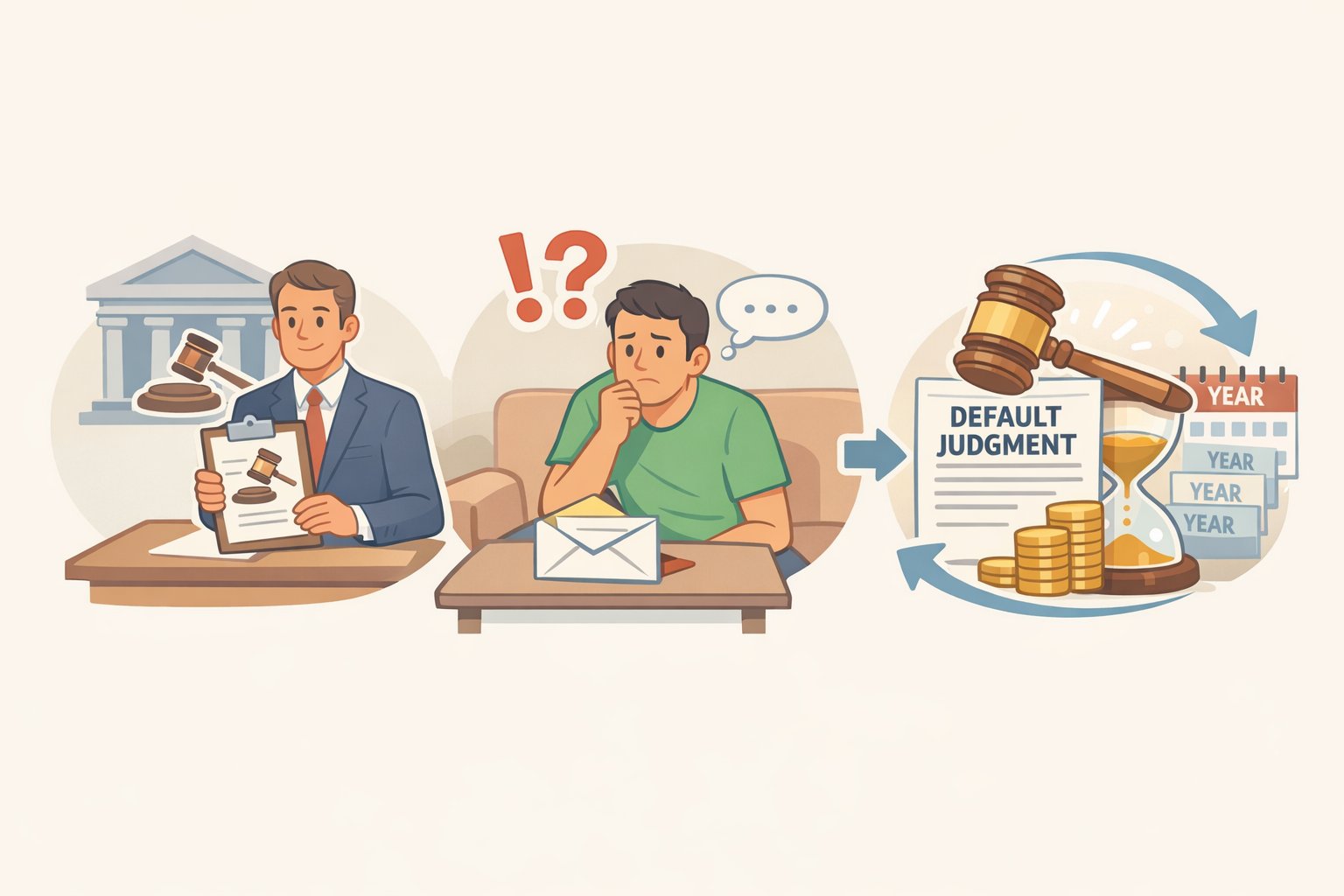
A second scenario shows how this turns ugly. Suppose someone leaves Texas with a $9,000 credit card balance and assumes time abroad will run the clock down. The creditor sues anyway, gets a default judgment because no one answers the complaint, and now the debt is no longer a simple collection account. If that person later returns to the United States, the creditor may still have a live judgment, plus interest, and possibly a longer tail than the original debt ever had (LegalClarity, July 2025; Ginsburg Law Group, February 2026).
Why government debt is the real red flag
This is where the conversation changes. Federal tax debt and federal student loans are not ordinary consumer balances, and the government has reach that private lenders do not.
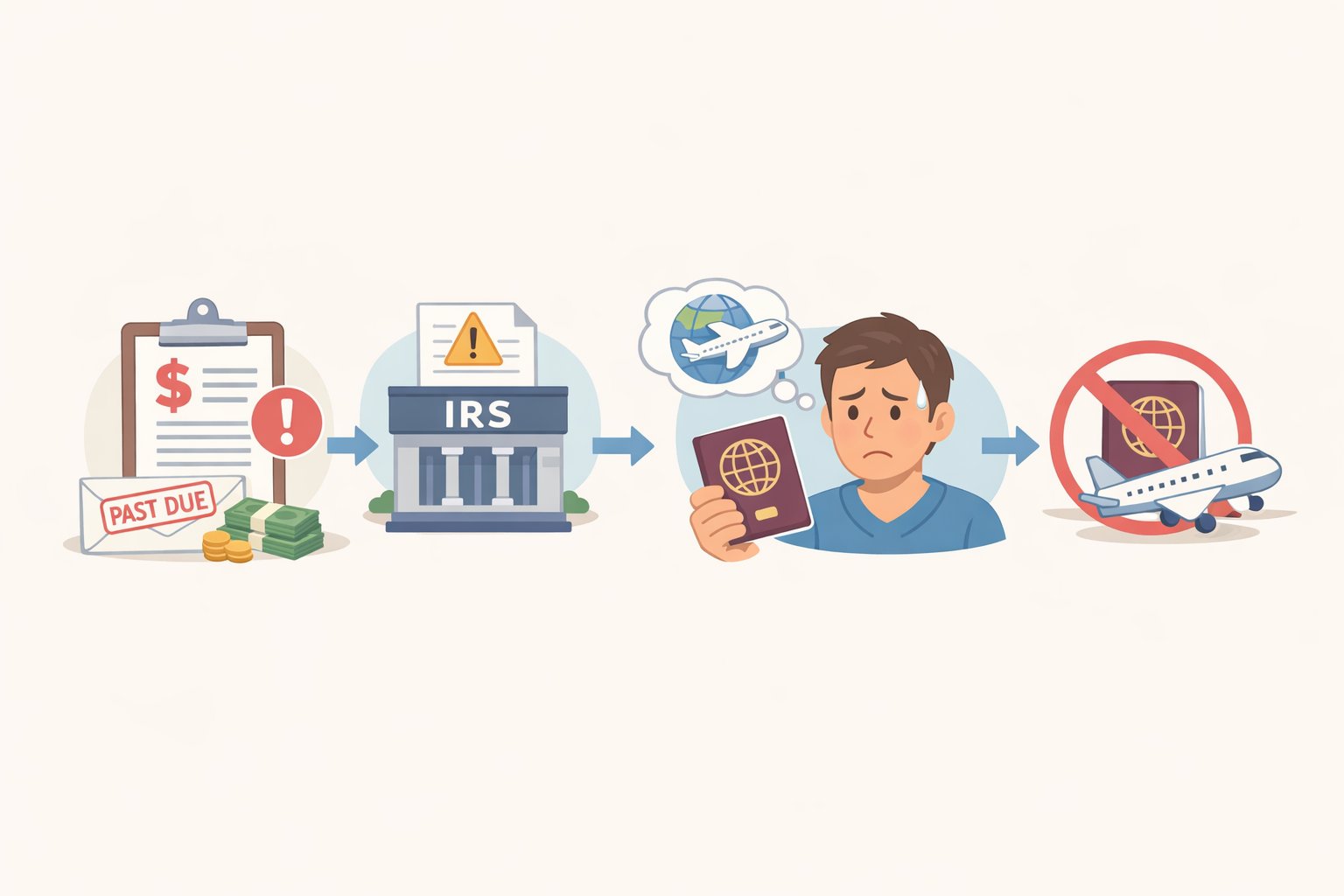
Start with tax debt. The IRS has a 10-year collection period, with exceptions and tolling rules, and moving abroad does not automatically stop IRS collection (Ginsburg Law Group, February 2026). The IRS also uses international information-sharing agreements to identify taxpayers with outstanding balances (LegalClarity, January 2026).
That is where Portugal matters in a different way from a private collection case. The point is not that Portugal is uniquely hostile. It is that Portugal is a country with its own legal process, and the IRS does not need to hire a local collection shop and hope for the best. If the debt is seriously delinquent, the IRS can certify it to the State Department, which can then deny or revoke a U.S. passport (LegalClarity, January 2026; Ooraa, November 2025). For anyone planning to live abroad, that is not a minor inconvenience.
Here is the federal-tax version of the earlier scenario. Someone moves to Lisbon owing the IRS and assumes the tax debt is now just another piece of paper in another time zone. It is not. The IRS can still use information-sharing channels to locate the taxpayer, the collection period continues running, and seriously delinquent tax debt can trigger passport problems that complicate life abroad in a very direct way (LegalClarity, January 2026).
Federal student loans are different again. The Department of Education rarely pursues foreign legal action, but it retains the power to offset future federal benefits, including Social Security, against an unpaid loan balance (Ooraa, November 2025). For someone planning retirement, that is the part worth circling in red.
There is another wrinkle if foreign income is part of the picture. Under income-driven repayment plans, monthly federal student loan payments are based on taxable income reported to the IRS, so foreign earnings that end up in adjusted gross income can affect the payment calculation (LegalClarity, January 2026). That is not the same thing as collection, but it can change the bill before anyone starts chasing it.
What to do before you get on the plane
The first step is to sort the debt by type. Credit cards and personal loans belong in one pile. Federal student loans and tax liabilities belong in another. A $67,000 debt load can be a settlement problem, a tax problem, or a retirement problem depending on what makes up the total.
Next, audit U.S. assets. Bank accounts, property, retirement accounts, and co-signed obligations in the United States are the most exposed if a creditor gets a U.S. judgment. Less exposure means less to lose. Simple enough, even if the paperwork is not.
If the debt is unsecured, settlement before the move may be worth looking at. Creditors may accept reduced lump-sum settlements, often around 40% to 60% of principal, when full recovery looks doubtful (Ooraa, November 2025). The tradeoff is that forgiven debt may count as taxable income by the IRS.
Bankruptcy is another option, but timing matters. Chapter 7 can discharge most unsecured consumer debt, while Chapter 13 restructures repayment over three to five years (Ooraa, November 2025). importantly, U.S. residency requirements still have to be met, so this is a pre-move issue, not a post-move cleanup job.
Federal obligations should move to the front of the line. IRS debt has the clearest cross-border reach, the longest collection window, and the most concrete consequences, including passport action (Ginsburg Law Group, February 2026). If there is one category to resolve before leaving for Portugal, it is that one.
The last step is getting actual advice from people who know the terrain. A debt attorney, a tax professional familiar with expat rules, and a cross-border financial planner can help sort state law, federal law, and Portuguese residency requirements. General information is useful. Wrong assumptions are expensive.
Conclusion
Private credit card and loan debt does not disappear when you move to Portugal, but it also does not automatically become easy to collect abroad. The legal obligation remains, U.S. credit damage follows you home if you ever come back, and any U.S. assets or co-signers are still exposed (LegalClarity, January 2026).
Government debt is the sharper risk. IRS liabilities and federal student loans travel farther than ordinary consumer debt, and the passport issue alone makes unresolved tax debt a pre-departure priority (LegalClarity, January 2026; Ginsburg Law Group, February 2026).
Do not rely on time to make the problem go away. Statutes of limitations vary, may be tolled when someone leaves, and judgments can last for decades (Ginsburg Law Group, February 2026). For anyone moving from the U.S. to Portugal with debt, the next useful reading is the IRS’s expat guidance, the State Department’s passport certification rules, and Portugal’s NHR tax regime. The next useful conversation is with a cross-border attorney.