
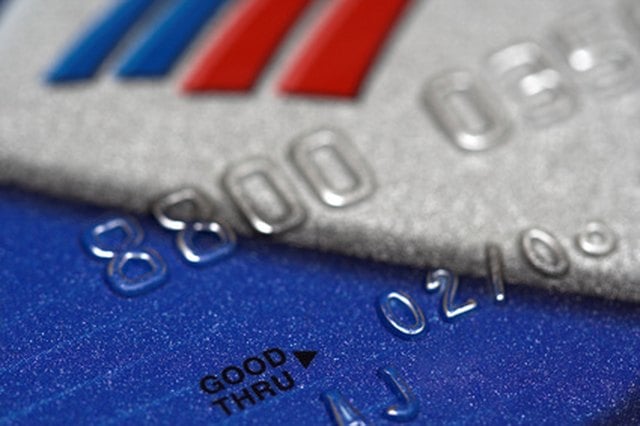


On a credit card, BIN is the Bank Identification Number. The BIN is embedded within the credit card number and tells which financial institution issued the card as well as the industry of the issuing financial institution. As institutions beyond banks have gotten into the business of issuing credit cards, the term "Issuer Identification Number," or IIN, has also become common. Whether it's BIN or IIN, the term represents the same thing.
Credit Card Numbers
In any credit card number, the first six digits are the BIN or IIN. All the digits that follow the BIN or IIN, except for the last digit, identify the individual account linked to the card. The final digit in the credit card number is a "check digit," a security and verification measure. If you plug the other digits into a certain mathematical formula – called the Luhn algorithm – the result should be the check digit. If it isn't, the card number is invalid.
The Luhn algorithm is also known as the modulus 10 or mod 10 algorithm and is used in the validation of various identification numbers including Canadian Social Insurance Numbers, IMEI and credit card numbers. Developed by mathematicians in the latter half of the 1960s, it was adopted by credit card companies and is a public domain algorithm.
The First Digit
The first digit of the BIN or IIN is known as the "Major Industry Identifier." This digit tells you what general industry the issuing institution comes from. If the card starts with a 1 or a 2, the issuer is an airline. If it is a 3, it's in the travel and entertainment industry. Cards starting with 4 and 5 come from financial institutions. A card starting with a 6 can come from either a bank or a merchandiser, such as a retail store card. If the first number is a 7, then the issuer is in the petroleum industry. If it's an 8, the issuer is in telecommunications. Card starting with 9 or 0 are for other issuers, including governments.
The Other Digits
The remaining five digits of the BIN pinpoint the specific institution that issued the card. An institution can have just one BIN or IIN, or it can have a whole string of them. It can reserve some BINs for "gold" or "platinum" cards, corporate cards, debit cards, gift cards or other specific types. Since there are six digits in the BIN, there are a million possible numbers.
Common Card Issuers
Cards issued under a major brand will share a few digits at the beginning of the BIN. Visa-branded cards always begin with a 4. MasterCards will always begin with a number from 51 to 55. Discover cards, originally issued by a unit of Sears, start with 6011, 644 and 65. American Express cards, reflecting the company's roots in the travel industry, start with 34 or 37.