

Retirement Financial Challenges 2026: 3 Money Risks
Retirement financial challenges 2026 are not arriving as one tidy crisis. They are showing up in three familiar places, long-term care, Medicare drug coverage, and the tax rules that govern retirement accounts. The trouble is that each one can feel manageable right up until it isn’t.
Start with long-term care, where the numbers have moved faster than most household budgets. AARP’s Public Policy Institute reported in March that home care and assisted living costs rose nearly 50 percent between 2019 and 2024, while income for households headed by someone 65 or older grew 22 percent over the same stretch. That mismatch is the real story.
This guide walks through the three biggest retirement money challenges in 2026 and the practical steps that can blunt the damage.
Prerequisites: This is for people already retired, close to retirement, or helping a parent or spouse manage retirement income, Medicare coverage, or withdrawals from tax-deferred accounts.
Long-term care costs for retirees are rising fast

The cleanest way to think about long-term care is this: it is where retirement arithmetic stops being polite. AARP reported in March that adult day services rose 33 percent from 2019 to 2024, while nursing home costs climbed 25 percent. Over the same period, older households saw income rise only 22 percent.
The national benchmarks are blunt. AARP said home care and assisted living costs rose nearly 50 percent, and it cited Genworth/CareScout survey data showing costs ranged from about $26,000 a year for adult day services to nearly $128,000 for a private nursing home room. AARP also said median financial assets for households age 75 and older are about $50,000. That does not leave much room for a bad year.
The risk is not hypothetical. AARP said 56 percent of adults who turned 65 between 2021 and 2025 are expected to need long-term services and supports at some point in life. Yet many people still assume Medicare will cover the bill, and it generally does not. That misunderstanding is expensive.
Geography matters more than people want it to. AARP said the most expensive states such as Maine, West Virginia and Oregon can run about twice the cost of the least expensive ones, including Louisiana, Maryland, Utah and Texas. A retiree in one state is not shopping in the same market as a retiree in another.
-
Estimate local costs first. Use state-level long-term care data or the Genworth/CareScout Cost of Care survey to check home health, assisted living, and nursing facility prices where you live. National averages are useful as a warning light. They are not a bill.
-
Check what Medicare will actually cover. Medicare generally does not pay for custodial care, the kind that helps with bathing, dressing, and meals. A lot of families discover that only after the first monthly invoice arrives, which is an unpleasant way to learn insurance policy language.
-
Measure the gap against your assets. Compare a realistic one-year, two-year, and three-year care scenario with liquid savings and income. If a moderate care spell would wipe out most of the cushion, the gap is real even if care never comes.
-
Choose a funding path before care starts. Traditional long-term care insurance, hybrid life-and-LTC policies, and self-funding each solve different problems. If assets are limited, Medicaid planning may be part of the answer, but the rules are strict and state-specific. An elder law attorney can help before the clock starts ticking.
-
Make the household conversation unavoidable. AARP said about 60 percent of households headed by someone 65 or older include more than one person. That matters because one spouse’s care can drain the other’s security. Family caregiving may fill some gaps, but AARP also notes that unpaid caregivers provide most long-term care in the U.S. That help has real financial and physical costs of its own.
Medicare Part D costs changed in 2026, but not evenly
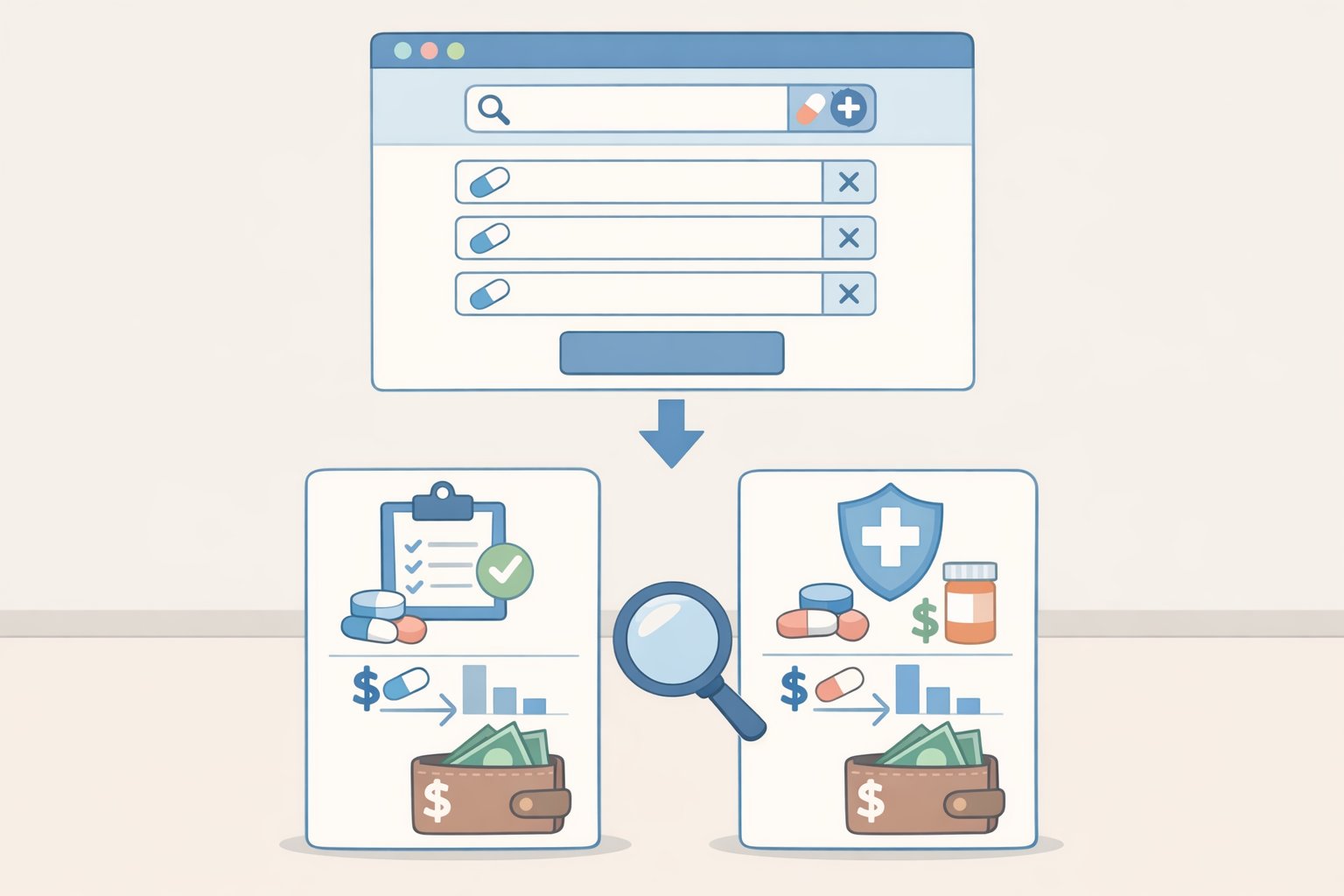
Medicare Part D has a habit of looking simpler from a distance than it does up close. KFF reported in March that 56.1 million people are enrolled in Part D as of February 2026. Of those, 56 percent are in Medicare Advantage drug plans and 44 percent are in stand-alone prescription drug plans.
The average premium picture looks calmer than the plan-by-plan reality. KFF said the average monthly enrollment-weighted premium for non-group PDPs fell from $39 to $36 between February 2025 and February 2026. That is the broad trend. It is not the whole story.
KFF also said some PDPs raised premiums by as much as $50 for 2026, the maximum increase allowed for plans participating in the Part D premium stabilization demonstration. So yes, the average fell. Plenty of individual retirees still saw their own bill go up. The average never pays the pharmacy.
The biggest enrollment shift showed up in employer group coverage. KFF said group MA-PD enrollment declined by 1.2 million between 2025 and 2026, the first such decline since 2010, while group PDP enrollment increased by 1.2 million, the largest such increase since 2013. KFF said most of the overall growth in PDP enrollment came from employer group PDPs. That is a meaningful migration, not a universal one.
-
Confirm your current plan. Look up the plan name, premium, deductible, and drug tiers. Plenty of people are paying for a plan they enrolled in years ago without checking whether it still fits their prescriptions.
-
Run your drugs through Medicare’s Plan Finder. Use exact medications and dosages. The monthly premium alone is a bad guide; the annual out-of-pocket estimate is the number that matters.
-
Pay attention if an employer plan moved you. KFF’s data show the biggest shift was among employer group plans, not all Part D coverage. If your former employer changed your drug coverage structure, verify that your prescriptions still land on a workable tier.
-
Mark open enrollment now. Medicare’s annual window runs from October 15 through December 7, and changes take effect January 1. Miss it, and the calendar tends to become stubborn.
Tax and RMD mistakes can quietly drain retirement income
Tax mistakes in retirement rarely make headlines. They just show up as money that should have stayed in the account. That is the dull little tragedy of the thing.
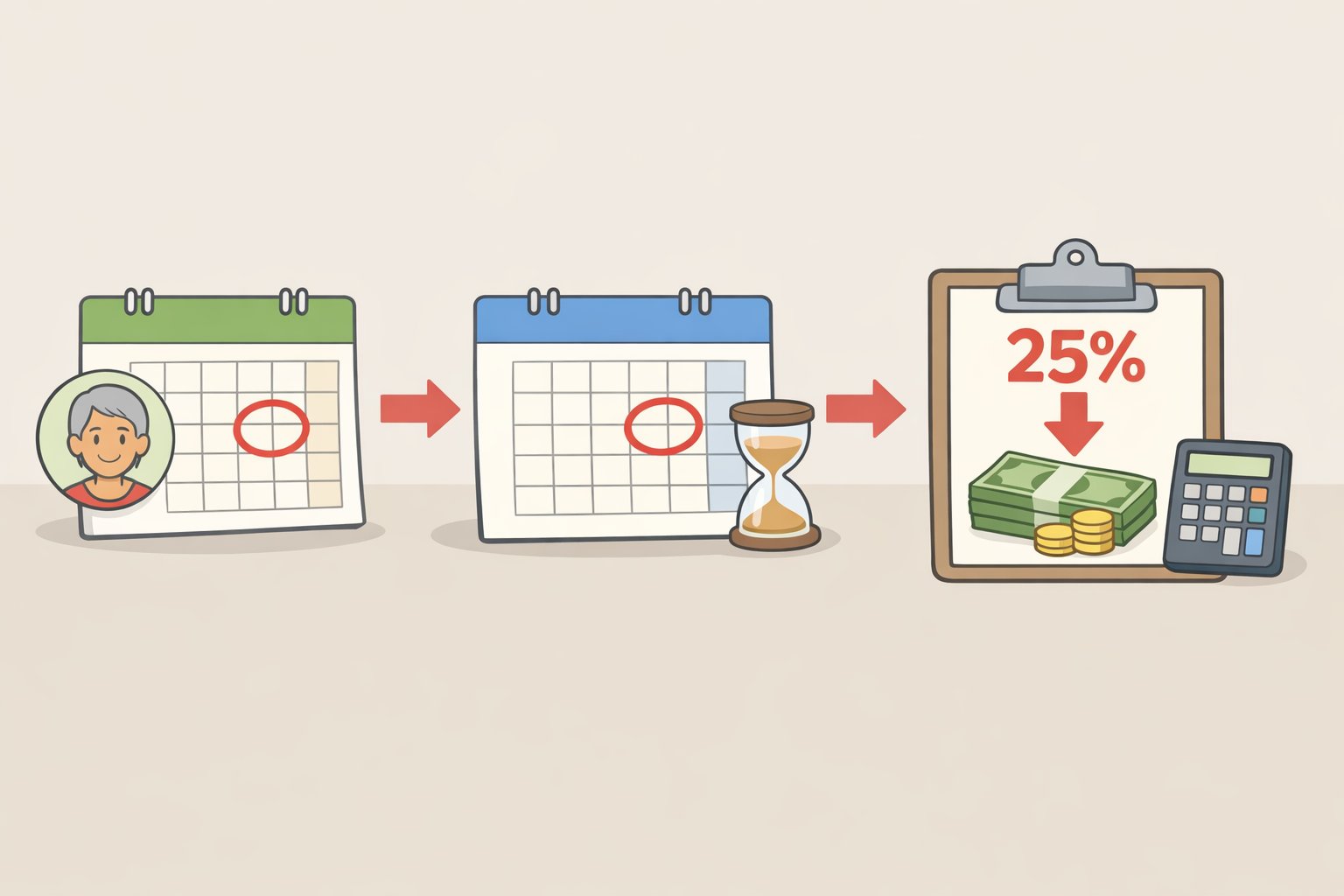
Required minimum distributions are the obvious place to start. The Taxpayer Advocate Service said in December 2023 that taxpayers generally must begin withdrawals from traditional IRAs, SEP IRAs, SIMPLE IRAs, or retirement plan accounts at age 72, or 73 if they reach 72 after Dec. 31, 2022. After the first withdrawal, the annual deadline is generally December 31.
The penalty is steep enough to get attention. TAS said the excise tax for failing to take the full amount is 25 percent of the shortfall for tax years beginning in 2023 and after, with a possible reduction to 10 percent if additional requirements are met. That is not a clerical error you want to make casually.
Pension income can also be mishandled. The IRS said in September 2025 that if some contributions to a pension or annuity were previously included in gross income, part of the distributions can be excluded from income. The tax-free part must be figured when payments first begin, and it generally stays the same each year even if the payment amount changes. For qualified retirement plans, the simplified method usually applies; for nonqualified annuities, the general rule applies.
There is a reason to use a credentialed preparer here. TAS said in January 2026 that most paid return preparers are not credentialed, and studies have found non-credentialed preparers disproportionately file inaccurate returns. That can mean overpaying or underpaying taxes, and underpayment brings penalties and interest. Retirement returns often bundle RMDs, pension income, Social Security taxation, and investment distributions. The margin for sloppy work is thin.
Federal retirees have one more wrinkle. TAS said in August 2025 that the IRS is sending LT36 notices under its Federal Employee/Retiree Delinquency Initiative to current and former federal workers who may have an unpaid tax debt or an unfiled return. The notice can arrive even if no money is owed. It should not be ignored.
-
Figure out your RMD age and amount. If you hit age 72 after Dec. 31, 2022, your trigger age is 73. Use the IRS worksheet and life expectancy table, and check the custodian’s number against your own.
-
Take the withdrawal on time. The first RMD can be delayed until April 1 of the following year, but that can create two withdrawals in one tax year. For many retirees, that is enough to push income into a less friendly bracket.
-
Complete the pension worksheet if you contributed after-tax dollars. The IRS says the tax-free part should be determined when payments begin, using the Simplified Method Worksheet or the general rule, depending on the plan. Do it once, and do it carefully. Recalculating it later usually means you missed something earlier.
-
Choose a preparer who is actually accountable. A CPA, enrolled agent, or tax attorney is not a guarantee of brilliance, but it is a better signal than a neighbor with a spreadsheet and confidence.
-
If LT36 lands in the mailbox, answer it promptly. TAS said the IRS can garnish pay and benefits and use pension withholding if the matter is left hanging. The notice may be wrong. The response deadline is not.
What to do first
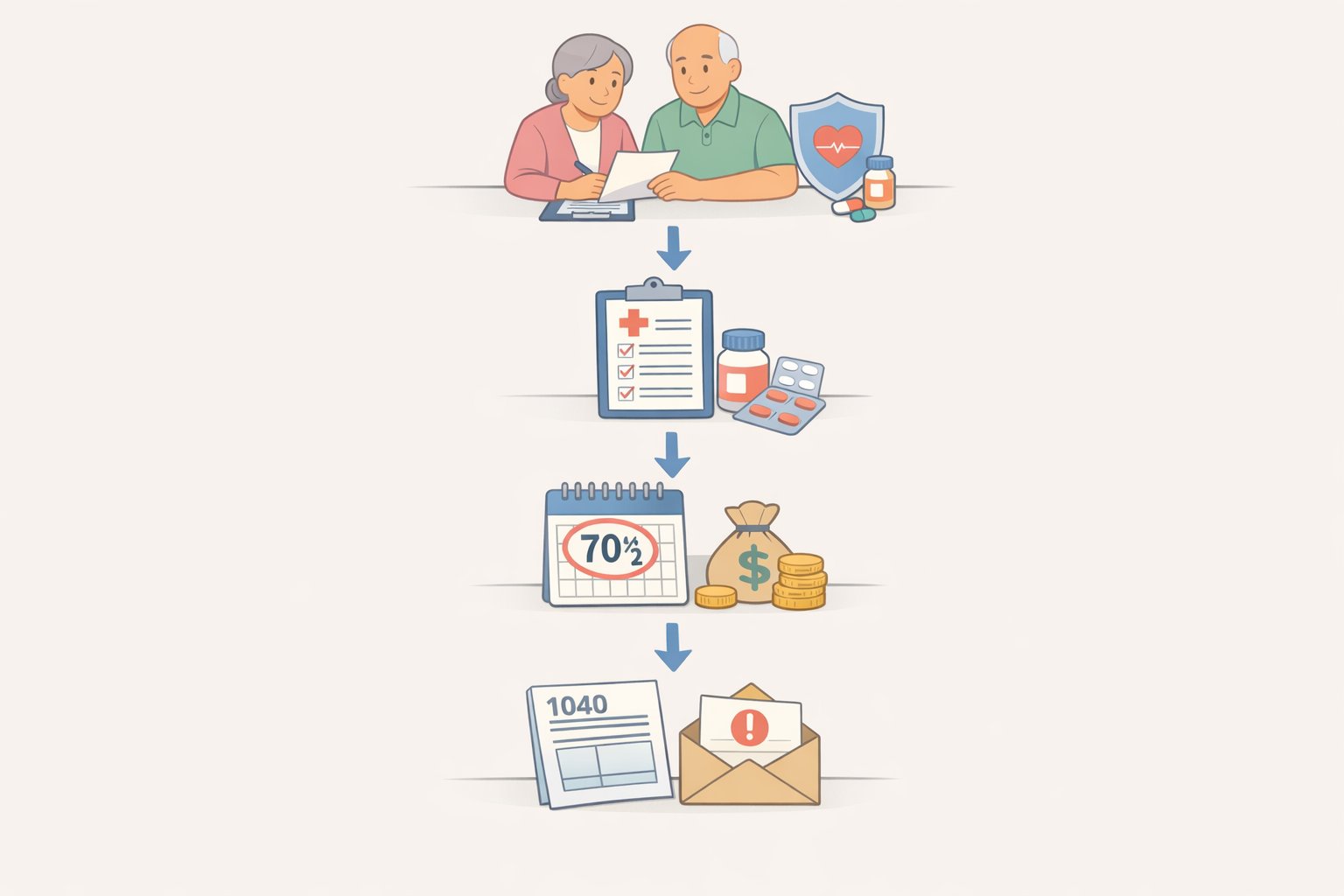
The smartest order is simple. Start with long-term care, because that is the risk most likely to shred a retirement budget in one stroke. Then review Medicare Part D coverage before open enrollment closes. After that, check RMDs, pension taxation, and any IRS notices that need a reply.
A retiree with a small savings cushion does not need a grand strategy for all of this at once. One cost check, one plan review, one tax pass. That is enough to stop the quiet leaks before they become a flood.