
- Does travel insurance cover illness? Medical vs trip cancellation
- Travel insurance illness coverage: medical treatment vs trip cancellation
- Pre-existing conditions are where claims often go sideways
- What makes an illness claim succeed or fail
- How insurers sort an illness claim
- What to check before you buy
Does travel insurance cover illness? Medical vs trip cancellation
Travel insurance does cover illness, which is the part most buyers notice first. The catch is tucked into the fine print: coverage usually applies only to sudden, unforeseen illness that is not pre-existing and not excluded by the policy. Miss one of those conditions and the denial letter tends to arrive with the confidence of a form filled out by an unforgiving machine.
Standard travel insurance policies may cover emergency medical expenses if a traveler becomes ill or injured on a trip, and they can help recover prepaid trip costs if a covered illness forces cancellation or shortens travel (Travel Insured International). Covered emergencies often include illness or injury to the traveler, as well as hospitalization or death of a close family member, even if that person is not traveling (Insurify). Which situations count, though, depends on the trip details, the traveler’s health history, and the policy purchased (Travel Insured International).
Travel insurance illness coverage: medical treatment vs trip cancellation
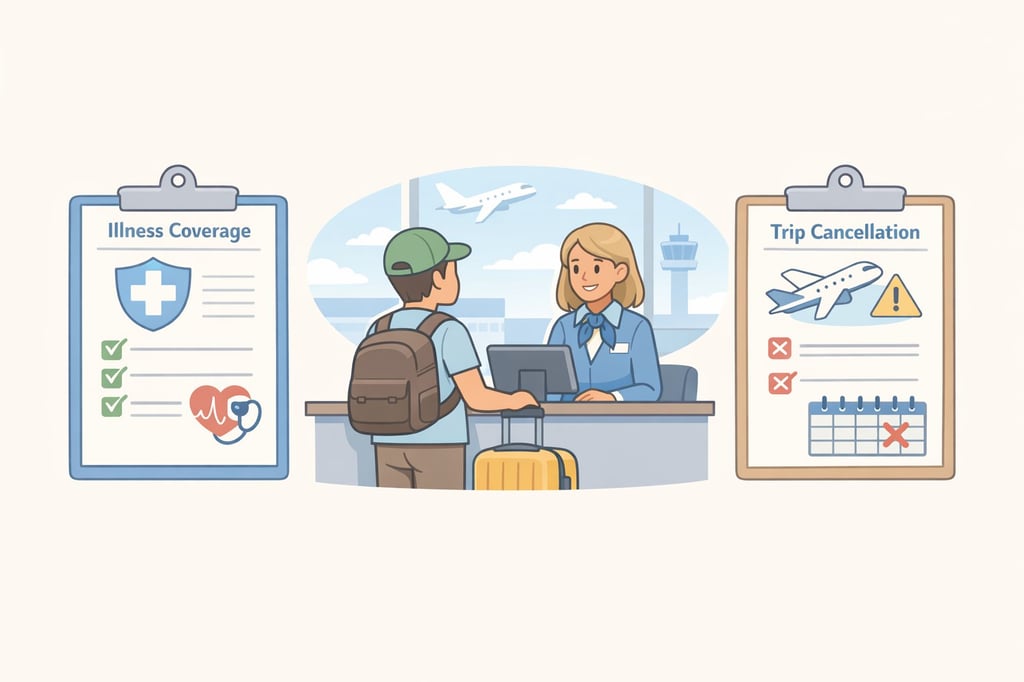
The easiest way to think about travel insurance is as two separate products wearing the same coat. One covers medical costs overseas. The other protects prepaid trip expenses.
Emergency medical coverage may pay eligible expenses if a traveler becomes ill while traveling (Travel Insured International). For many people, that is the benefit that matters most, because health insurance at home often does not behave kindly once the passport comes out.
Trip cancellation and interruption work differently. If a covered illness forces a traveler to cancel or cut short a trip, those benefits can help recover costs that would otherwise be lost, such as flights, hotels, and tours (Travel Insured International). A physician’s documentation is often part of the claim, and the illness usually has to be serious enough to stop travel, not merely make it miserable (Ginsburg Law Group).
Both benefits are built around the same basic idea: the event has to be sudden and unforeseen. Travel insurance is not there for preventive care, routine checkups, or treatment that could have been scheduled at home before departure (Travel Insured International). Think of it less like a universal safety net and more like a very specific net with a few sizable holes.
A family member’s illness can matter too. Covered emergencies typically include illness, injury, hospitalization, or death of a family member, even if that person is staying home (Insurify). That is the kind of detail travelers skip past, then regret later.
Pre-existing conditions are where claims often go sideways
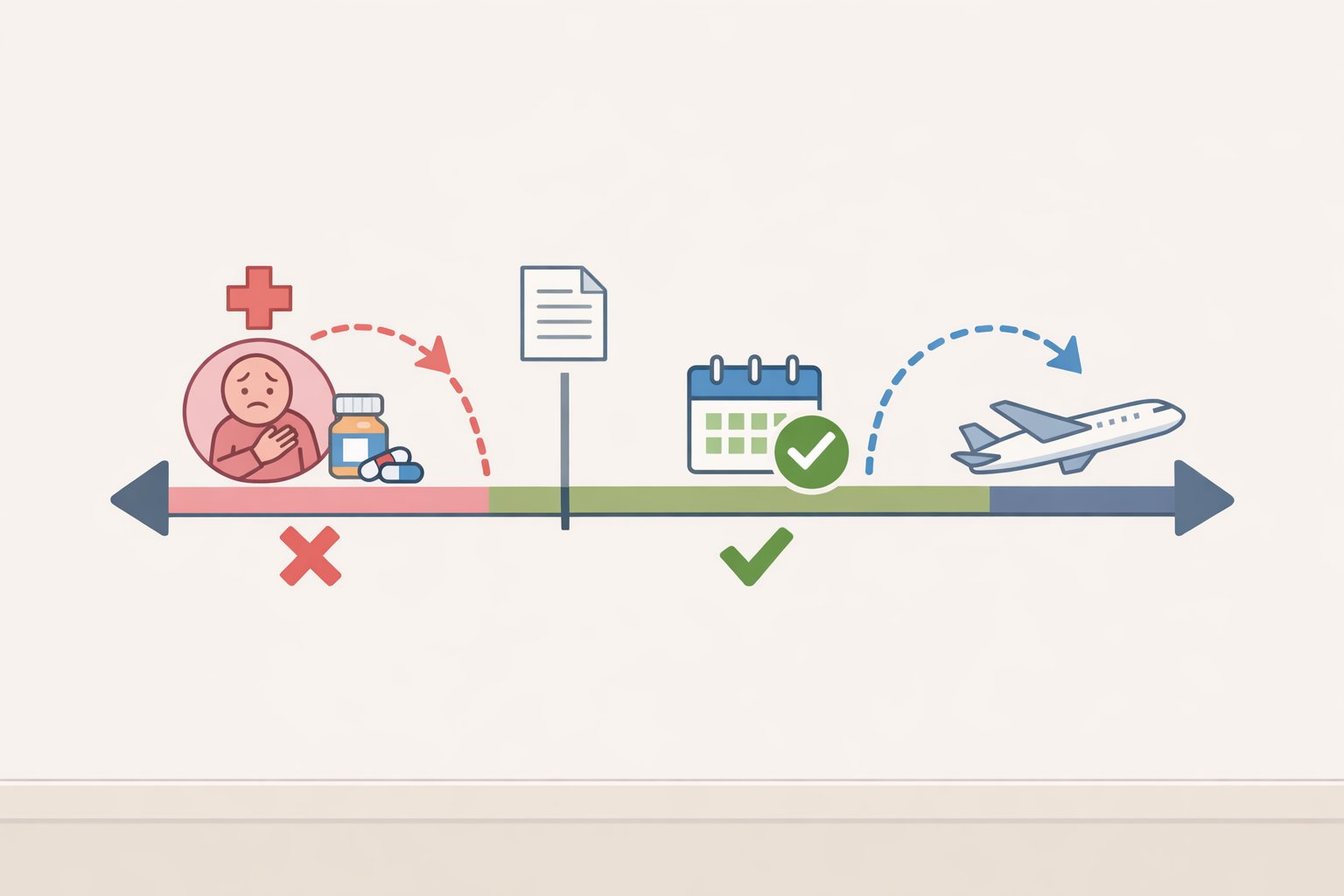
Pre-existing conditions are usually excluded for all types of claim, whether the problem is physical or mental (ITIJ). In plain English, if the insurer decides the condition was already there before the policy was bought, the claim may never get out of the gate.
The definition is broader than many travelers expect. A pre-existing condition can include an illness, injury, or symptom that was diagnosed, treated, or showing signs before purchase (ITIJ). Insurers then use a lookback period, often 60 to 180 days before the policy date, to check whether the condition stayed stable. If there were no changes to medication, symptoms, or treatment during that period, a condition may be covered under some policies (ITIJ).
There is an escape hatch, but it is narrow. A pre-existing medical condition exclusion waiver may restore coverage if the policy is bought within a set window after the initial trip deposit, and that window is often 14 to 21 days (ITIJ). Miss the deadline and the waiver may be gone, regardless of how well controlled the condition is.
Mental health claims follow much the same logic, with some extra friction. In the US, cover for trip cancellation or interruption caused by a mental health condition is generally excluded, although it’s sometimes covered if the condition results in hospitalization (ITIJ). Emergency treatment abroad may be handled differently, which is why the US Travel Insurance Association advises travelers to ask specific questions before buying, rather than assuming the brochure has already done the thinking for them (ITIJ).
For anyone traveling with a chronic illness or a mental health history, the useful move is simple enough: check the lookback period, confirm waiver eligibility, and get the insurer’s answer in writing. Telephone reassurance ages badly. Paper does not.
What makes an illness claim succeed or fail
A claim can look covered and still fail on proof. Insurance companies do not pay out on vibes, however sincere.
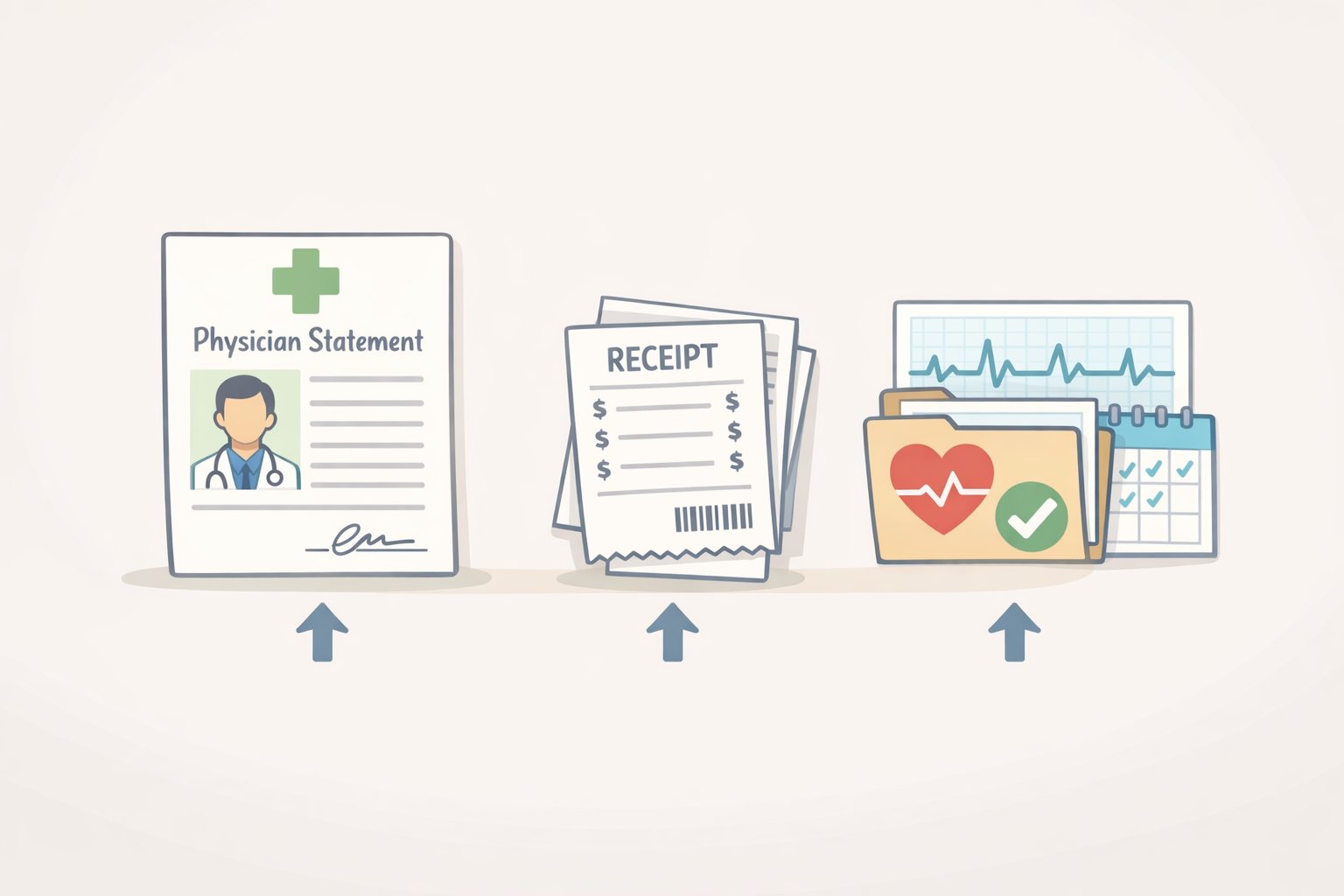
The usual paperwork starts with a licensed physician’s written statement confirming the illness, the dates involved, and whether it prevented or interrupted travel. Receipts for prepaid, non-refundable expenses should follow, and if a pre-existing condition waiver is in play, records showing stability during the lookback period become important.
Timing matters just as much. If symptoms were already present, or a diagnosis had already been made, before the policy was purchased, the insurer can treat the condition as a known event and deny the claim. Insurance Journal reported this month that after a weather event is forecast, buying a policy later can leave related claims excluded as a known event, and the same basic logic applies when an illness was already on the scene before coverage started (Insurance Journal).
The same article described a separate dispute over a war exclusion, where a traveler argued the violence behind his cancellation was more like terrorism because Congress had not declared war in Iran. The insurer still denied the claim, pointing to a blanket exclusion for acts of war (Insurance Journal). That case is a useful reminder that broad exclusions rarely bend to clever arguments. Contracts are rude that way.
There is a fallback for travelers who do not fit the standard illness rules. A cancel-for-any-reason add-on is available on some policies, subject to restrictions, and can cover up to 75 per cent of trip costs (ITIJ). It does not require a qualifying illness, which is the point, though it usually has to be purchased within a set period after the initial deposit (ITIJ).
How insurers sort an illness claim

If the policy language is still feeling slippery, it helps to ask the same questions claims handlers do. They are usually trying to sort the situation into one of a few buckets.
- When did the symptoms start, or when was the diagnosis made? If either happened before the policy was purchased, coverage is likely excluded unless a stability rule or waiver applies.
- Is the illness sudden and emergent, or predictable and manageable? Travel insurance is designed for sudden and unforeseen events, not treatment that could have been handled at home (Travel Insured International).
- Which benefit is being claimed? Emergency medical coverage has a different standard from trip cancellation or interruption, which usually needs physician certification that travel was medically blocked (Ginsburg Law Group).
- Who was affected, the traveler or a family member? A family member’s illness, hospitalization, or death can trigger cancellation coverage even if that person is not on the trip (Insurify).
- Is there a pre-existing condition waiver, and was it activated in time? If the illness is pre-existing, the waiver may be the only path to coverage, and it depends on a narrow purchase window (ITIJ).
This is not glamorous reading, but it is the part that keeps a trip from turning into a dispute.
What to check before you buy
The answer to does travel insurance cover illness is yes, sometimes, and the useful part is in the conditions. Coverage usually exists for sudden illness, emergency medical treatment, and certain cancellation claims, but the policy will still draw a line around pre-existing conditions, predictable problems, and excluded events (Travel Insured International).
Before buying, the small print worth reading first is the part about pre-existing conditions. Check the lookback period, the waiver deadline, and any mental health limits, especially if cancellation coverage matters (ITIJ). If medical evacuation is important, verify that it is included in the emergency medical benefit rather than assumed into it.
If flexibility matters more than full reimbursement, compare cancel-for-any-reason options. They cost more and pay less, but they can be the cleanest answer when an illness sits just outside the policy’s usual definition of covered (ITIJ).
And if a chronic condition or mental health history is part of the picture, get the insurer’s answer in writing before the trip deposit is paid. That is where the argument belongs, not after the claim is filed.