

- Tax credits parents often overlook: AOTC, LLC, ODC, CDCTC
- Why tax credits parents often overlook get missed
- Credit 1: The American opportunity tax credit, up to $2,500 per college student
- Credit 2: The lifetime learning credit when the AOTC does not fit
- Credit 3: The Credit for Other Dependents, $500 for the child who aged out of the CTC
- Credit 4: The child and dependent care tax credit for working parents
- Before you file: the simplest decision rule
Tax credits parents often overlook: AOTC, LLC, ODC, CDCTC
Most parents know the Child Tax Credit. Fewer know that tax credits parents often overlook can still cut a 2025 tax bill after a child turns 17, starts college, or needs paid care. The four credits in this guide follow those life stages in order, from college costs to aging out of the CTC to child care expenses that let a parent keep working (Tax Policy Center, August 2025; IRS, 2026).
That is the point of the whole exercise. The credits are ordinary, not flashy, and that is exactly why they get missed. Some are refundable, some are not, and the difference can be the gap between a useful tax break and a line on a return that does very little.
Why tax credits parents often overlook get missed
The Child Tax Credit is still the better-known benefit, but it stops at age 16 under current 2025 rules and is capped at $2,200 per child under 17, with up to $1,700 refundable if the credit exceeds tax owed (Tax Policy Center, August 2025). OBBBA also changed the rules for families claiming the CTC, including an SSN requirement for taxpayers and the continuation of the child SSN rule (Tax Policy Center, August 2025).
That leaves a lot of parents looking straight past the credits that still apply. Families with college students should be thinking about education tax credits for parents. Families with older teens or adult dependents should be looking at the Credit for Other Dependents. Working parents with paid care costs should check the Child and Dependent Care Tax Credit, even if the benefit ends up smaller than hoped (IRS, October 2025; Tax Policy Center, July 2025).
Credit 1: The American opportunity tax credit, up to $2,500 per college student
The American Opportunity Tax Credit, or AOTC, is the most valuable of the education credits for parents of college students. For 2025, it can be worth up to $2,500 for each student who qualifies, and 40 percent of that credit may be refundable (IRS, January 2026).
Step 1: Confirm the student qualifies
The AOTC is available for the first four years of postsecondary education. The student must be enrolled at least half-time in a program that leads to a degree or recognized credential (IRS, January 2026).
That is where many families misfire. A student can be in school and still miss the AOTC because the program is too far along, the course load is too light, or the credential track does not fit the rule.
Step 2: Check the refund and income limits

For 2025, the AOTC can reduce tax by up to $2,500 per eligible student, and if the refundable portion exceeds tax owed, the excess is refunded (IRS, 2026). The credit phases out for single filers between $80,000 and $90,000 of MAGI, and for joint filers between $160,000 and $180,000 (IRS, January 2026).
That keeps the credit aimed at middle-income families, where it still does useful work. It also makes the refundability matter more than the headline number.
Step 3: Gather the paperwork before filing
To claim the AOTC, the taxpayer or dependent needs Form 1098-T from the school (IRS, January 2026). In most cases, the student should receive that form by February 2, 2026 for the 2025 tax year, and the school’s EIN must go on Form 8863 (IRS, January 2026).
That is the unglamorous part, which is to say the important part. The form is not optional, and neither is the EIN.
Step 4: Don’t stumble on the penalty rules
For each student, only one education credit can be claimed for a year, either the AOTC or the Lifetime Learning Credit, not both (IRS, 2026). If the AOTC is claimed when the taxpayer is not eligible, the IRS says the credit can be barred for two or 10 years depending on the conduct (IRS, January 2026).
There is also a separate identification rule for 2026. Beginning then, people claiming the AOTC or LLC will need a Social Security number valid for work and issued before the return due date (IRS, 2026). That does not change the 2025 return, but it will matter next filing season.
Credit 2: The lifetime learning credit when the AOTC does not fit
The Lifetime Learning Credit, or LLC, is the quieter sibling in the higher-education pair. For 2025, it can be worth up to $2,000 for all eligible students on a return combined, there is no limit on the number of years it can be claimed for each student, and the credit is nonrefundable (IRS, January 2026).
Step 1: Use it for the students the AOTC misses
The LLC works well for graduate students, part-time students, professional development courses, and students who have already used all four years of AOTC eligibility (IRS, January 2026).
That is the cleanest way to think about the two education tax credits for parents. The AOTC is stronger and more specific. The LLC is broader, but slimmer.
Step 2: Check the ceiling and the phaseout
The LLC can be worth up to $2,000 per return for 2025, not per student (IRS, January 2026). It phases out between $80,000 and $90,000 of MAGI for single filers, and between $160,000 and $180,000 for joint filers (IRS, January 2026).
Because it is nonrefundable, the LLC can only reduce tax to zero. That still helps, but it does not create a refund the way the AOTC sometimes can.
Step 3: Use the same Form 1098-T rule
The LLC also requires Form 1098-T from an eligible educational institution (IRS, January 2026). No form means no claim.
A useful rule of thumb: if the student is beyond year four, below half-time, or taking courses that do not lead to a degree, the LLC may still be open even when the AOTC is not. That is usually the better fallback than trying to force the wrong credit onto the return.
The two education credits are easy to mix up because they share the same paperwork and the same income band. Their real difference is simpler than the tax code would prefer: the AOTC is larger and partly refundable, while the LLC is smaller and not refundable.
Credit 3: The Credit for Other Dependents, $500 for the child who aged out of the CTC
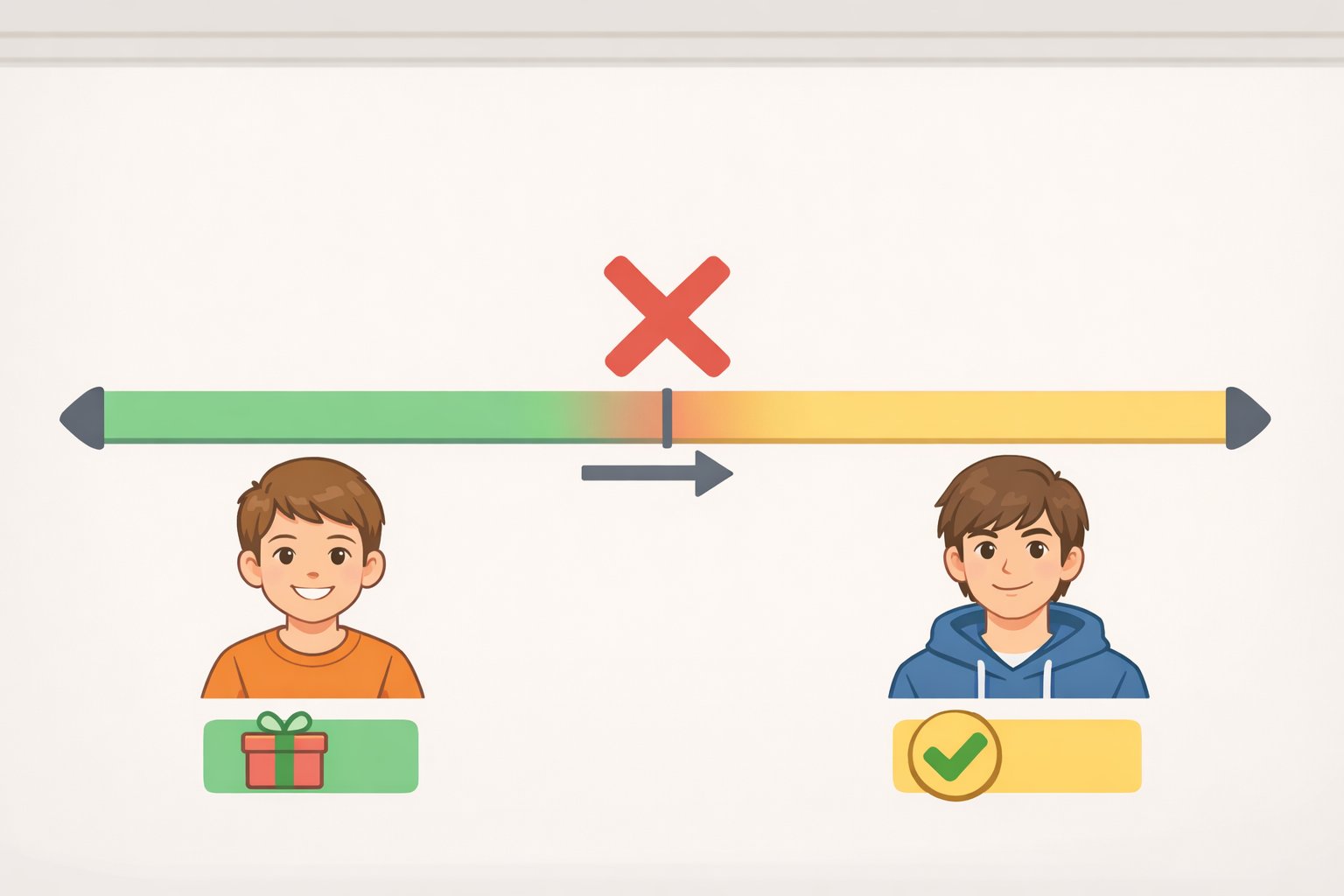
The Child Tax Credit ends when a child turns 17, but the tax break does not necessarily disappear with the birthday cake. If the dependent still qualifies, the Credit for Other Dependents, or ODC, may be worth up to $500 per person (Tax Policy Center, August 2025; IRS, October 2025).
Step 1: Know when the ODC takes over
Other dependents who are not eligible for the CTC can qualify for this nonrefundable credit, including children ages 17 to 18 and full-time college students ages 19 to 23 (Tax Policy Center, August 2025). It also covers other qualifying relatives who meet the IRS rules (IRS, October 2025).
That makes the ODC a useful bridge. The child has aged out of the main CTC, but not out of the family budget.
Step 2: Check the identification and income rules
The ODC accepts an SSN, ITIN, or ATIN issued before the return due date (IRS, October 2025). The credit begins to phase out at adjusted gross income above $200,000 for single filers and $400,000 for married filing jointly (IRS, October 2025).
That is a little more flexible than the CTC, which is helpful for families with dependents who do not fit the child-credit box quite as neatly anymore.
Step 3: Watch the split-household rules
Only one taxpayer can claim the same child for the child-related bundle of benefits, including the CTC, ODC, head of household status, child and dependent care credit, and the EITC (IRS, May 2025; IRS, May 2025).
If two returns claim the same child, the IRS tiebreaker rules apply (IRS, May 2025). For the EITC, a written agreement does not override the residency test (IRS, May 2025). Tax law can be very formal about family arrangements, which is one way of saying it is not impressed by improvisation.
Credit 4: The child and dependent care tax credit for working parents
The Child and Dependent Care Tax Credit, or CDCTC, is meant to offset care expenses parents pay so they can work (Tax Policy Center, July 2025). It is one of the tax breaks for parents that looks larger on paper than it often feels in real life, because it is nonrefundable and tied to earnings (Tax Policy Center, July 2025).
Step 1: Confirm the expenses were work-related

The credit applies to care expenses paid so a parent can work (Tax Policy Center, July 2025). For married couples, eligible expenses cannot exceed the earnings of the lower-earning spouse (Tax Policy Center, July 2025).
That earnings cap catches a lot of households off guard. The limit is not based on the family’s total income, which would at least be tidy. It is based on the lower earner.
Step 2: Adjust expectations around the credit amount
Because the CDCTC is nonrefundable, households with little or no federal income tax may get little or no benefit even if the care bills are large (Tax Policy Center, July 2025). The 2025 reconciliation law, often called OBBBA, increased the credit rate for low- and moderate-income families, but the change takes effect in 2026, not on the 2025 return (Tax Policy Center, July 2025).
A married couple earning $60,000 with $3,000 in qualifying care expenses is the Tax Policy Center’s example of how that change plays out, with the credit rising from $600 to $1,050 under the new rate rules (Tax Policy Center, July 2025). Useful, yes. Transformative, no.
Step 3: Coordinate with a dependent care FSA
If an employer offers a dependent care flexible spending account, the amount set aside there reduces the expenses eligible for the CDCTC (Tax Policy Center, July 2025). If an employee sets aside the full $3,000 for one child, there are no remaining qualified expenses left for the credit (Tax Policy Center, July 2025).
That same tradeoff is why the FSA matters so much. Slightly less than half of employees have access to one, so plenty of families can use it, but many cannot (Tax Policy Center, July 2025).
Step 4: Keep the shared-custody rule in view
Only one taxpayer can claim a child for the child and dependent care credit (IRS, June 2025). In shared-custody arrangements, that rule works the same way as it does for the CTC and EITC.
Before you file: the simplest decision rule
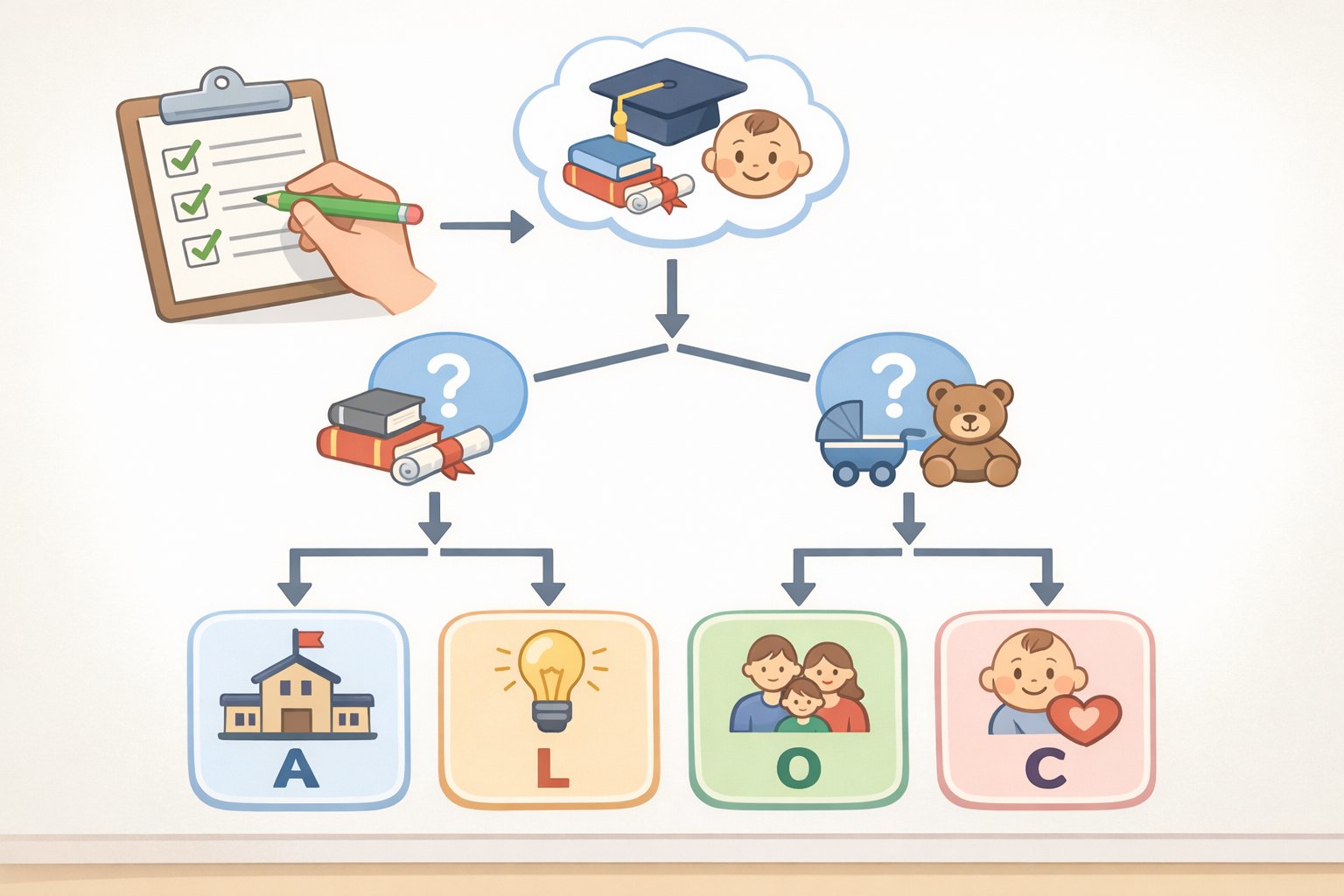
If the child is in college and eligible for the first four years, check the AOTC first, then the LLC if the AOTC does not fit. If the child is 17 or older and still a dependent, check the ODC. If the expense is paid child care so a parent can work, check the CDCTC and then compare it with any dependent care FSA already in use.
The other checklist is short. For education credits, confirm Form 1098-T and the school’s EIN, and keep Form 8862 in mind if a prior AOTC claim was disallowed for more than a math error (IRS, January 2026). For 2026, remember the new SSN rule for the AOTC and LLC, because the IRS has a habit of enforcing the parts people only notice later (IRS, 2026).
The larger picture is blunt enough. These credits mostly help middle- and moderate-income families, while lower-income families often get more out of the EITC than out of nonrefundable credits (Tax Policy Center, October 2025). For parents filing this spring, the job is not to memorize the whole tax code. It is to match the child, the school, or the care bill to the right credit before the season ends.