


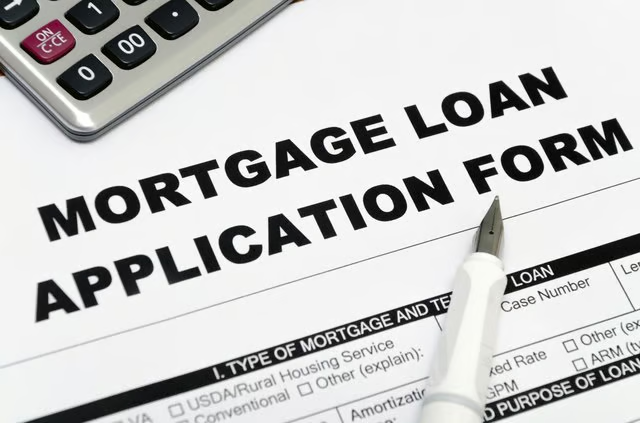

When you submit a mortgage loan application, your lender must verify that you have sufficient income to take on the new debt. Lenders therefore contact your employer to verify your employment; this normally occurs after you receive your preliminary approval for the loan. However, the mortgage loan process can take weeks or even months so lenders typically reverify your employment prior to the loan's closing.
Mortgage Loan Approval
You must include income information on your mortgage loan application. Your lender uses the information provided, such as your stated annual income, to make a preliminary decision on your application. Your lender compares your stated income with the debt levels shown on your credit report and calculates your debt-to-income ratio. If you have enough income and satisfactory credit then you get a preliminary approval. Credit bureaus usually have records pertaining to your employment and can provide your lender with an estimate of your annual income. However, credit bureaus don't always have up-to-date information so your lender must contact your employer to find out if you're still employed.
Mortgage Loan Requirements
The majority of loans written in the U.S. are sold to mortgage entities Fannie Mae and Freddie Mac; these two firms require lenders to obtain a written verification of employment notice from your employer. For a first-lienmortgage, the lender must send a verification form directly to your employer; an authorized representative of your employer must complete it and send it back to the lender. For a second-lien loan such as a home equity loan; the lender can give you the form and ask you to have your employer complete it and return it to the lender.
Mortgage Loan Second Verification
The mortgage underwriting process typically takes between 45 and 60 days to complete. Because your credit report changes once a month, your lender checks it again prior to closing to ensure that your financial circumstances haven't changed. Your lender will also reverify your employment at the end of the underwriting process to ensure you're still employed. This second verification could occur on the day of the closing and a job loss or change of jobs could derail the entire mortgage process.
Losing or Changing Jobs
If your mortgage lender discovers you've lost your job or changed jobs during the underwriting process you may still qualify for a loan, but at best you must face a delay. You must provide your lender with evidence of a new income source and your lender must contact your new employer and verify your income at least once before closing on the loan. If you're self-employed you must also have two years of verifiable income before you can qualify for a loan. Additionally, if you don't find a new employer you could get your loan back on track if you find a cosigner willing to take on the shared responsibility of the loan.