


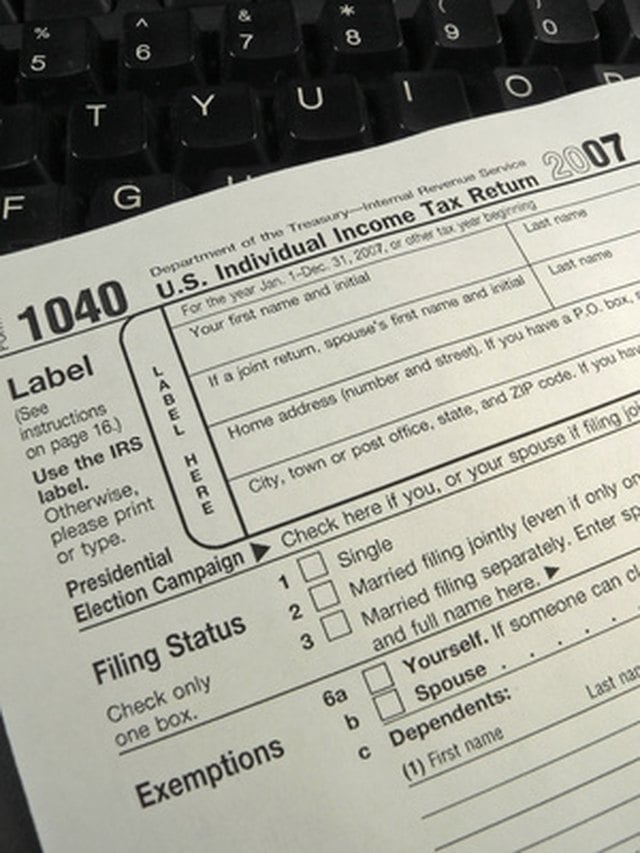

Donations made to a local government entity generally qualify you for a tax deduction on your federal income tax return. A donation to a government entity is a type of charitable contribution, meaning you must meet a few criteria to qualify for a deduction.
Itemize
Donations to local government entities are a type of itemized deduction. This means you cannot claim the donation as a deduction if you claim the standard deduction.
Public Purpose
A donation to a local government entity only qualifies as an itemized charitable deduction if the donation is made for a public purpose. Public purpose has a fairly broad definition and it typically includes anything other than something for which you receive a direct benefit. For example, if you "donate" $1,000 to your city in exchange for an annual pass to the city's municipal golf course, then your $1,000 was not given for a public purpose. But, if you donate $5,000 to your police department to help implement a child safety awareness program, then the donation is for a public purpose, even if you have children that may benefit from the program.
Political Subdivision
Donations to a local government entity only qualify you for a deduction if the entity is a political subdivision of your state. Almost all local government entities are political subdivisions of the state in which they are located, but there are some exceptions. If you are uncertain whether a specific entity is considered a political subdivision, you can check with that entity and you can also check with a tax professional. You probably want to verify this information before you actually make the donation.
Property
The charitable contribution deduction is appropriate whether you donate money or property. If you donate money then the deduction is easy: it is equal to the amount of money donated. But, if you donate property, then the amount of the deduction is equal to the fair market value of the property as of the date of the donation. Fair market value is generally the amount of money that a willing buyer would pay a willing seller. Special rules apply to property worth $5,000 or more, including a requirement for an independent appraisal of the property.
Receipt
You should always obtain a receipt from the local government. You can only claim the deduction if you have a receipt from the entity, or if you have bank record proving that you made the deduction.