


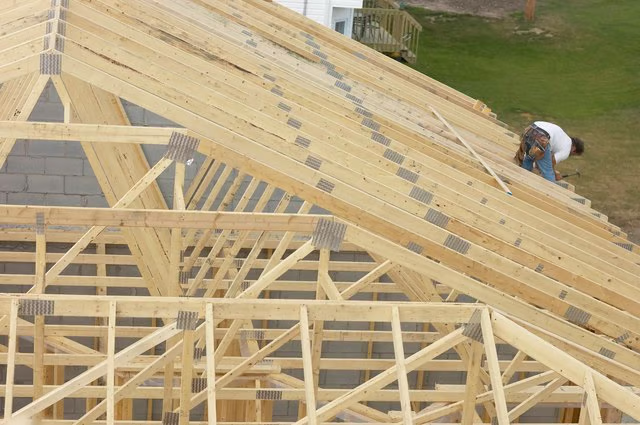

The Internal Revenue Code allows for the deduction of various expenses you incur during the tax year that don't qualify as an investment or purchase. The amount you pay to purchase a new roof receives investment treatment and can't be taken as a deduction on your tax return. However, the IRS provides a tax benefit for the new roof as a reduction in the gain you must recognize when you sell the home.
Tax Basis
The tax basis of a home represents the total investment in the home. This includes the purchase price plus the cost of all home improvements you make. To increase the home's tax basis by the cost of improvements, the improvements must be significant in that they add value to the home or prolong the home's useful life. Regular repairs and maintenance don't add value or prolong the home's useful life.
New Roof
The cost of installing a new roof qualifies as an improvement that increases the home's tax basis. This cost qualifies for an increase in tax basis because after installation, the useful life of the roof is extended and warrants an increase in fair market value to the extent you can increase the selling price of a home after installation. However, no tax deduction is available in the year you incur the cost.
Home Sale Gain
Increasing the tax basis of the home for the cost of the new roof provides you with a tax benefit that you can recognize in the tax year you sell the home. A home's tax basis dictates the amount of taxable gain that results from a sale. For example, if you purchase the home for $400,000 and spend $15,000 to install a new roof, the home's tax basis is $415,000. If you later sell the home for $415,000, the total gain is zero. However, if the cost of the roof didn't increase the home's tax basis, you're liable for tax on the $15,000 capital gain.
Casualty Loss
The IRS provides one exception to the rule allowing for a tax deduction rather than an increase in tax basis. If a sudden and infrequent event such as a tropical storm or hurricane causes sufficient damage to the roof, you can deduct the cost of installing a new one. You calculate the deductible amount by using the smaller of the roof's original cost or the decrease in the home's fair market value resulting from the casualty. Generally, when the casualty loss relates to the home, both figures are the same, as the fair market value decreases in an amount equal to the cost of installing a new roof. However, if you receive a reimbursement from your insurer, the deduction is unavailable.