
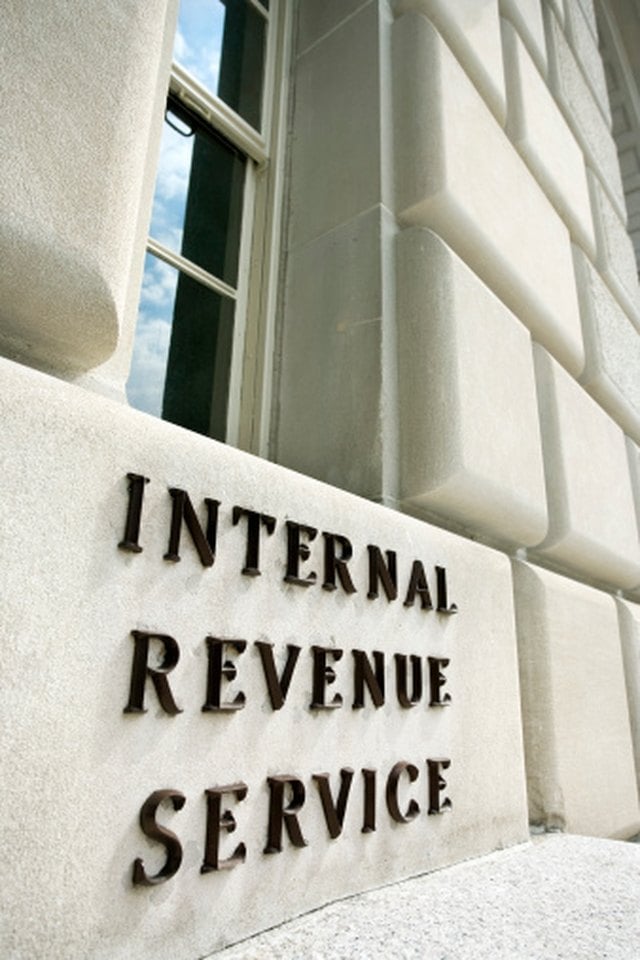


The Internal revenue Service (IRS) has broad authority to investigate violations of the gross income reporting requirements of the Internal Revenue Code (the "Code"). Form 4789 is one of the tools used by the IRS to prevent money laundering and tax evasion by tracking transfers of large amounts of cash.
Currency Transaction Report
Form 4789, the Currency Transaction Report, was introduced by the IRS in 1970 after the passage of the Bank Secrecy Act. It requires financial institutions, other than casinos, to report to the IRS any cash deposit, withdrawal, exchange of currency, or other payment or transfer, in excess of $10,000.
Financial Institutions
The financial institution that files Form 4789 is generally a bank, but it can also be any broker or dealer in securities, money transmitter or the U.S. Postal Service, which uses the form for issuing money orders. The term 'financial institution' also includes certain cash businesses, such as check cashers. In short, a business is considered a financial institution if it cashes checks, transmits money, or issues, sells, or redeems money orders or travelers checks.
Purpose
The IRS is concerned with collecting income taxes on all income, including illegal income. As the United States pursued organized crime in the early part of the twentieth century, and as the war on drugs developed as the century went on, it became evident that the tax evasion involved in laundering money from illegal activity was sometimes the only avenue to pursue a criminal conviction. In 1970, Congress passed the Bank Secrecy Act, which introduced Form 4789 as a new tool to aid in enforcement and establish a paper trail for the use of large amounts of cash. The IRS claims that the requirement that financial institutions file Form 4789 has created a significant impediment to the use of illicit profits by criminals engaged in illegal activity.
Format
Form 4789 requires a financial institution to classify a transaction as suspicious unless it falls under an exemption, to collect the person's name, address and social security number and to verify the information through the presentation of identification. Account numbers must be recorded, as well as whether the funds benefited another individual. Finally, the reporting institution must indicate the type of transaction that took place and where the financial institution is located. The form also requires the reporting of multiple transactions as a single transaction if they took place within one business day or if the bank has knowledge that the transactions are related.
Filing
Form 4789 must be filed with the IRS Detroit Computing Center or a local IRS Center within 15 days of the transaction. Failure to file a report is subject to civil and criminal penalties of up to $500,000 and 10 years in prison. The filing institution must keep a copy of the report on file for 5 years.