
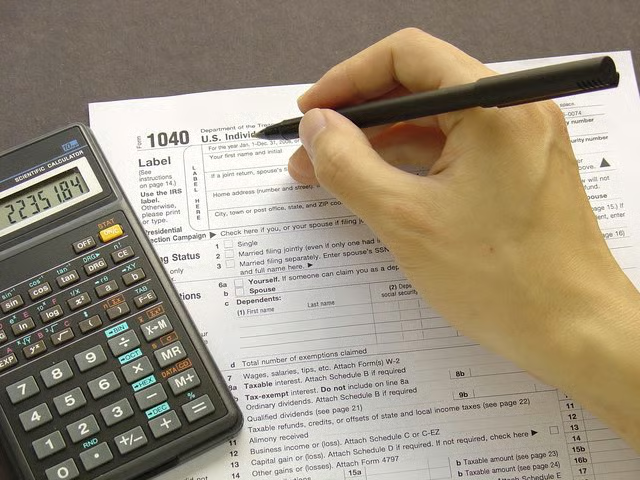


Every year the Internal Revenue Service refuses to accept some taxpayers' returns. Most of those denied are for simple reasons that can be promptly corrected, according to the IRS website. However, other rejected returns require filing the corrected data or submitting an amended return.
Most Common Mistakes
Tax software programs often correct common mathematical errors when filing electronically, according to the IRS. But when filing on paper, simple math errors may lead the IRS to deny a return and send it back to be corrected.
Occasionally, a taxpayer forgets to include a piece of documentation or attach a requested form when filing paper returns. Sometimes, the IRS can process the tax return without the omitted items and will do so. In other situations, the agency denies the incomplete return and the taxpayer then must file a second return to fix the error.
Consider Also: E-Filing: How to File Your Taxes Electronically, IRS Free File & More
Mistakes That Lead to Rejection
The most common reason a federal tax return is denied is due to the Social Security number of the taxpayer or claimed dependents being entered incorrectly. For example, if the taxpayer transposes two numbers, the IRS's processing system will target the return because names and identifying numbers must match exactly what the IRS calls its "Master File."
If those names and numbers don't match, the return will be denied. A second common mistake is an incorrect Employer Identification Number, shown as the EIN on W-2 forms. This, too, will cause the return to be denied. If the spelling of the taxpayer's name does not match the IRS files, this can cause a return to be denied as well.
Consider Also: W-2 Forms: What It Is, Who Gets One & How It Works
Understanding the Codes
When a return is denied, the IRS will send a notification that contains what the agency calls a "reject code." This code consists of a number that corresponds with the reason the agency denied the return. For example, according to Intuit TurboTax, the IRS lists the "top reject code" as SEIC-F1040-506-02 with the corresponding explanation that the reject code indicates a child claimed for purposes of taking the Earned Income Credit has the same Social Security number as someone filed on a different return.
This could mean the taxpayer simply wrote the number wrong or that two people claimed the same child. Both ways, the error must be corrected or explained and the tax return filed again on paper.
Consider Also: Earned Income Tax Credit: What Is It & How to Qualify
Fixing the Return
When you file your federal tax return electronically and the return is rejected because of an error in a Social Security number or EIN, you may be given the opportunity to correct the error immediately and file again electronically. In other situations, the IRS may require you to submit an amended paper return to correct the mistake. The rejection notice will explain the reason the return was denied, how to fix the error and what method to use in filing the correction.