
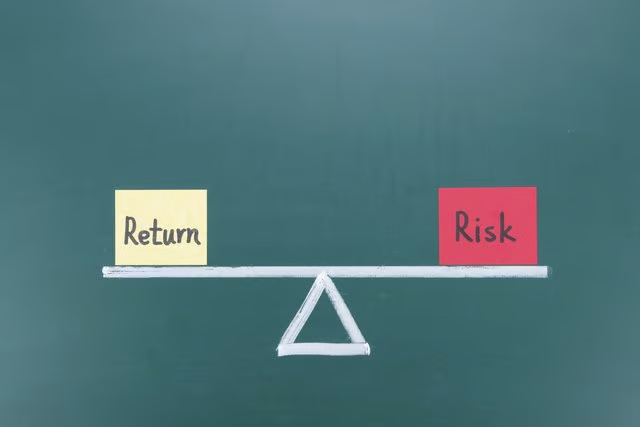


Risk is a fact of life for investors, and learning to manage risk is vital to a healthy investment portfolio. Even federally insured certificates of deposit have interest rate risk, meaning a rise in rates could leave you stuck with below-market earnings until the CD matures. Calculating risk exposure is one of the tools savvy investors use to evaluate and manage risk, with hopes of building wealth over time. That's important because investors who understand the risks they face can make better investment choices, leading to higher returns on investment.
Risk and Exposure
Investors need to understand that risk is the chance that a possible negative event actually will occur. According to Investopedia, this means that there is the chance that adverse financial events will cause you to lose money at some point, as an investor. For example, if you purchase a bond, there is some probability that the bond issuer will default, leaving you out of luck and out of money. A risk exposure calculation tells you how much you are likely to lose due to adverse events so that you can make informed choices with your money.
Estimating Risk Probability
Before you can calculate risk exposure, you need a reasonable estimate of the probability a risk event will occur. Suppose you are considering investing in a corporate bond. The first thing you might want to do is conduct some research to find out any business risk areas pertaining to the investment, as well as the default risk of the bond. For example, The Economist reports that in early 2021, the corporate bond default rate was 7 percent, but was expected to drop to under 2 percent by spring of 2022.
This risk exposure example tells us that risk levels are expected to decline over a period of time, which might cause some investors to go ahead and jump in, but cause others to wait a few months until risks are lower. You can find data for financial events and specific industries, like the odds a startup will fail or commercial real estate will fall in value, by using financial publications or government sources, or by asking your broker for assistance.
Risk Exposure Formula
The formula for calculating risk exposure is the total loss if the risk occurs multiplied by the probability that the risk will actually happen. In one risk exposure example, suppose you plan to purchase $10,000 worth of investment grade corporate bonds. Begin by considering what might happen if the issuer defaults. Your loss could amount to the entire $10,000 you initially invested. If the default risk is 2.09 percent at the time of investment, multiplying $10,000 by .0209 gives you a risk exposure of $209.
Evaluating Risk Exposure
Using risk exposure as an investment guide requires some judicious interpretation. For example, an investment with high risk and a low potential loss can yield the same exposure as a low-risk investment with the possibility of a large loss. Another issue to consider is the expected return on the investment. You'll need to make a judgment call as to whether or not the risk exposure is acceptable given the potential profit.
Consider Also: The Difference Between Risk Averse and Risk Neutral, and What is Risk Preference?