
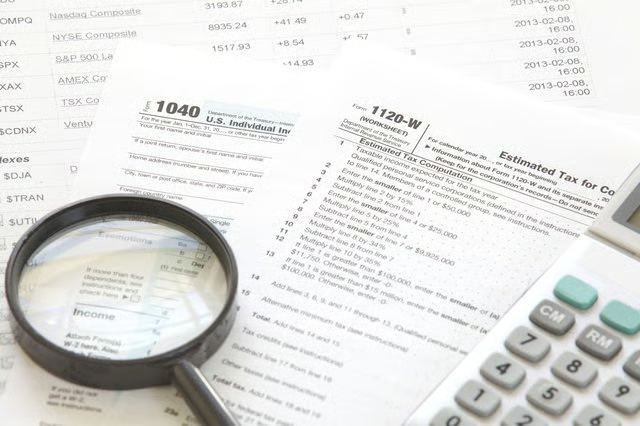


Are work clothes tax-deductible? If you spend money on clothes for work, you may or may not be able to claim them as a business expense, depending on a number of factors. These include your work status and the type of clothes you're looking to write off. Reviewing the rules to claim clothing as a legitimate expense (not a clothing tax deduction) will help you take advantage of any write-off you have coming in this area.
Consider Also: Form 1040: What You Need to Know
Employee vs. Contractor
Beginning January 1, 2018, the Tax Cut and Jobs Act eliminated the deduction for unreimbursed business expenses by employees, explains the IRS. This means that if you work for a salary or wage while being an employee (vs. a contractor), you can't claim clothing as a business expense. This is true even if you are required to wear the clothing and are not reimbursed by your employer.
If you are a contractor, gig worker, self-employed or sole proprietor, for example, you can claim this expense. You might fall under an exception – members of the clergy who are employees, for example. However, even if you work for yourself, the amount and types of clothing you can claim as a business expense is very limited.
Consider Also: Non-Employee Compensation: Definition & Compensation Reporting
Type of Clothing
The IRS does not allow you to claim clothing that can be used for both work and other everyday activities. Clothes you claim as a business expense must be mandatory for your job and not suitable for other purposes, explains TurboTax.
For example, surprisingly, tennis coaches can't claim their tennis clothes because they could be (and often are) used for going to the movies, shopping, dining and other activities. Can you also imagine how much money would be spent on suits and dresses each year if people could wear them to the office, then call them work clothes?
Your clothes must be necessary for your work and used exclusively for work. If you buy painter's pants, for example, personal protective equipment such as gloves or hard hats, medical scrubs and caps or work boots you wear to constructions sites, those would qualify for a deduction. But if you buy everyday clothes but have a large logo on them, this might be considered a marketing expense, especially if you and any others who work for the company are required to wear logoed shirts or caps for work.
Consider Also: Self-Employed Tax Deductions, Benefits & More
Writing Off Clothing
If you determine that you have clothing you can claim as a business expense, you will enter this information on Schedule C of your 1040 tax return. You will claim these as other expenses (not deductions). List clothing in Part V of this form. You not only can claim the cost of the clothing, but also the cost of maintaining it, such as laundering or dry cleaning.
List each clothing item you purchased separately. In the event of an audit, you'll help your justification of the claim if you keep receipts of your clothing purchases, dry cleaning, etc.