


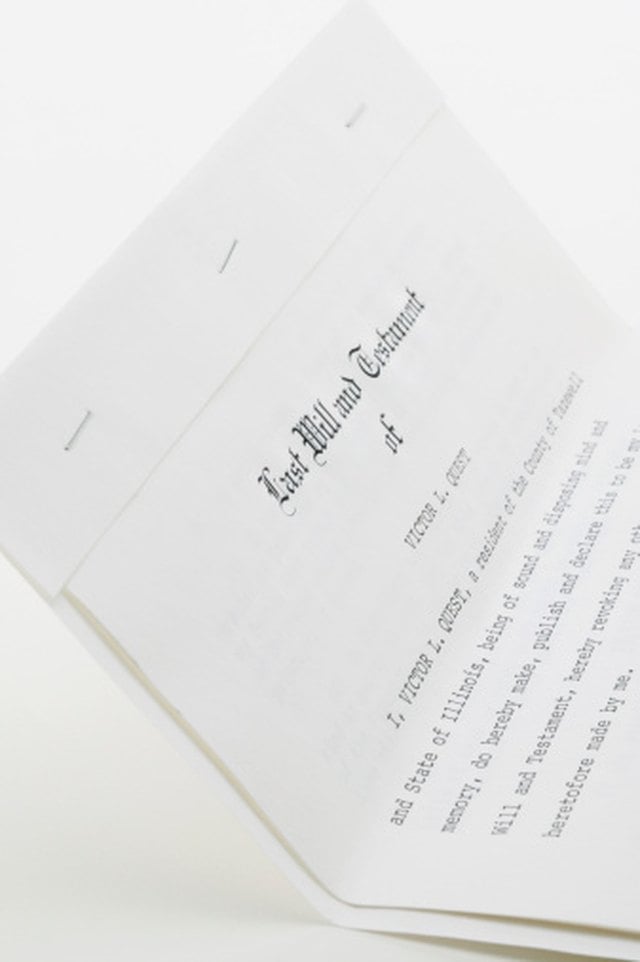

The percentage of an estate that an executor will get will depend on the size of the estate, the terms of the will and the state where the estate resides. Executor compensation is determined by state statutory law, so compensation rates will be different everywhere. Generally, most executors are compensated somewhere between 2 to 4 percent of the estate, but the percentage can be different if your state has special circumstances for low- or high-value estates.
Executor
An executor is an individual who is in charge of handling the matters of an estate. If you are appointed executor by will, you may decline the duties altogether and ask that another executor be appointed to the estate. In general, executors are in charge of accounting for all of the deceased's assets, initiating and finalizing the probate process, notifying the deceased's creditors and distributing the assets of the estate to creditors and beneficiaries.
State Law
All states set executor compensation by statute, so you will need to check the law in your state. Executor compensation is usually set on a sliding scale, so executors receive a smaller percentage of larger estates. Courts may also play a role in determining how much an executor gets paid. However, keep in mind that some states allow the decedent to deny the executor compensation in the terms of his will. So in some instances, there could be no compensation available for serving as an executor.
Examples
In Pennsylvania, the executor of an estate can earn anywhere from 1/2 percent to 5 percent of the estate for performing their duties. The amount the executor will make depends on the size of the estate. For estates under $100,000 the executor will make 5 percent. On the other end of the spectrum, for estates worth more than $4 million, the executor will make 1/2 percent. In California, an executor can make between 1/2 percent and 4 percent of the estate, also based on the size of the estate. For estates under $100,000, executors make 4 percent. At the high end, for estates up to $25 million, executors are paid 1/2 percent of the estate.
Opting Out
If you serve as the executor of an estate you will be required to pay taxes on the compensation you receive. You have the ability to serve as executor and waive the fee, thereby leaving more money in the estate for distribution to the beneficiaries. This makes sense if you are the sole beneficiary of the estate and you will receive all of the distributions anyway.