
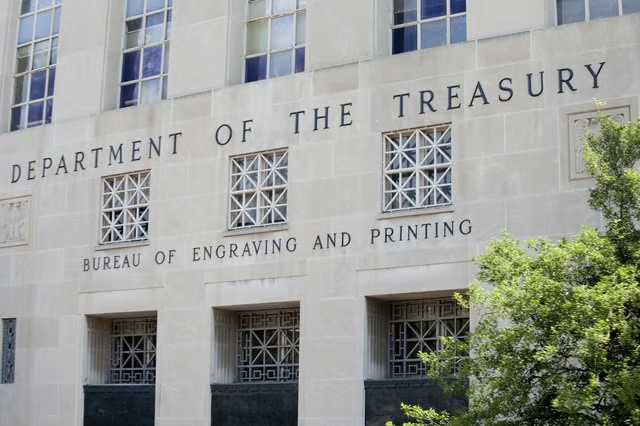


Narrowing down your investment options should involve thorough evaluation of each potential investment. Investors of all stripes, from individuals to giant mutual funds, put money into securities issued by the U.S. Treasury. Treasury bills provide some advantages, including safety and guaranteed returns. At the same time, however, you could probably get better returns from other investments.
T-Bill Basics
When you buy a Treasury bill, you're lending money to the federal government. You get your money back, with interest, but how long that takes depends on the maturity. Technically speaking, Treasury bills are securities that mature in a year or less. Those that mature in two to 10 years are Treasury "notes." Those that mature in 30 years are Treasury "bonds." In practice, though, all three kinds are commonly referred to as bonds, bills or "Treasuries."
Safety
One of the most attractive features of Treasury bills is safety: Money placed in Treasuries is backed by the "full faith and credit" of the United States government. Unlike corporate bonds or municipal bonds, Treasuries are considered to have a zero chance of default; markets assume that the U.S. will always make good on its financial obligations. If fact, in finance, the interest rate paid on Treasury securities is referred to as the "risk-free rate."
Convenience and Tax Savings
Buying Treasury bills is easy. Depending on what type of bill you want to purchase, you may be able to simply get on the U.S. Treasury website and place an order. If the bill you want is no longer being sold by the Treasury, you'll have to go through a broker and buy it from another investor on the secondary market. Besides the convenience of buying the bills, you also get the benefit of saving money on state and local income taxes. Profits you earn from investing in Treasuries are exempt from these types of taxes.
Low Returns
In investing, risk correlates with return. To get a high return, you have to take risks. To get safety, you have to give up some return. The risk-free rate on short-term Treasury bills is just about the lowest return promised by any investment. The government still has to pay some interest to entice people to buy bills -- rather than just keep their money in a bank, where it's more easily accessible -- but it's not much. You may be able to beat the returns with CDs and high-yield savings accounts. You can definitely do better by putting your money into stocks or corporate bonds, although the trick is in knowing which ones.
Limited Access
Another problem with Treasuries is difficulty in getting your money out. If you need to cash in the bill before its maturity date, you may have to pay a penalty. This means that all of your original investment may not be returned to you, depending on when you take the money out. The alternative is to try to sell your bill to someone else, but to do so, your broker will likely charge you a fee. If you think you'll need access to the money before maturity, you would likely be better off to put it into a bank account.